Read More


Night Recap - May 15, 2026
3 hours ago









Xiaomi CEO Lei Jun takes selfie with Musk goes viral online
14-05-2026 23:39 HKT

Spicy food is becoming ever more popular in Hong Kong: malatang, mala xiang guo, and Sichuan fish with pickled vegetables can be found everywhere. Spicy food lovers may often experience heat from the opposite end when they defecate the next day. Many people associate spicy food with hemorrhoids, but Dr. Tsang Shun Julian, a Specialist in General Surgery, says there is no direct concrete evidence that these foods cause hemorrhoids.
Patients may experience symptoms such as blood in their stool, prolapse, pain, and discomfort. Without proper treatment, hemorrhoids can become larger and symptoms more severe. For example, ignoring frequent and severe bleeding may lead to anemia. And some symptoms, such as blood in stool, can also be a symptom of more serious diseases such as colorectal cancer. Therefore, patients with symptoms of hemorrhoids should seek medical advice promptly for assessment and a physical examination to get a correct diagnosis and rule out any other more serious conditions.
Surgery can be avoided if lifestyle changes are sufficient for management
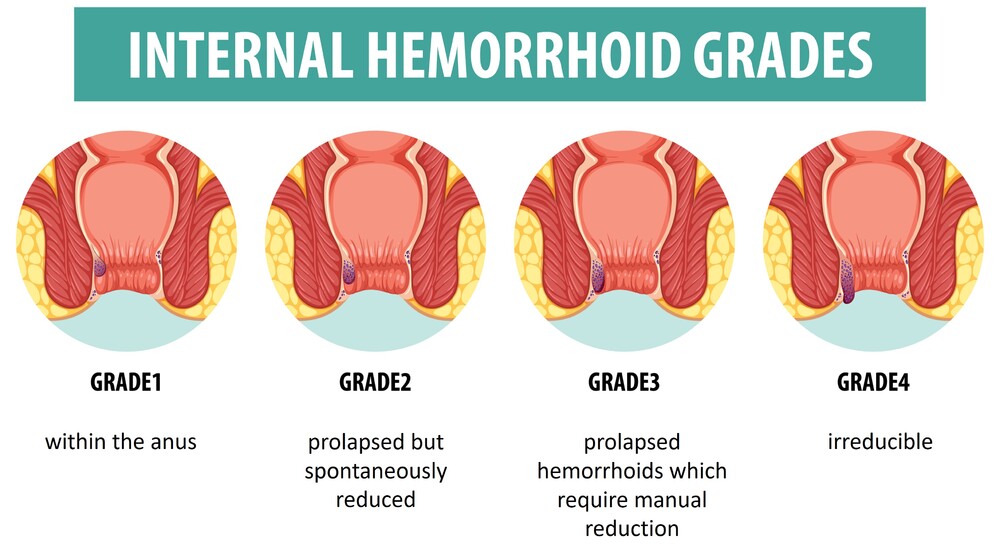
Hemorrhoids can be categorized into four grades, which are considered alongside symptom severity when tailoring a treatment plan for an individual patient.
“Patients are recommended to start with conservative measures, meaning modifications in lifestyle and diet. They should increase fibre and fluid intake, exercise more regularly and avoid sitting and straining on the toilet for long periods of time. Medications such as ointment and suppositories can be prescribed. These may be sufficient to improve the condition and reduce symptoms at an early stage. If they do not work, we may need to consider clinic-based procedures, such as rubber band ligation and injection sclerotherapy, or even surgery,” Dr. Tsang says.
Three surgical options that treat hemorrhoids with different mechanisms
There are three options available for patients who require surgery. The most traditional and effective option is a conventional hemorrhoidectomy, in which hemorrhoids are excised under spinal or general anesthesia. Patients may experience pain for up to four to six weeks, depending on the size and number of hemorrhoids. Patients can be discharged the same day after surgery with painkillers and laxatives.
Another option is the stapling technique (Stapled hemorrhoidopexy) which disrupts the blood supply to the hemorrhoids causing them to collapse. Less pain is associated with this surgery than with a traditional hemorrhoidectomy, and patients can return to work more quickly. However, there is higher recurrence rate when compared with conventional hemorrhoidectomy.
The third option is hemorrhoidal artery ligation (HAL), in which the blood vessels supplying blood to hemorrhoids are located with ultrasound which are then tied off with sutures. HAL may be less painful than a conventional hemorrhoidectomy and require a shorter period of hospitalization than the other two options. Unfortunately, the recurrence rate after HAL is also the highest among the three types of surgery.
Reducing recurrence rate with post-surgical lifestyle modification
While hemorrhoids can be removed by surgery, the recurrence rate is still high without lifestyle modification. Maintaining a healthy lifestyle, avoiding constipation and straining after surgery is the best way to prevent a recurrence. Patients with recurring hemorrhoids may need to undergo repeated surgeries.
The above information was provided by Dr. Tsang Shun, Julian and this educational article is supported by Johnson & Johnson.