Read More




Night Recap - September 23, 2026
4 hours ago









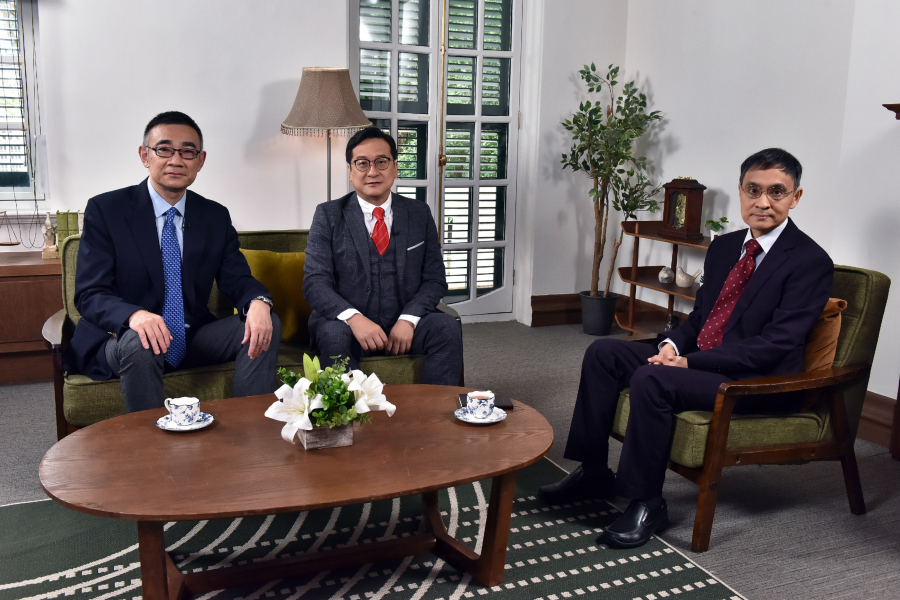
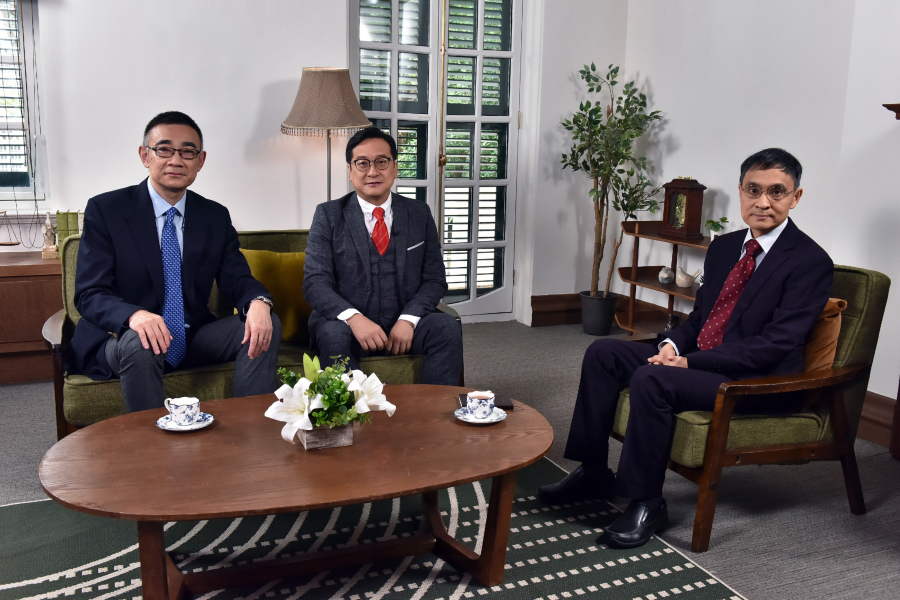
This article is extracted from “NSL Chronicles II”, an RTHK programme aiming to facilitate the general public to better understand the National Security Law. The programme is hosted by Hong Kong member of CPPCC Thomas So and Head of Centre for the Rule of Law of HKPRI CM Chan. Starting from 24 June, the English language programme will be aired every Saturday on RTHK TV31 at 8pm. Archives are available at rthk.hk, RTHK YouTube Channel and mobile apps RTHK Screen.
********************
Regarding cases related to the National Security Law (NSL), there have been discussions on the issues of bail, jury trial and whether interpretation of the NSL by the Standing Committee of the National People’s Congress (NPCSC) would mean interference with Hong Kong’s common law system.
On the issue of bail, our Criminal Procedures Ordinance (Cap. 221) and the NSL are phrased differently. In particular, Article 42 in the NSL states that:
No bail shall be granted to a criminal suspect or defendant unless the judge has sufficient grounds for believing that the criminal suspect or defendant will not continue to commit acts endangering national security.
The threshold for granting bail in national security cases, therefore, is more stringent. It should be noted, however, that similar practice is present in other common law jurisdictions as well.
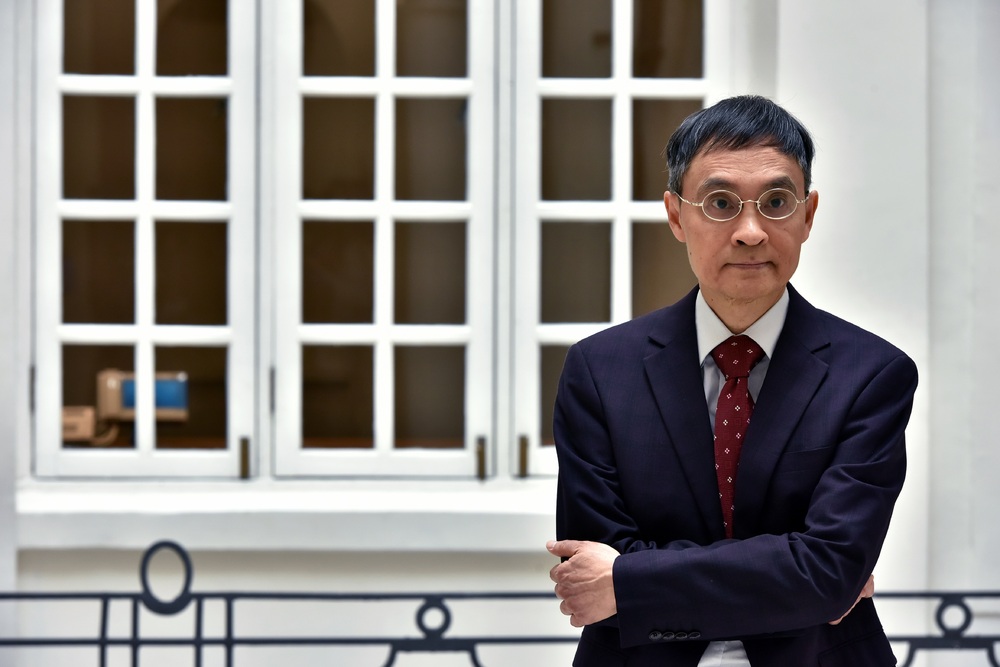
The guest of the episode, Professor Albert Hung-yee Chen, member of the Committee for the Basic Law of the Hong Kong Special Administrative Region under the NPCSC and Chair of Constitutional Law of the Department of Law of the University of Hong Kong, explained how the mechanism for granting bail works in Hong Kong, ‘Our original regime of bail is based on the Criminal Procedure Ordinance. It stipulates three circumstances under which the courts will refuse to grant bail to an accused person in criminal cases.’
‘First, he/she is at risk of absconding. Second, he/she may interfere with a witness when released on bail. Third, he/she will commit criminal offence after being released on bail.’
‘So, it has never been the case that the accused persons in all cases would be granted bail…… The NSL adds one more rule in addition to the three circumstances under the Criminal Procedure Ordinance: ……whether the judge has grounds for believing that if the defendant is granted bail, he/she will not commit any offences endangering national security.’
Professor Chen also stated that in other common law jurisdictions like Canada and the UK, for a certain range of cases, the threshold for granting bail could be raised. Such does not violate the common law principle of presumption of innocence.
On the issue concerning cases tried without a jury, Professor Chen noted that the European Court of Human Rights and the Court of Final Appeal have stated that defendants do not have the right to require that their cases be tried by jury. The question is, rather, whether there is a fair trial.
Professor Chen added that most criminal cases were tried without a jury. ‘This is because most criminal cases are heard in Magistrates' Courts or the District Court, in both of which only one judge is needed to try cases. Only a small number of more serious criminal cases were heard in the Court of First Instance of the High Court. According to the original system, in the Court of First Instance, criminal cases will be tried by a jury……The judge instructs the jury on legal issues. Ultimately, the defendant's guilt or innocence is decided by the jury and not the judge.’
‘This system is also modified in other common law countries. When Hong Kong courts consider this special provisions of the NSL, the courts also refer to cases from other common law countries including the UK and Ireland. The NSL states that circumstances in which cases are tried without a jury. In such cases, a certificate will be issued by the Secretary for Justice,’ Professor Chen mentioned.
‘Our NSL stipulates that if in the High Court the case is not tried by a jury, it must be tried by a panel of three judges. Three judges, compared to one judge, should be a higher guarantee on the quality of trial,’ Professor Chen concluded.
On whether interpretation of the NSL by the NPCSC would mean interference on Hong Kong’s common law system, Professor Chen explained, ‘Under this legal system, the role of the courts is, according to the law and the facts of the case, to make decisions.’
‘If there is ambiguity or parts that are unclear, it is up to the court to interpret first. Of course, the NPCSC also has the power of interpretation, but this is not often used. So, I think even with the NSL in Hong Kong, we are still maintaining the original common law system, which is not significantly different from the common law systems in foreign jurisdictions.’