Read More
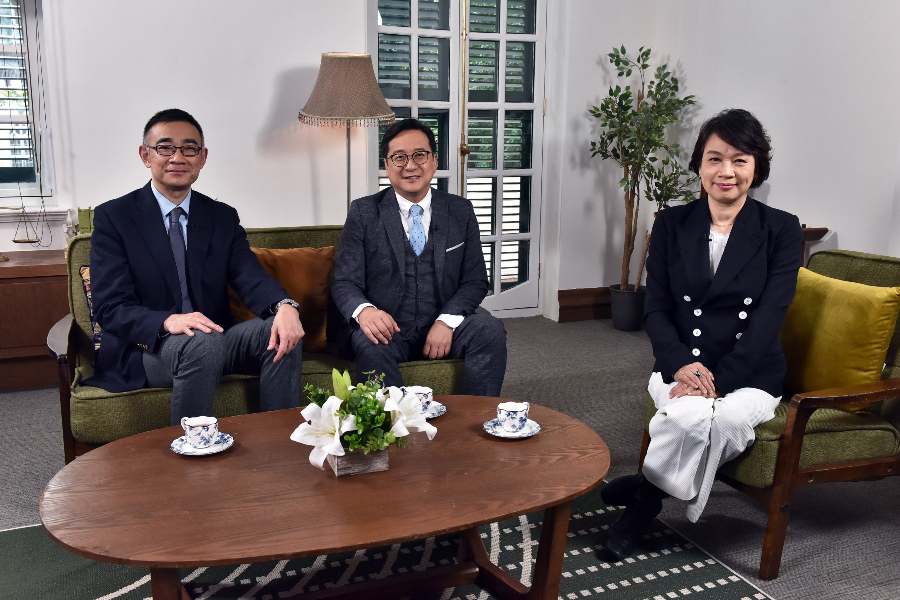
This article is extracted from “NSL Chronicles II”, an RTHK programme aiming to facilitate the general public to better understand the National Security Law. The programme is hosted by Hong Kong member of CPPCC Thomas So and Head of Centre for the Rule of Law of HKPRI CM Chan. Starting from 24 June, the English language programme will be aired every Saturday on RTHK TV31 at 8pm. Archives are available at rthk.hk, RTHK YouTube Channel and mobile apps RTHK Screen.
ADVERTISEMENT
SCROLL TO CONTINUE WITH CONTENT
********************
Among the laws of Hong Kong, the National Security Law (NSL) is not the only one on safeguarding national security. Back in the 1930s, the earliest versions of the Crimes Ordinance (Cap. 200) were already in existence. In particular, sections 9 and 10 of the Crimes Ordinance concern the sedition offence.
There were a few notable cases concerning the sedition offence. In the ‘Sheep Village’ case, five members of a trade union of the speech therapist profession, who published three picture books for children of a seditious nature, were then arrested and charged with conspiracy to print, publish, distribute, display and/or reproduce seditious publications. They were found guilty and sentenced to 19 months imprisonment.
The judge, when delivering his verdict and at sentencing, stated that all three picture books had seditious intention. They were targeted at children and parents and were in effect a ‘brainwashing exercise’ on children. The judge described the picture books as sowing the seed of instability in Hong Kong in children's mindset. The judge also mentioned in the reasons for verdict that the publishers ‘lead the children not to trust the administration of justice in Hong Kong and look down upon the police, the prosecution and the court with contempt’, and that ‘the children will be led to believe that the only way to protect their home is to resist and to use force if necessary against the authorities’ (Paragraph 124).
The episode’s expert guest, Priscilla Leung Mei-fun, member of the Legislative Council and the Committee for the Basic Law of the Hong Kong Special Administrative Region, elaborated on “seditious intention” in section 9 of the Crimes Ordinance. ‘For example, in the “Sheep Village” case, in some situations it is… the notions in the pictures per se that matter. What do people see in them? They bring in hatred. What is sedition? Sedition, from the legal point of view, first and foremost, must have an intention, and when there is an intention, there will most likely be a conviction – unless you have absolutely no idea what you are doing.’
Ms Leung remarked, ‘When it comes to the law, we must tell the public: violence does not need to be present in order to incite hatred against the Government or between different classes of population.’
While Ms Leung noted that Hong Kong takes freedom of speech very seriously, such freedom is not absolute. ‘To restrict, the aim of the restriction must be proved: that it is really to achieve the aim of protecting public interest. This is the first point. The second point: this restriction must really be useful. It must be connected to and can achieve this aim. Not just restrict everything indiscriminately, which is pointless. It is wrong if one’s freedom is restricted without him/her doing anything. Third point: it is necessary. We do not make unnecessary restrictions. Hong Kong is a society that values freedom. Fourth point, this point in the Hysan case is made very clear previously by the then Court of Final Appeal. They put rights, restrictions and societal interest side by side to strike a balance.’
The government cannot restrict people's rights without reason. None of us want that. I am a scholar; I also hope that academic freedom is guaranteed,’ Ms Leung added.
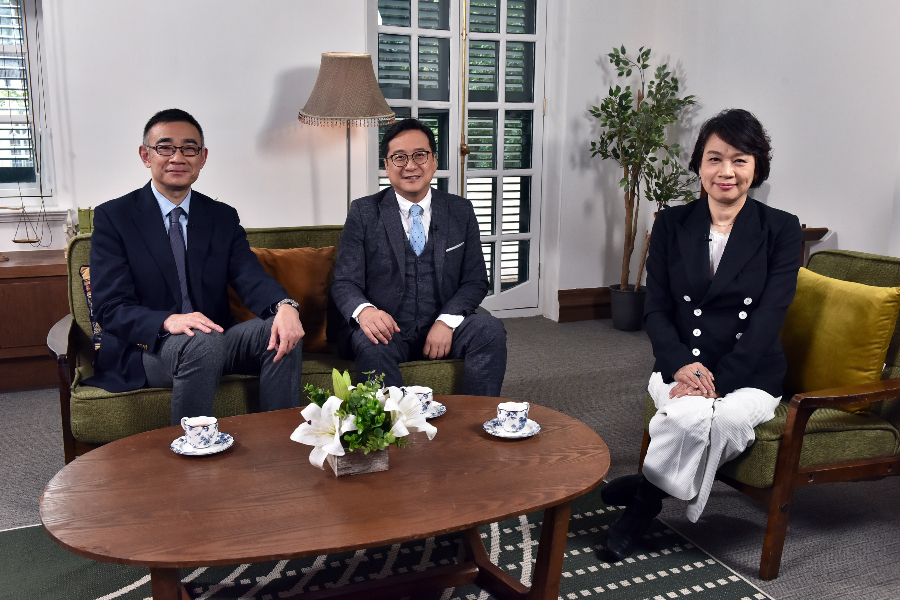
Guest: Ms Priscilla Leung Mei-fun, member of the Legislative Council and the Committee for the Basic Law of the Hong Kong Special Administrative Region

Guest: Ms Priscilla Leung Mei-fun, member of the Legislative Council and the Committee for the Basic Law of the Hong Kong Special Administrative Region