Read More
This article is extracted from “NSL Chronicles II”, an RTHK programme aiming to facilitate the general public to better understand the National Security Law. The programme is hosted by Hong Kong member of CPPCC Thomas So and Head of Centre for the Rule of Law of HKPRI CM Chan. Starting from 24 June, the English language programme will be aired every Saturday on RTHK TV31 at 8pm. Archives are available at rthk.hk, RTHK YouTube Channel and mobile apps RTHK Screen.
ADVERTISEMENT
SCROLL TO CONTINUE WITH CONTENT
********************
Article 29 of the National Security Law (NSL) has two parts, the first of which is related to espionage – stealing, spying, obtaining with payment, or unlawfully providing State secrets for a foreign country or an institution, organisation or individual outside the mainland, Hong Kong, and Macao of the People’s Republic of China. While the scope of state secrets is rather broad, Article 29 only covers state secrets related to endangering national security.
For the second part of Article 29, five acts have been stipulated:
1. waging a war against the People’s Republic of China, or using or threatening to use force to seriously undermine the sovereignty, unification or territorial integrity of the People’s Republic of China;
2. seriously disrupting the formulation and implementation of laws or policies by the Government of the Hong Kong Special Administrative Region (HKSAR) or by the Central People’s Government, which is likely to cause serious consequences;
3. rigging or undermining an election in the HKSAR, which is likely to cause serious consequences;
4. imposing sanctions or blockade, or engaging in other hostile activities against the HKSAR or the People’s Republic of China;
5. provoking by unlawful means hatred among Hong Kong residents towards the Central People’s Government or the Government of the HKSAR, which is likely to cause serious consequences.
A person who requests a foreign country or an institution, organisation or individual outside the mainland, Hong Kong, and Macao of the People’s Republic of China, or conspires with a foreign country or an institution, organisation or individual outside the mainland, Hong Kong, and Macao of the People’s Republic of China, or directly or indirectly receives instructions, control, funding or other kinds of support from a foreign country or an institution, organisation or individual outside the mainland, Hong Kong, and Macao of the People’s Republic of China to commit any of the above acts shall be guilty of the offence of “collusion with a foreign country or with external elements to endanger national security”.
The above acts are all very narrowly defined and the threshold for conviction is high.
The guest of the episode, Mr Hung Wan-shun, former President of the Law Society of Hong Kong and a legal expert with many years of experience in handling criminal cases, brought us through the offence of spying under the Official Secrets Ordinance. ‘First, the defendant must have the intention to prejudice the safety of the state or of Hong Kong, or causing heavy losses.’ The acts concerned include making sketches or models near ‘prohibited places’, the information of which may help an enemy commit illegal acts, and passing on secrets to foreign or Taiwan agents.
Mr Hung reminded us that ‘For all criminal charges – including the criminal charges related to the NSL – the burden and standard of proof rest with the prosecution. This means the accused has no responsibility to prove his or her innocence.’
Mr Hung also mentioned grounds for defence according to the Official Secrets Ordinance. ‘If the defendant can show that he or she had no reasonable cause to believe or did not know that it was a classified document or secret information, and the court accepts the defendant’s point, this could be a defence. If the defendant knows it is classified information and yet feels he or she owes Hong Kong a civic obligation to disclose such information – if they feel the information will affect the public in Hong Kong – that is not a possible defence.’
So how can ordinary citizens protect themselves from getting into trouble? ‘I will, first, see if the information is something known to the entire world. The major premise is: how can the prosecution prove that this is classified information? I think, from the defence point of view, what have you done to make sure that the information you process is not classified?’
‘I think, in terms of criminal law, the most important thing is, when you say or do something, do you have an unlawful intent? If you honestly feel what you do is okay, you should not be too worried. In all criminal charges, the prosecution must prove that the defendant has an unlawful intent.’

Guest: Mr Hung Wan-shun, former President of the Law Society of Hong Kong
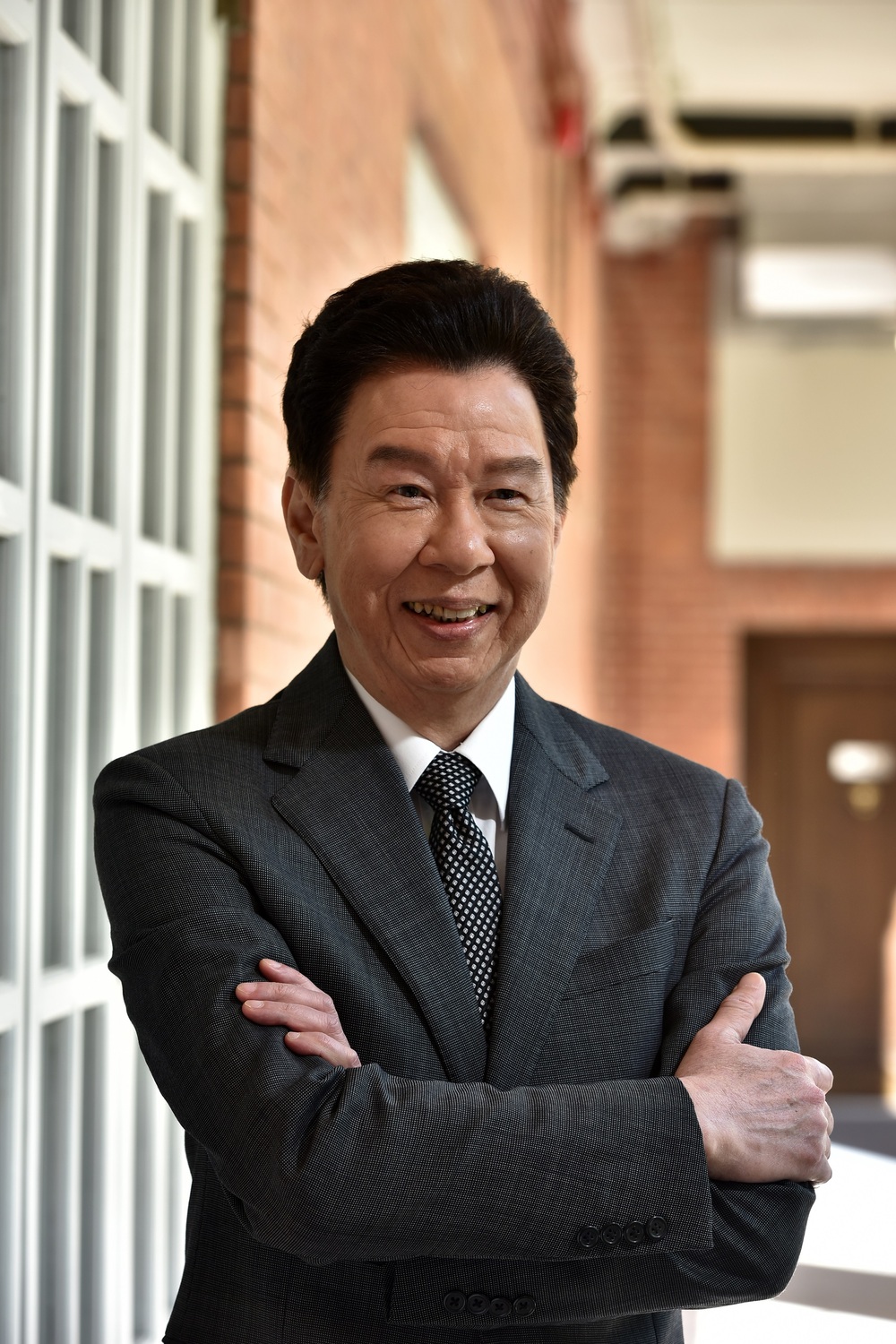
Guest: Mr Hung Wan-shun, former President of the Law Society of Hong Kong