Read More








Night Recap - May 21, 2026
4 hours ago




ImmD crackdown targets moonlighting domestic helpers arresting 17
19-05-2026 17:52 HKT

There are discrepancies between the English and Chinese versions of the national security law.
That was seen after the English version was gazetted three days after the Chinese version came into effect on June 30.
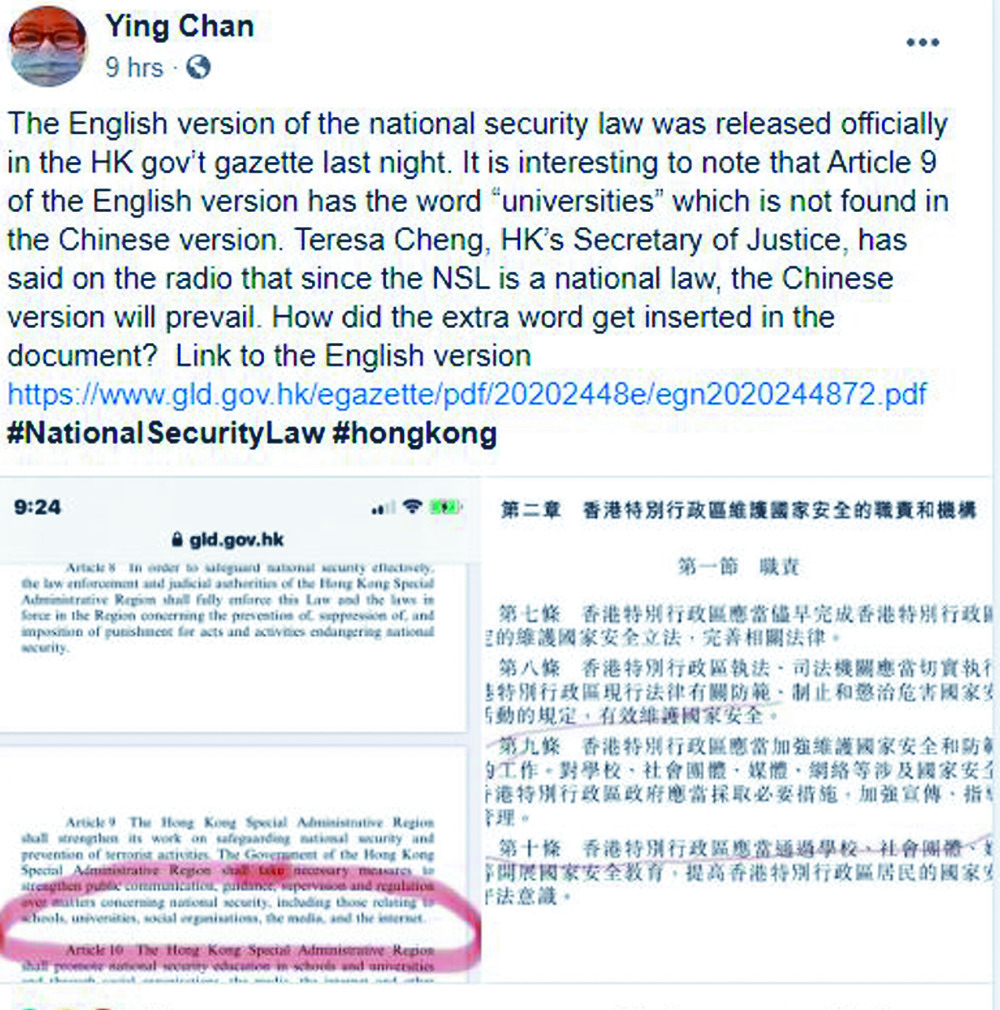
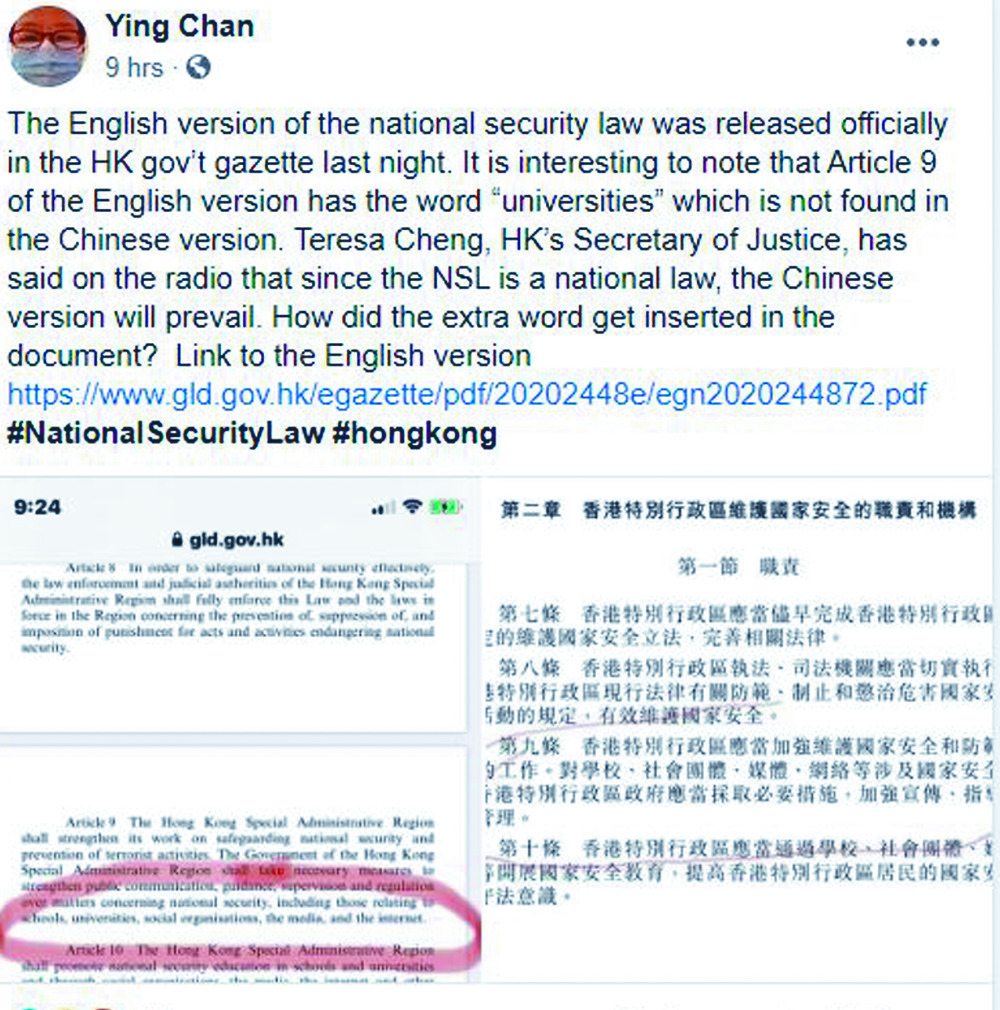
A former academic in the University of Hong Kong's School of Journalism, Ying Chan Yuen-ying, found the Chinese version states that the SAR should step up efforts to monitor schools and social organizations in national security matters.
But the English version refers to "schools, universities and social organizations."
Chan noted: "It is interesting to note that article 9 of the English version has the word 'universities,' which is not found in the Chinese version.
The same flaw is in article 10, stating the SAR should promote national security education in schools and universities in the English version, but "universities" is not in the Chinese version.
And the discrepancy is in an English translation published by Xinhua News Agency, which was released "for reference."
Civic Party lawmaker Alvin Yeung Ngok-kiu, a barrister, said there is a logical problem with the addition of "universities" in the English version.
"'Schools' is a general term that includes all educational institutions," he said. "I have no idea why law drafters would have to separately mention universities, which I think is strange."
He also noted the three-day delay in releasing the English version of the law and the lax translation would make it difficult to win the confidence of the international community.
Yeung also slammed justice secretary Teresa Cheng Yeuk-wah for saying that since the law is a national one the Chinese version would prevail.
"The remark is very unprofessional," he contended, saying it was a departure from general legal practice "as it is usually the English version that prevails.
"It is unfair to English judges, and it is not at all convincing to the international community as the law is applicable to the rest of the world. You cannot assume everyone can understand Chinese."
Yeung also said the Basic Law is the only legal document in which the Chinese version would prevail.
The flurry came after the SAR administration promulgated on Tuesday night the national security law for Hong Kong, which was passed by the National People's Congress Standing Committee without an English version.
The official English translation was not published until Friday, three days after the Chinese version was gazetted.