Read More












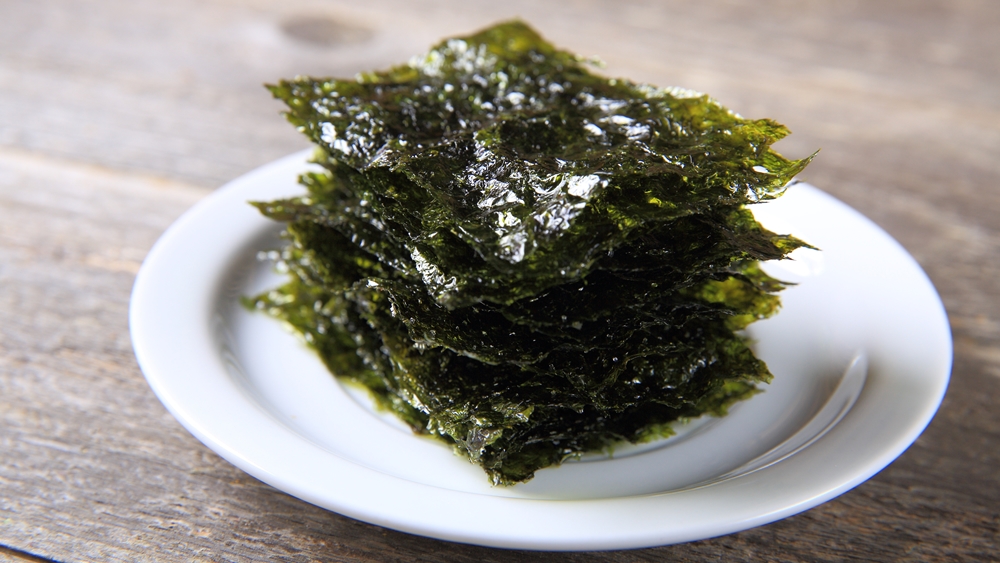
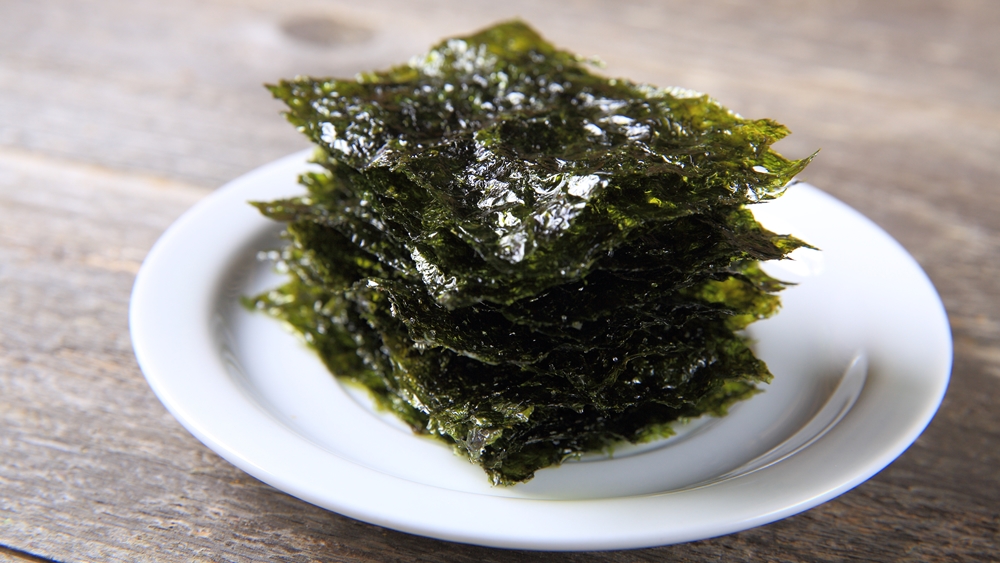
Seaweed has for many years been hailed as healthy food due to its rich mineral content, especially as a source of iodine. However, a recent consumer watchdog test has found that 70 percent of seaweed snacks they tested were “high-sodium” foods, while 40 percent were “high-fat” foods.
According to the Consumer Council’s latest test on 27 ready-to-eat seaweed samples sold in the territory, 70percent, or 19 samples, were found to reach the high-sodium food levels as defined by the Centre for Food Safety, with detected sodium content per 100g ranging from 614mg to 4,840mg.
In the snack category, the sample with the highest sodium content per 100g - Tao Kae Noi’s Grilled Seaweed Roll Tom Yum Goong Flavour, translated to a sodium intake of 89mg per serving (3g).
While this only accounted for 4 percent of the daily maximum level of intake for adults as recommended by the WHO, which suggests an intake of less than 2,000mg, if one consumes the whole box of 9 servings, the sodium intake would amount to 799mg, equivalent to 40 percent of the daily maximum intake for adults, the watchdog noted.
Meanwhile, in terms of the non-snack category, the sample with the highest sodium content (per 100g) - Topvalu’s Salted Nori Seaweed For Rice Balls, was found with 4,840mg sodium.
The watchdog warned that despite its sodium intake (around 63mg) per serving (1.3g) merely accounting for 3 percent of the maximum intake for adults, the implication would be much greater for children.
Separately, the council’s test has found that 10 samples they tested were “high-fat” foods, with fat content per 100g ranging from 29.1g to 60.4g.
“Amongst these, the sample with the highest fat content (60.4g) was the highest across the total fat, saturated fatty acid and trans fatty acid contents per 100g,” it said. The sample was said to be Tao Kae Noi’s Hot & Spicy Flavor Crispy Seaweed.
“While it is easy to assume that seaweed, with their light and relatively dry texture, would not be high in fat, novelty varieties of seaweed snacks, such as those fried and heavily seasoned, its fat level cannot be undermined,” the watchdog warned.