Often, the LGBTQ+ community is seen as having a single identity but Retrograde, a group exhibition of 11 artists from eight nationalities and seven countries, wants to challenge that notion.
ADVERTISEMENT
SCROLL TO CONTINUE WITH CONTENT
"We'd long ago decided not to make this a typical LGBTQ exhibition," said art curator and editor Cusson Cheng. "Of course, it is our basis, but the core, besides the critiques and questions to the heterosexual society, emphasizes normalcy within the sexual minorities. Apart from the serious question of how exploitation and discrimination can be tackled, we also interweave the individual experiences of the artists."
He hopes the show will question attitudes and actions taken when confronting the mainstream identity and narrative for queerness among the sexual minorities.
"While the mainstream narrative of coming out from the closet is all about hopefulness, positiveness and moving forward, is that really the case? Are those who are already out truly happy, enjoying equality and freedom?"
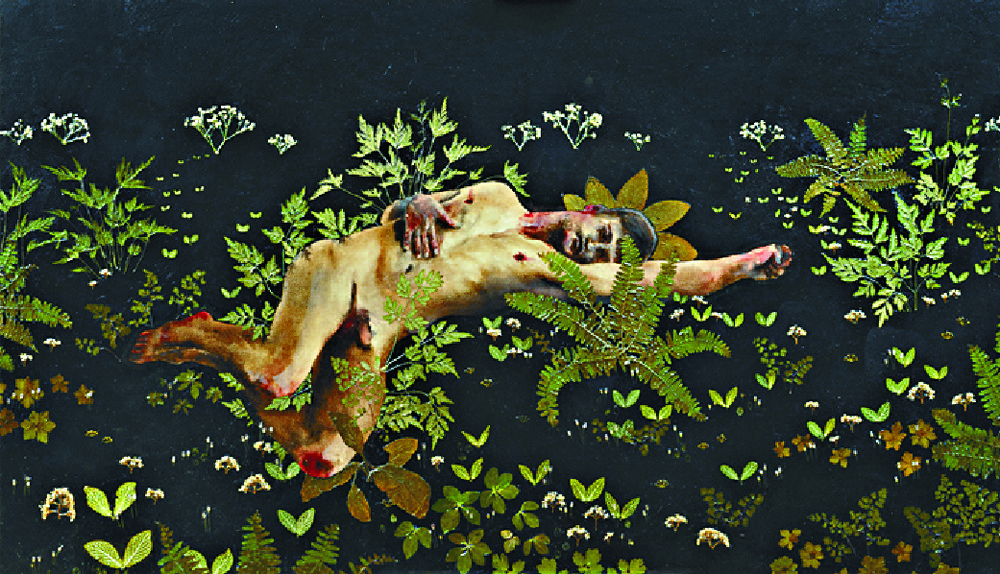
The paintings of the Netherlands-based Mexican artist Luis Xertu follows this line of questioning.
For Your Love shows an injured man with a clenched fist lying on a plant bed made of actual leaves in different stages of decay.
"The changing colors of the real plants are juxtaposed against the human subject, who is frozen in time. So, instead of being totally positive, can we hold on to the pain and historical injury in the gay and lesbian culture, as if at a standstill, and still fit into the identity and presentation as a queer?" asked Cheng.
Similar to the concepts in Xertu's paintings, Strange Fruit by the Taiwanese Tseng Chien-Ying takes another perspective on the marginalized theme within sexual minorities.
"The first thing people will notice will be the pretty gold branches," said Cheng. "But a closer look will show them that it is really a painting about torture - and maybe lead them to wonder: 'Could this be me?' "
It is a commentary on how the marginalized feel they need to overcome or ignore their trauma to fit in with the mainstream identity.
The umbrella term "queer" has a huge impact. Said Cheng: "The word has the biggest freedom in language as it covers many more people like the non-binary."
This is where the title, Retrograde, came from. It is used in astrology when planets take a different path from the main orbit, a departure from the norm.
And there is another recurring element that can be easily spotted: nature.
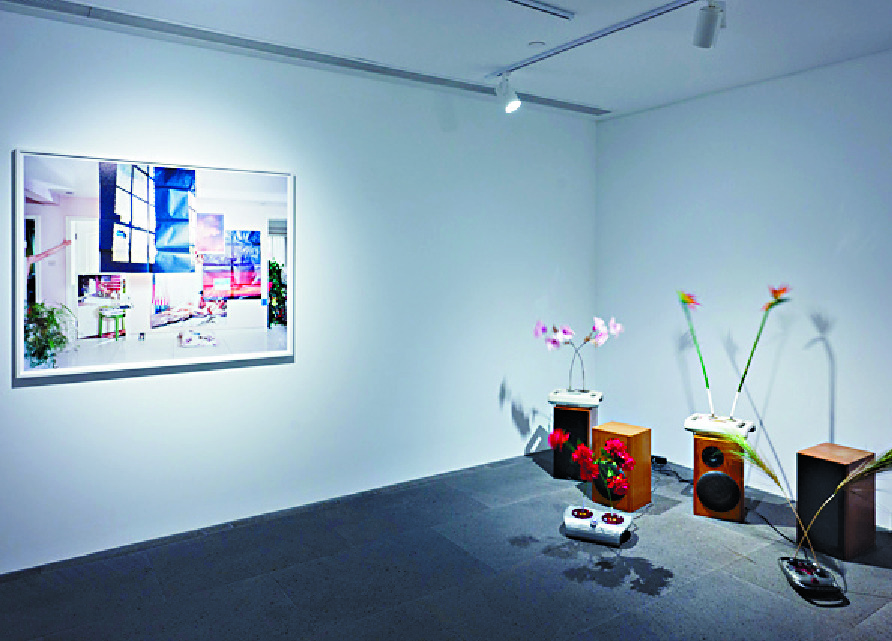
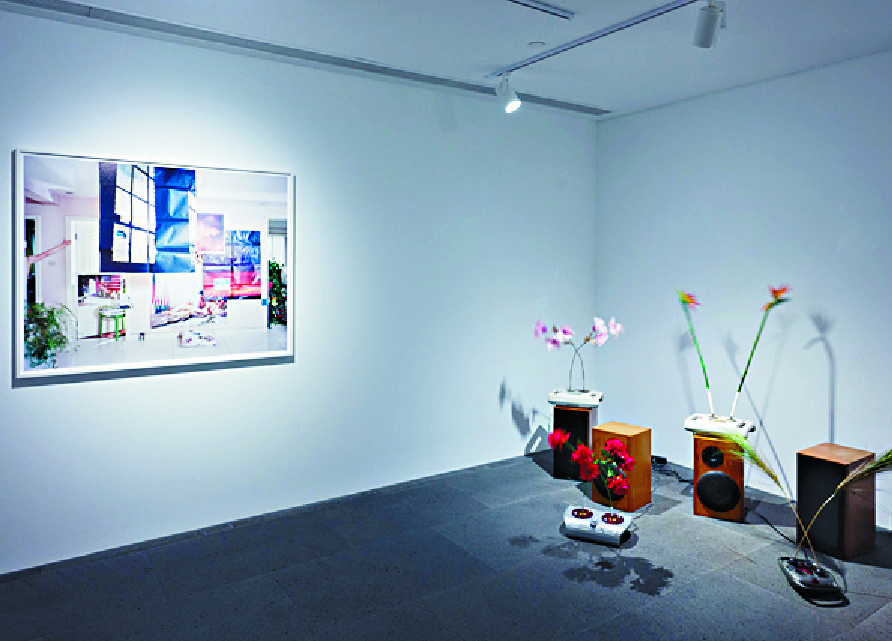
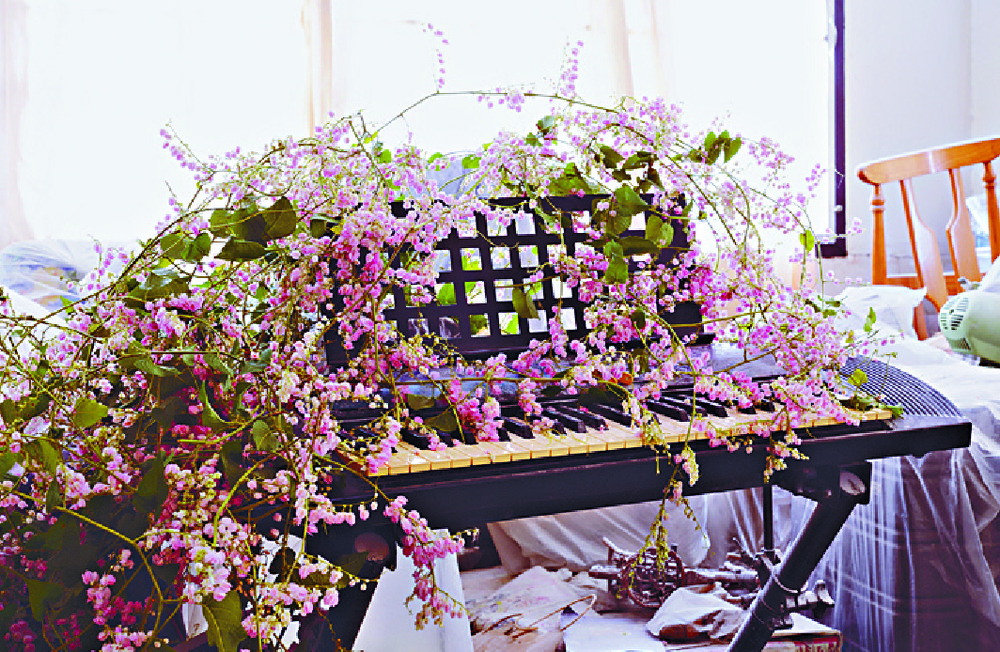
"In Thai artist Naraphat Sakarthornsap's photographs, for example, he uses floral language to express emotions which can't be described in words. In his other series, he considers the characteristics of species such as hermaphrodite plants," said Cheng.
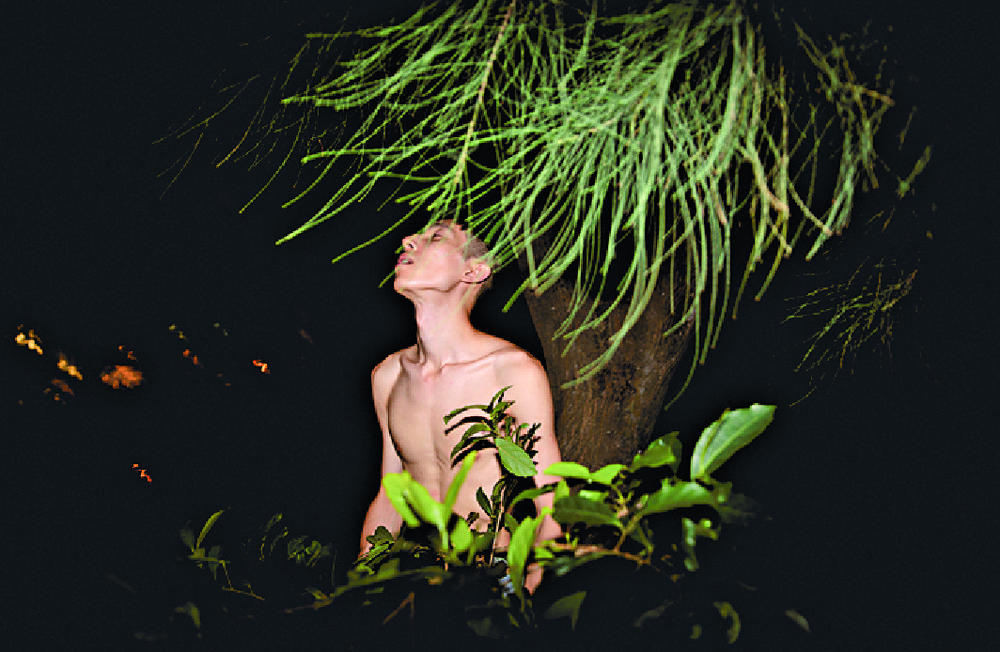
Local video director Green Mok takes images in public spaces like parks and children's playgrounds. He hopes to talk about the issue of space in his photos.
Dancing in the Dark, a selection of five photographs, show nearly nude male models in public spaces at night. They hint at the somehow "fragile and short-lived relationships of gay folks" found in gay cruising.
Cheng said: "Considering how public space is not totally public because of the regulations governing its usage, this questions how we can retrieve that right to use it."
Initially, Cheng was worried the exhibition would meet with criticism because of its subject matter but he was pleasantly surprised. "We may have underestimated our audiences' acceptance and level of understanding in Hong Kong. As long as we keep talking about topics like this, people, regardless of sexual identities, will come to understand instead of being discriminatory."Retrograde will be on show at Galerie Du Monde in Central until August 13.