Read More





The Death of Late Night? What Colbert’s Final Bow on May 21 Means for TV
18-05-2026 21:09 HKT

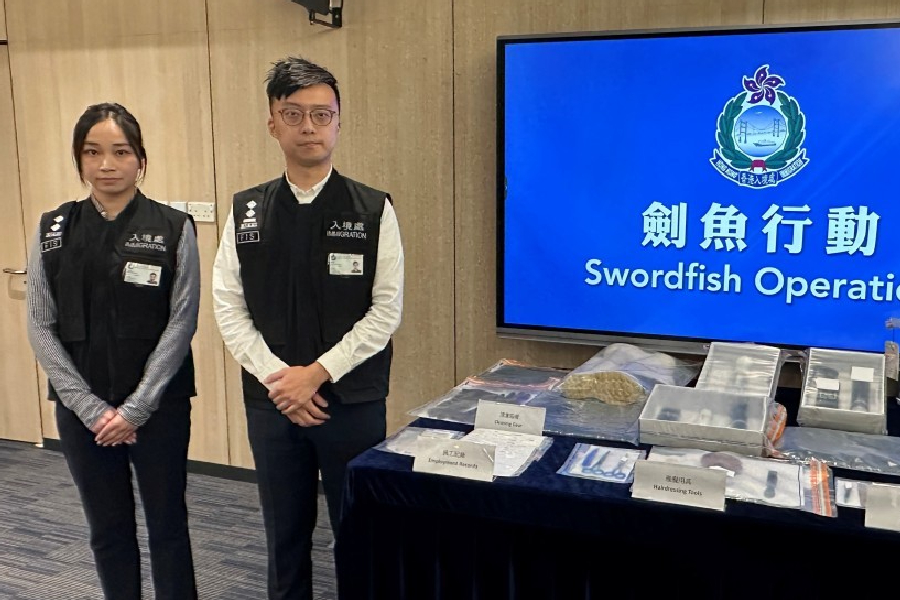
ImmD crackdown targets moonlighting domestic helpers arresting 17
19-05-2026 17:52 HKT
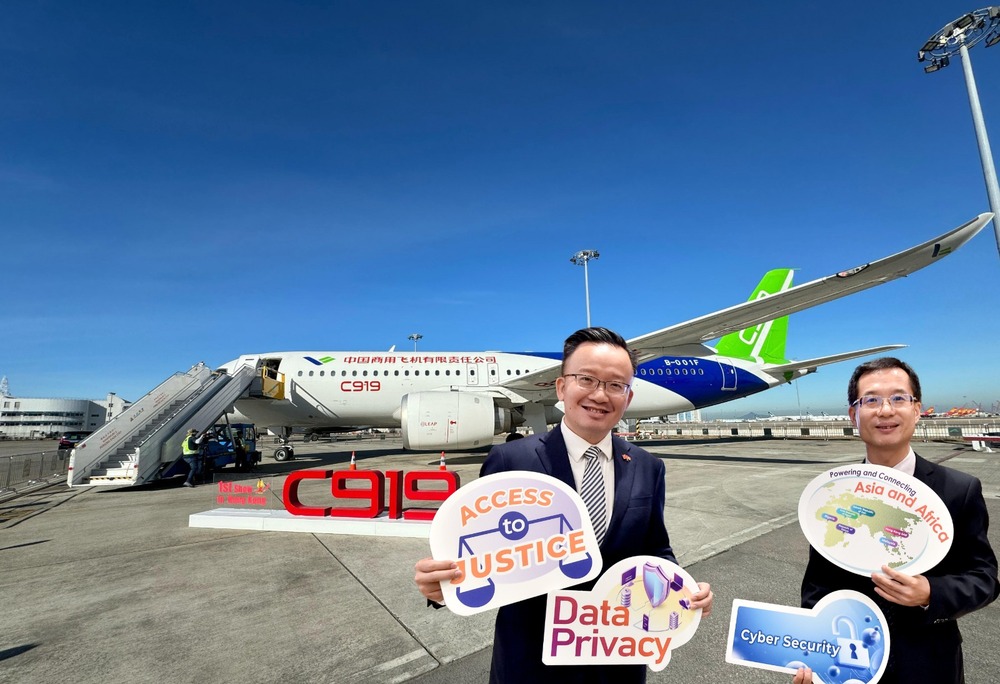
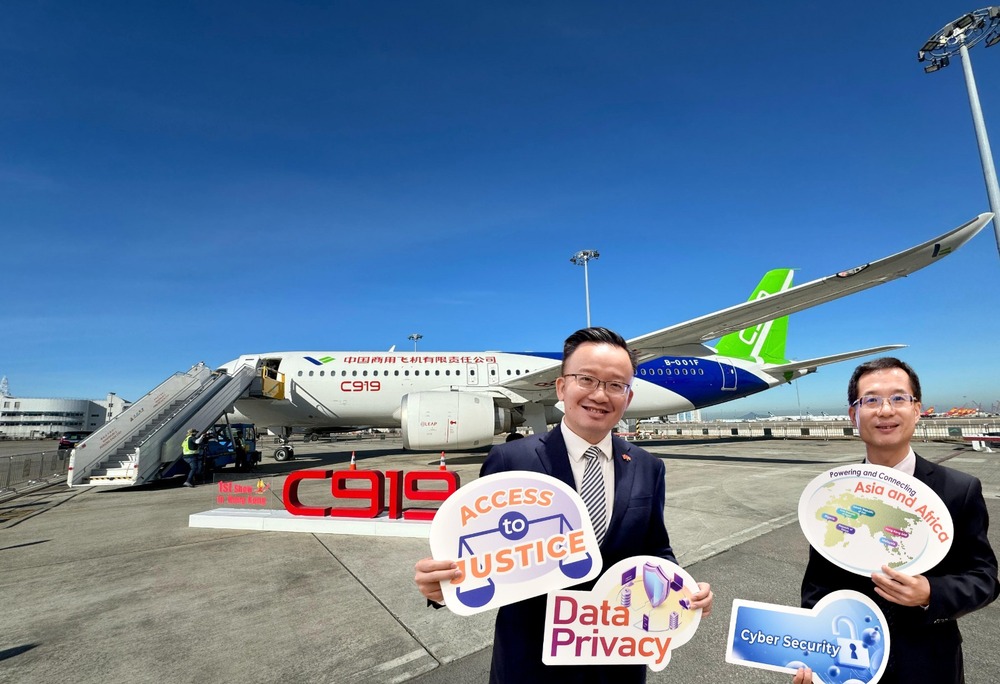
Hong Kong residents, the administration and even visitors gave China's space station resident taikonauts and the domestically-developed C919 and ARJ21 aircraft a heroes' welcome to share in the joy of many important breakthroughs!
The Belt and Road Initiative, including "Air Silk Road," involves collaboration by many countries.
Hong Kong, blessed with all the unique advantages of one country, two systems, is a strong contributor and benefactor, with China now ranked as the world's most innovative nation.
China-based researchers have filed more than 1.58 million patent applications last year, followed by the USA at over 500,000, and Japan at over 400,000.
The 20th national congress of the Communist Party is proposing to expedite China's development as an aerospace power and the 14th Five-Year Plan expressly supports the enhancement of Hong Kong's status as an aviation hub.
Businesses, scientists, aspiring space travelers and economies could leverage on launching from Hong Kong into the Air Silk Road.
Situated in the heart of Asia, Hong Kong is conveniently located, and often handles the largest numbers of cargoes and passengers, breaking many records.
Being a smart airport, Chek Lap Kok is recognized as "Asia's Leading Airport 2023" and "China's Leading Airport 2023," and, now that the third runway is operational, can handle 120 million travelers and 10 million tonnes of cargo.
Air Silk Road is more than just air travel and cargo transportation.
Outer-space activities also have the potential to positively impact daily lives.
During a recent discussion with Zhao Yun, a leading professor in international law and associate dean (mainland affairs)at the University of Hong Kong, it was noted that the Outer Space Treaty shares the view that extraterrestrial activities benefit all nations and that any country is free to explore the orbit and beyond. Having said that, the fact is not all countries have the resources and know-how.
China provides support to Belt and Road partners by offering satellite development and launch services.
For instance, LaoSat-1, a satellite exported from China, has enabled Laos to access crucial services like satellite communication, TV broadcasting, and wireless broadband, even in remote areas.
Such satellites have played a proactive role in communication, agriculture, and meteorology, benefiting other nationals and countries.
China's efforts extend beyond mere project implementation as it also transfers knowledge and does capacity building for Belt and Road partners.
For example, it conducts online training programs to assist countries such as Laos, Myanmar, Bangladesh and Pakistan in enhancing their climate-change capabilities through aerospace technology.
While scientists from non-participating countries are often excluded from accessing the International Space Station, which has cost over US$150 billion (HK$1.17 trillion) to build and operate, yet NASA plans to send it spiraling into the Pacific Ocean in 2031.
China takes a remarkably different approach, signing cooperation agreements with aerospace institutions and organizations, making its Tiangong space station the first in history to provide open access to all United Nations members, allowing scientists from any country to conduct experiments aboard it.
The commercialization of the industry is the next big frontier open to non-governmental involvement and contribution.
Hong Kong, being an aviation hub, has the potential to play a more significant role in this important undertaking.
Professional talents and services have always been its advantages.
In particular, Hong Kong has actively participated in assessment of the C919 and ARJ21 aircraft and training of crew members, making valuable contributions to national aviation development.
It can also provide high-quality supporting services to enterprises and economies that are part of Belt and Road.
These services include project financing, risk management, international law and dispute resolution, engineering construction, shipping logistics, innovative technologies, and more.
Zhao suggested the need for advancing the adoption of optional arbitration rules within the industry. In fact, the 61st annual session of Asian-African Legal Consultative Organization that took place in October has addressed the legal issues regarding outer space with all 47 member states, which together speaks for two thirds of the world's population.
AALCO Hong Kong Regional Arbitration Centre is a reputable dispute resolution center that resolves not only business-to-business and investor-state disputes but also investor-state disputes.
Established under international law, it maintains a neutral stance, ensuring fairness and impartiality in dispute resolution.
Moreover, with the AALCO disputes settlement system and assistance from regional courts, an arbitral award is easier to be enforced in all 47 AALCO member states and beyond, including Iran, which is not a party to the New York Convention.
Space travelers, space venturing companies, you are welcome to use the center's model arbitration clause for economic growth and to resolve disputes.