The small factories in the western Japanese city of Higashiosaka for decades fueled the thundering rise of the country's biggest brands, but a weak yen and rising costs have accelerated a slow decline and are reshaping industry.
Home to about 6,000 firms, 87 percent of which have fewer than 20 employees, the city is emblematic of how such forces are pushing
Japan's small manufacturers toward a tipping point.
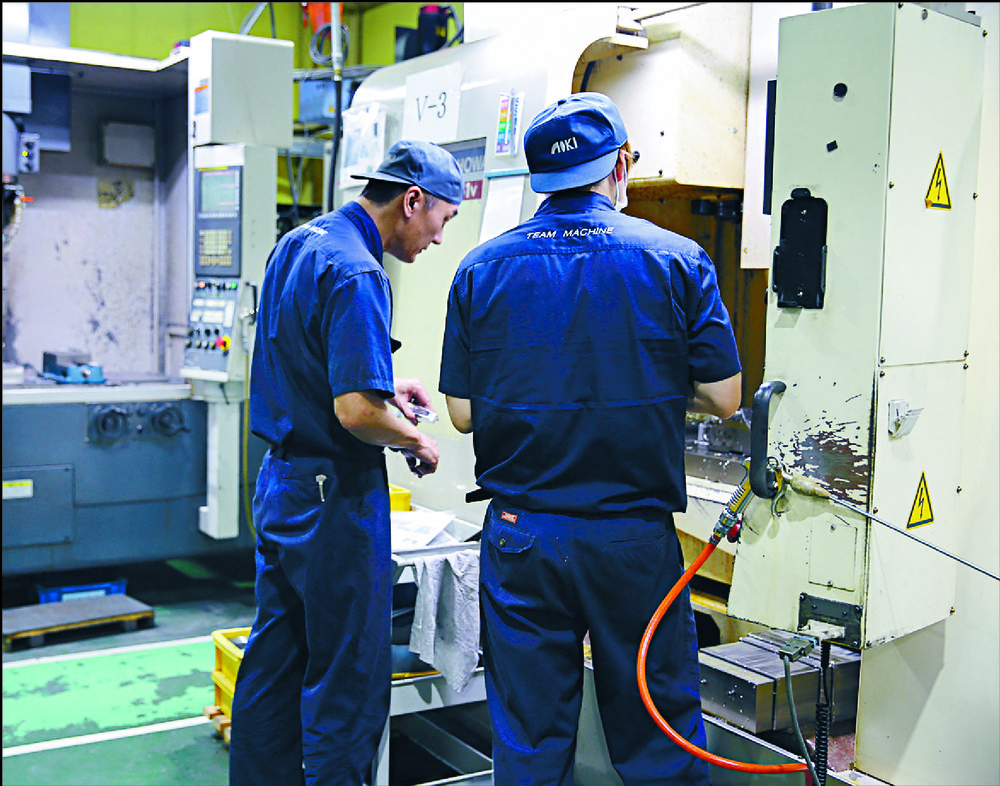
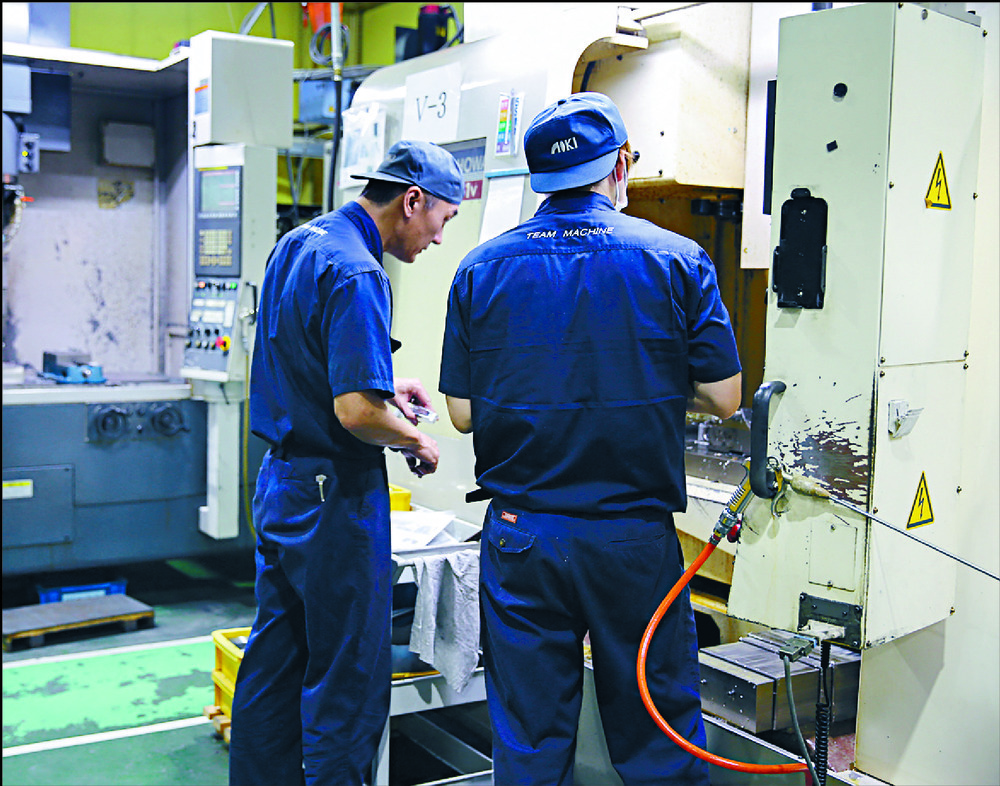
Workshops in Higashiosaka create metal components for everything from train seats to ballpoint pens and have long relied on powerhouses such as Sharp, Panasonic and Sanyo for orders.
Now Sanyo is gone, acquired by Panasonic. Work in general has dried up in recent years in the face of competition with South Korea and China, and when Taiwan's Foxconn acquired Sharp in 2016 it moved much of the company's manufacturing out of Japan.
The amalgam of issues Higashiosaka faces - aging population, offshoring, a sagging currency - mirror the problems chewing at the foundation of the world's third-largest economy and its global exports, which hit 83.1 trillion yen (HK$4.75 trillion) last year.
One factory in the city, aircraft component manufacturer Aoki, is moving into the food industry after being hit hard by the pandemic. Air drill parts maker Katsui Kogyo raised prices for the first time since it started business in 1967, and lampshade firm Seiko SCM scaled back production and is converting part of its headquarters to shared working space.
Says Hiroko Kusaba, chief executive of Seiko SCM: "We all believed the big brands would protect us, but that's just not the case any more."
The value of the yen has plummeted from about 115 to the US dollar in early March to more than 130 in August. And the pain of Covid lingers: 67 percent of small firms in Higashiosaka say they're still hurting.
For these companies weathering the economic storm isn't just about surviving but preserving the industrial ecosystem.
Small- and medium-sized enterprises account for 99.7 percent of companies and 68.8 percent of employment in Japan. But these same companies represented only 52.9 percent of the economy according to an official survey.
The region around Higashiosaka has a history as a manufacturing hub dating back hundreds of years. The city still has industrial enclaves where tiny factories are wedged between houses, hammering, sawing and shaping metal from early morning to dusk.
The mishmash of production has given rise to a sense of community, says Hirotomi Kojima, chief executive of Katsui Kogyo, the air drill company. That provides a crucial support network but also makes it difficult to pass along higher costs.
Kojima raised prices in October. But materials costs have soared since and he's hesitant to raise prices again, worried he may lose longtime customers.
Torn between protecting those ties or hurting his business, Kojima is seeking new clients for the first time in his 10 years as CEO.
He often visits Hironobu Yabumoto, a close friend who manages another air drill manufacturer. Although they are in competition they pass each other orders and share clients.
"We want the manufacturing industry and this culture to stay," Yabumoto says.
In the past 10 years or so Kusaba and Kojima have seen at least one factory close every year as aging owners die, fall ill or shut down heirless businesses.
The surviving companies are close knit.
Kusaba, CEO of Seiko SCM for 12 years and who's not from the city, says locals such as the baker and rice seller anchor her to the community.
That is why she's turning her own business on its head to protect her bottom line and help manufacturers in Higashiosaka.
In June she reduced the die-cast department of her company to three people from six and decreased the amount of machinery. In its place she is creating a co-working office space and a "shared factory," where users can pay for access to machines and resources that will cut fixed costs.
"The big brands, the big manufacturers - they've forsaken us," Kusaba says. "Now we need to communicate with the consumer directly. We only have ourselves to rely on."
Her decision means there will be more die-cast work for competitors, but Kusaba says that's better than seeing the entire industry fall into ruin.
Aoki, labelled "non-essential" during the pandemic, is trying to avoid being dragged down by an airline industry wrecked by Covid.
CEO Osamu Aoki has pegged his hopes on food manufacturing and is designing and building a machine that processes meat. For now, it sits in the Aoki factory as workers fine tune the device.
Although he predicts the food industry will provide more stability, Aoki is expecting his electricity bills to soar, which will require a 4 percent rise in revenue to cover.
Japan's manufacturing has traditionally been dependent on selling value-added products, in which a weak yen boosts profits. But that no longer seems true, Aoki says. "It's now time to re-evaluate."