Read More







The Death of Late Night? What Colbert’s Final Bow on May 21 Means for TV
18-05-2026 21:09 HKT



ImmD crackdown targets moonlighting domestic helpers arresting 17
19-05-2026 17:52 HKT

Recent uncontrolled inflation has sparked fears of a return of the 1970s' malaise.
Naturally the market is worried about a prolonged stagflation ahead.
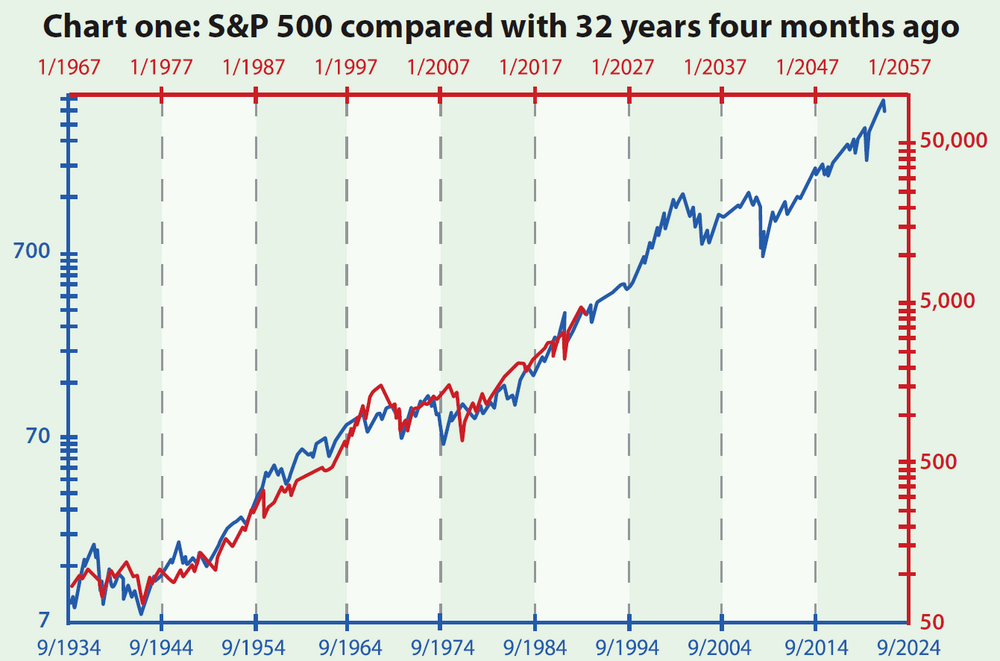
If you recall, the US stock market, as measured by the S&P 500, was bound in a 60-120 point range for more than 15 years from the mid-1960s to the early 1980s.
However, we are definitely facing a different scenario now.
By 1973 and 1974, when inflation skyrocketed, like now, the US Federal Reserve raised interest rates roughly in line with but still ahead of inflation.
By then, the jobless rate was already edging up. However, interest and unemployment rates are low at the current time.
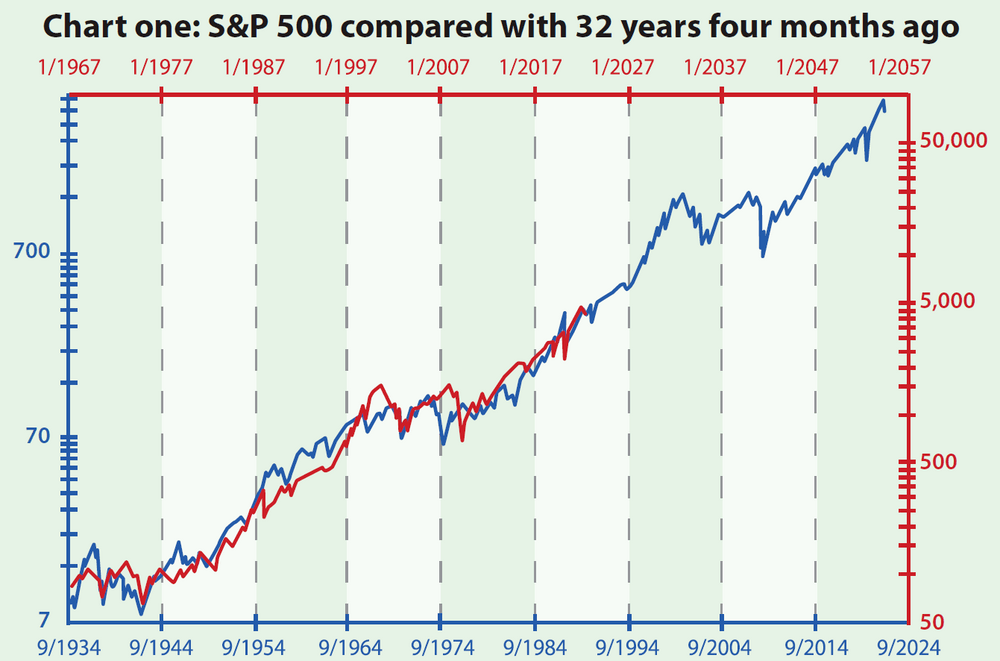
The current inflation trend may be quite similar to that of 1974, but the stock market is more like that of 1990, or 32 years four months ago, as chart one shows.
There was a US savings and loans crisis then and a mild eight-month recession followed. The market correction was gentle.
However, will the stock market enjoy a second half of a secular bull market, like in the 1980s to the 1990s?
The backdrop of that bull run was a prolonged rate cut from 20 percent all the way down to just 1 percent.
Now it is more like the reverse.
Yet cheap production may be achieved not by low rates but by tech advancements.
While the secular bull is partly driven by inflation, economic growth may not be high.
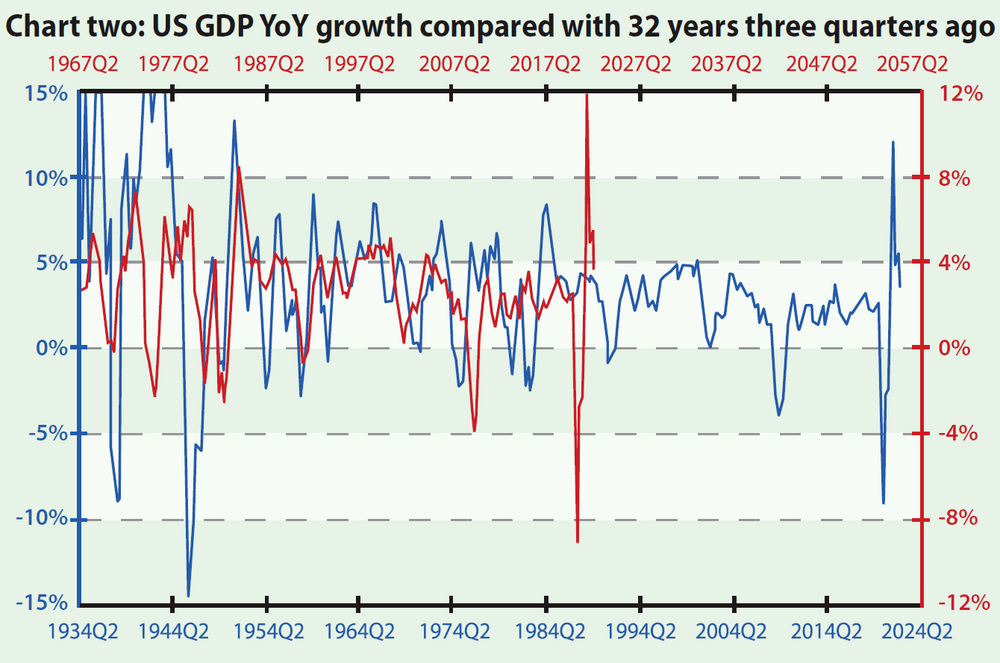
The trend growth in the 1980s and the 90s was lower than in the 60s and 70s as chart two shows, despite the stock market performing better in the later period than the earlier one.
The shift of secondary industry to a tertiary one explains this because unlike the production of goods, the provision of services is never on a massive scale. But when services migrate from man-made to robotic ones, then costs are saved and earnings and hence the stock index will improve.
Believe it or or not, it seems possible the history of a secular bull with low-trend growth is repeating itself.
Law Ka-chung has worked in the financial industry and the government for two decades. Reach him at mewe.com/join/lawkachung, facebook.com/kc.economist, lawkachung@gmail.com