The aviation industry is an economy in itself, encompassing a massive workforce and contributing a significant percentage to world trade. Here, the sector supports 88,000 jobs and HK$156 billion of GDP, according Oxford Economics in 2018.
Around 78,000 people work at the airport, which covers an area of 1,255 hectares. Another 650 hectares of reclaimed land in the north of the airport island are being commissioned for a third runway.
Effective airport operations involve the safe and secure management of millions of physical and digital assets across multiple stakeholders, not to mention the lives of travelers. Recent technological developments mean that new “smart” airports can be safer and more efficient.
Smart airports are ones that rely on the use of enabling technologies such as IoT devices, edge computing, AI and digital twin creation to perform business-critical planning and operations tasks. These tools should, for example, optimize passenger flows and the ground operations.
I wrote last year about the greater bandwidth, massive connectivity and low latency that 5G promises. The network reliability with remarkably faster response time and capability to process immense amounts of data are ideal features to support airports, particularly for efficient takeoff and landing management.
Private 5G is particularly relevant here. It refers to a network that is technically the same as a public one, but which gives the owner full control to provide priority access or licensing for its wireless spectrum.
Private networks are faster, more secure and provide greater targeted coverage than Wi-Fi or other network technologies. This means there are at least two key possible advantages.
First, 5G may enable quicker and smoother airport ground operations.
From the autonomous airfield to the autonomous terminal, airport staff and service providers could carry out work and monitor operations remotely via a reliable 5G network. As a result, operational issues could be identified in real-time and with seamless coverage, better than 4G or Wi-Fi.
Cloud-based video analytics and AI are adopted in monitoring operational areas such as docking and runway inspection.
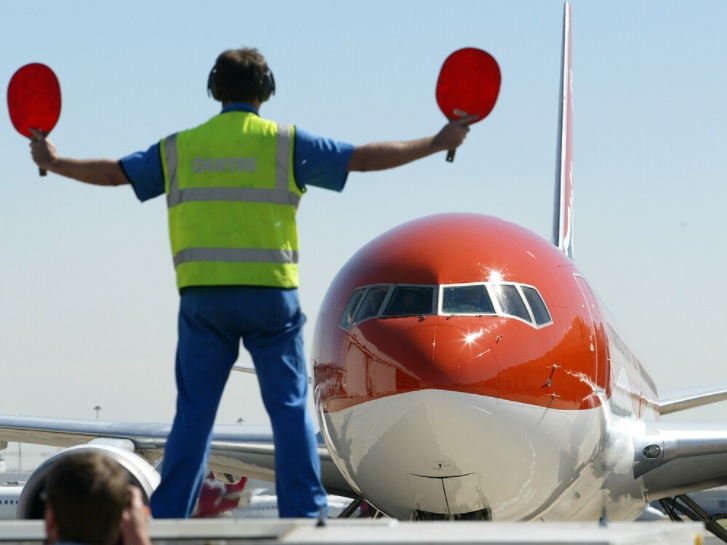
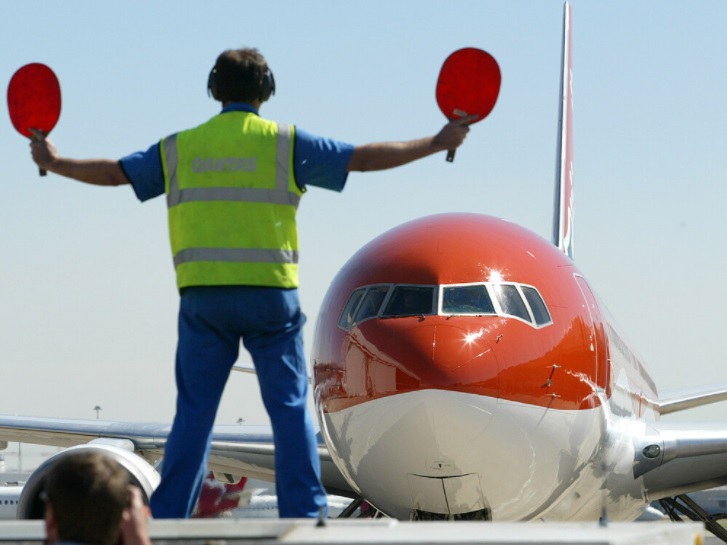
Going one step further, having integrated with 5G, aerobridge docking could be done without marshallers to stand by physically at parking stands.
5G’s massive data handling capability and ultralow latency allow 4K high quality footage captured to be transmitted and analyzed in real-time without time lag.
Marshallers could stay at an integrated remote control center and immediately notify pilots of any intrusion or hazard identified from real-time 4K footage.
In the near future with a reliable 5G network, smart airports can witness the actual implementation of a virtual air traffic control tower that could fully automate core operations for air traffic control.
Next, passenger experiences may also be enhanced.
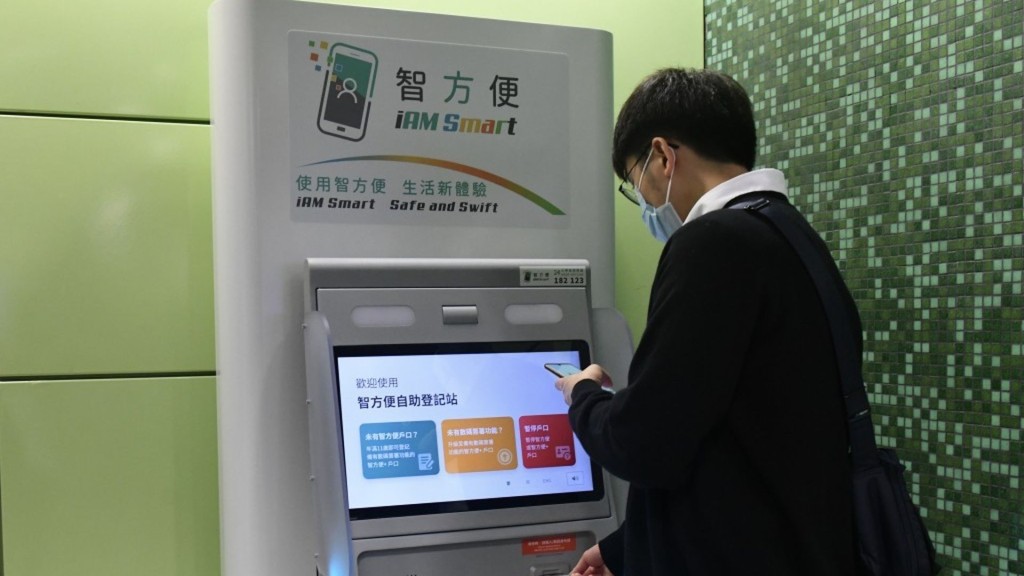
The passenger journey process is twice as long today as it was before Covid-19. 5G-empowered safe and seamless travel solutions such as facial recognition, automatic fever detection, contactless check-in and digital vaccine passports will help airports and airlines manage Covid-era regulations.
5G also facilitates big data analysis and passenger flow forecasts. Its capability in processing massive data can be used in a way that reduces congestion, for example by devising the optimal boarding order based on real-time passenger data.
To create slicker in-terminal travel experience, robotics could be adopted with a 5G network in services such as delivery of goods purchased, food and beverages before boarding.
With increasing indoor robotics and IoT use, smart airports can develop an in-terminal vehicle-to-everything ecosystem, in which indoor vehicles, robotics and thousands of devices are connected and communicate in real-time.
5G can also create enhanced services for passengers with special needs. For example, there could be remotely controlled wheelchair or cart transport.
To achieve these, private 5G will enable the emergent requirements for connectivity, flexibility and resiliency in smart airports of the post-pandemic world.
Dr Jolly Wong is a policy fellow at the Centre for Science and Policy, University of Cambridge
A passenger plane flies near downtown Arlington, Virginia, last month.