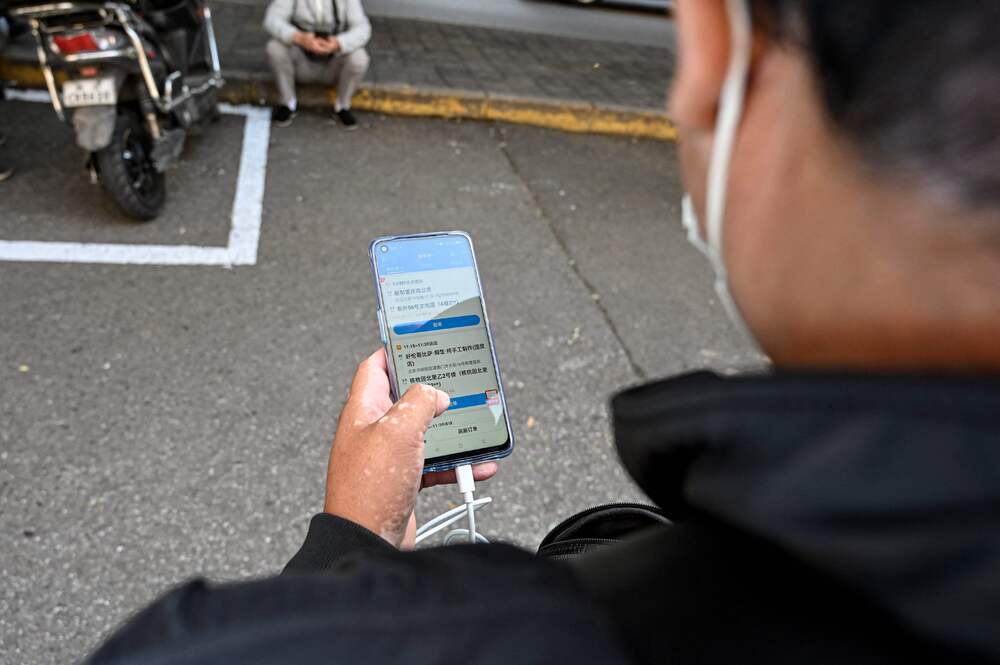
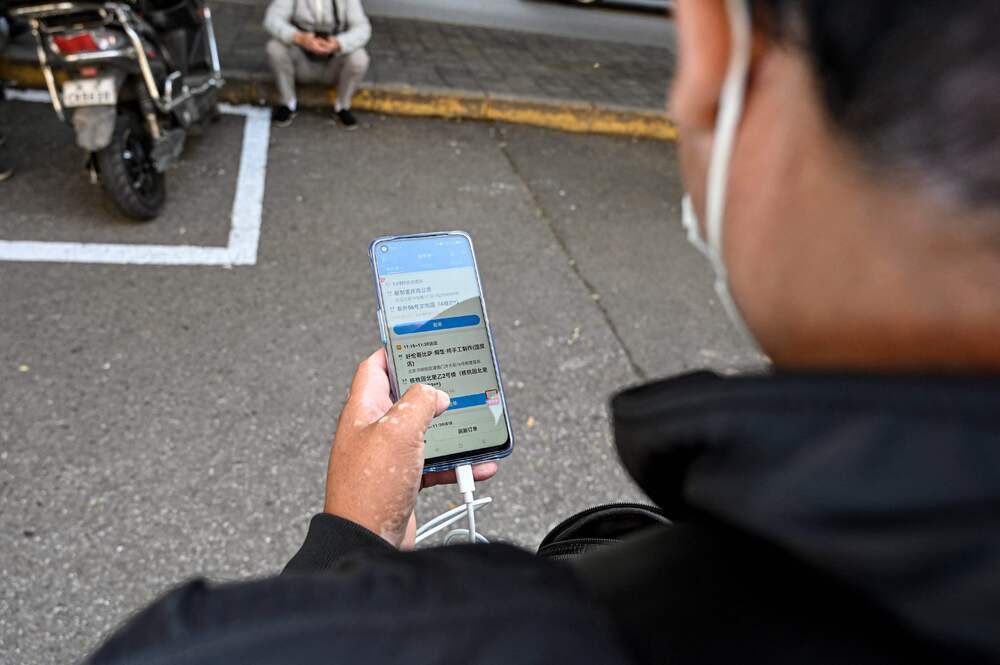
Handing over a hot meal at exactly the time promised, food delivery rider Zhuang Zhenhua triumphantly taps his job as complete through the Meituan app - and is immediately fined half of his earnings.
A glitch has registered him as being late, so he incurred an automatic penalty - one of many ways, Zhuang says, mainland delivery firms exploit millions of workers even as the sector booms.
Authorities have launched a crackdown, demanding firms including Meituan and Alibaba's Ele.me to ensure basic labor protections such as proper compensation and insurance, as well as tackling algorithms that effectively encourage dangerous driving.
But more than a dozen riders say there has been little change on the ground.
Often the only way to complete orders on time is to "go really fast - speed past red lights, drive on the wrong side of the road," Zhuang says. "At the beginning [the app allocated] 40 to 50 minutes to complete an order. Now for an order within a distance of two kilometers with the same distance and time as before we are given 30 minutes."
The coronavirus and lockdowns sent demand for meal delivery services soaring: the sector is now worth 664 billion yuan (HK$805 billion), according to the China Hospitality Association.
The nation's competitive app-based services have expanded into nearly every aspect of modern life, with digital-savvy consumers used to instantaneous service and fast delivery due to a ready flow of cheap labor. Most riders are migrant workers.
But after years of unrestricted growth, big tech is coming under fire from Beijing, with Tencent, Didi and Meituan all targeted over anti-monopoly rules.
There is mounting public concern over the amount of data handled by popular apps, including food delivery platforms, and authorities have directed the cyberspace watchdog to look at how algorithms are used by tech conglomerates.
Shortened delivery times have also caused more accidents in recent years, amid promises of swift service.
Globally, the sector is facing scrutiny over its treatment of predominantly freelance workers, who endure low pay, few employee rights, and are often hired through agencies to avoid providing benefits.
China's gig economy now accounts for almost one quarter of its workforce - 200 million people are in "flexible employment," according to government figures.
The plight of food delivery and truck drivers caught public attention after little compensation was offered to the family of a courier who died delivering meals for Ele.me in Beijing, and a second set himself on fire in a dispute with the firm over pay.
Despite being hailed as an essential service, particularly at the height of the pandemic, riders earn just 7,700 yuan a month on average.
Zhuang says many feel they are putting their lives at risk because of algorithms used by apps to determine a route and travel time allowed before drivers incur a "late delivery" penalty.
Another rider, Liu, 40, says allocated delivery time includes the period it takes for food to be prepared - something beyond his control but that can impact his pay.
"If there are delays riders take the blame," he says, adding that the system makes it hard to reject orders from slow merchants.
"It's useless to complain," says rider Chen Mingqiang, 50.
Meituan, with more than 628 million users, calculates the time needed for a journey in four ways and allocates the longest from those options and includes a buffer.
In a statement, the firm insists such decisions are made "considering rider safety as the first priority and to satisfy consumers' needs" and riders can contest unfair fines.
Last month, after China's cyberspace regulator outlined plans for tighter controls on tech companies, Meituan said it would optimize its "algorithm strategy" and roll out greater allowances to help couriers avoid dangerous work conditions.
Kendra Schaefer, at Beijing-based consultancy Trivium, says a lack of transparency on how platforms are coded to determine rider requirements and compensation is a serious issue.
"An algorithm is intended to maximize efficiency," she says.
"Unfortunately, we're finding that as society modernizes algorithms maximize efficiency at the expense of humans.
"Everybody wants drivers to get treated better, but nobody wants to pay for it."
Zhuang Zhenhua is put through his paces during a delivery.