Read More







The Death of Late Night? What Colbert’s Final Bow on May 21 Means for TV
18-05-2026 21:09 HKT


ImmD crackdown targets moonlighting domestic helpers arresting 17
19-05-2026 17:52 HKT
Astronauts from Japan, Russia, the United States and Europe held a pizza party aboard the International Space Station, celebrating the birthday of one of their number. But an era of multinational cooperation in orbit is fast drawing to a close, to be replaced by new international rivalry.
Summer 2021 has seen a significant worsening in relations between US space agency NASA and Russia's Roscosmos.
On August 12, a Russian report accused an American astronaut of sabotaging the International Space Station - swiftly denied by NASA.
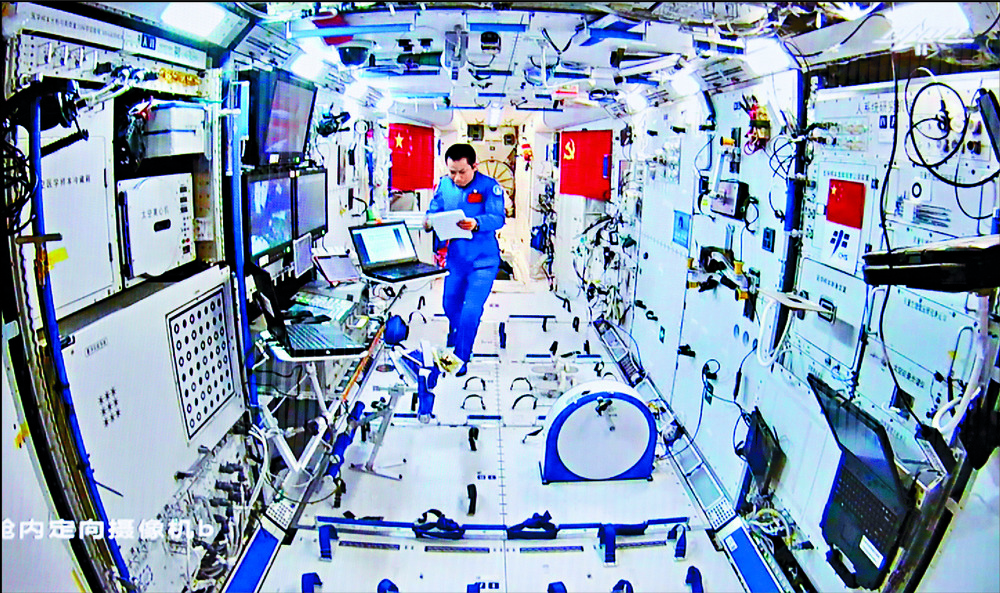
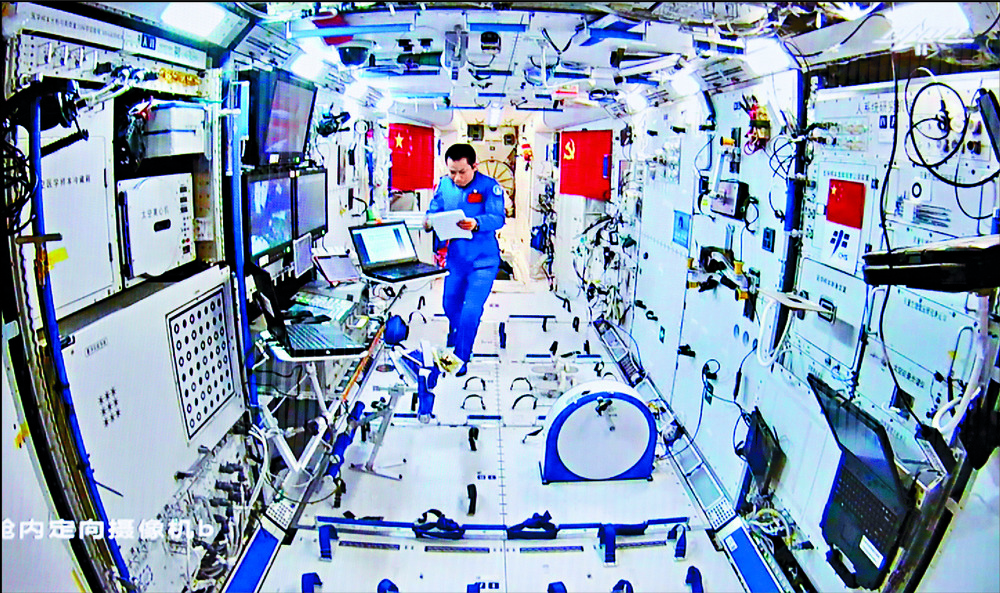
China, banned from cooperating with the ISS and NASA by a 2011 US congressional edict, is pushing rapidly ahead with its own space station in low Earth orbit, with three Chinese astronauts on an orbital mission that concludes this month.
Russia and China have signed a memorandum to work together on a moon base, though the dates for a mission remain unclear.
NASA's Artemis 1 - its largest rocket since the Apollo program - blasts off soon to test the systems the United States hopes will send its astronauts back to the moon by 2023 - another sign of a new Cold War-style space race.
Compared to that historic rivalry, however, the new competition is more complex.
It includes many more players, among them private companies, and ranges from electronic warfare and anti-satellite weapons in low-Earth orbit to what may be the early stages of a battle to colonize the solar system, particularly Mars.
In near-Earth orbit, experts say countries are taking a new interest in the military use of space, for example founding organizations such as the US Space Force.
Last July, the United States and Britain accused Russia of testing an anti-satellite weapon after a Russian satellite neared a US counterpart.
Washington and its allies have long argued against the military use of space, warning that incidents such as 2007's destruction of a defunct Chinese satellite by a rocket fired from Earth risk creating catastrophic levels of space debris.
However, reports are that the United States is now considering declassifying its own anti-satellite capabilities, a sign that Washington may now believe an arms race cannot be avoided.
Both the United States and China have sent and operated probes to Mars this year, with China's Zhurong rover operating there continuously for the past three months. The more sophisticated NASA Perseverance has been active since February, including deploying a small experimental helicopter. Both were presented as reconnaissance for long-term manned missions, although these may be decades in the future.
China in particular has much longer-term goals. Last week, Beijing highlighted a National Natural Science Foundation of China report calling for the country to explore the manufacture of vast space platforms, assembled in orbit and a kilometer or more in length, or 10 times the size of the ISS.
Such a feat would require overcoming massive technical challenges, but studying the feasibility of the project is to be part of Beijing's 2021-25 economic plan.
China's current space station may find itself the only manned platform in orbit if the ISS's life cannot be extended. Russia has just said one of its modules on the station was showing cracks that would worsen over time. It has also warned of a potential avalanche of equipment failures as soon as 2025.
While the United States has agreements with European and Asian allies to cooperate on its Artemis program, China is also reaching out to other nations and may collaborate with Russia.
American and Russian space authorities and media have been in a growing war of words in recent months.
In July, US media ran stories questioning the competence of Russia's space program after rockets on a Russian module activated, apparently spontaneously, shortly after its arrival at the station.
The United States was left dependent on Russia to get astronauts to and from the ISS following the termination of its shuttle program in 2011, but last year it resumed its own manned spaceflight. Relations have since deteriorated further, even as Moscow has moved closer to other emerging space powers such as India and the United Arab Emirates, hosting training for astronauts.
These alliances are important - another reason the United States is striking deals with allies to join in with Artemis.
The international battle for control of space is only just beginning.
REUTERS