Continuing with my theme on competitive sports and their relationship to technology, I turn to the theory of aerodynamics in cycle racing.
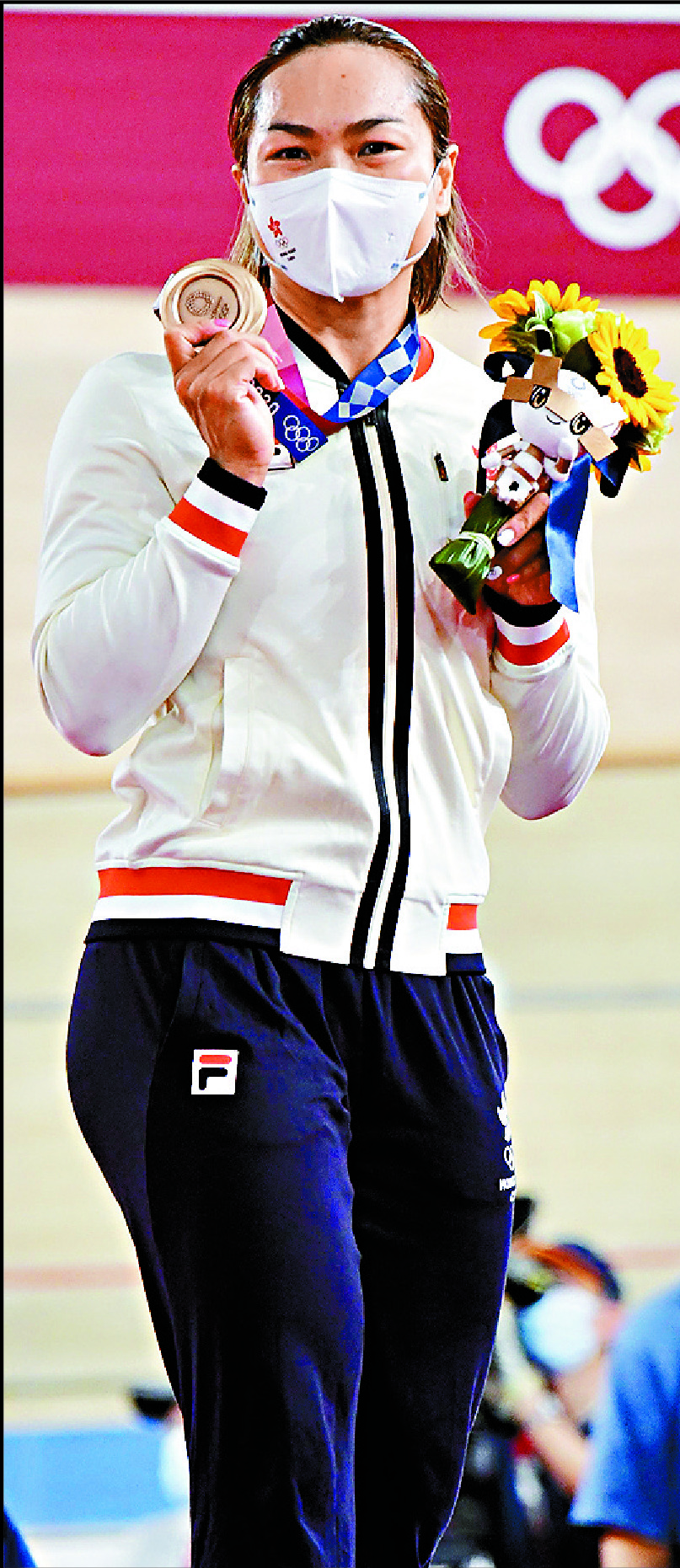
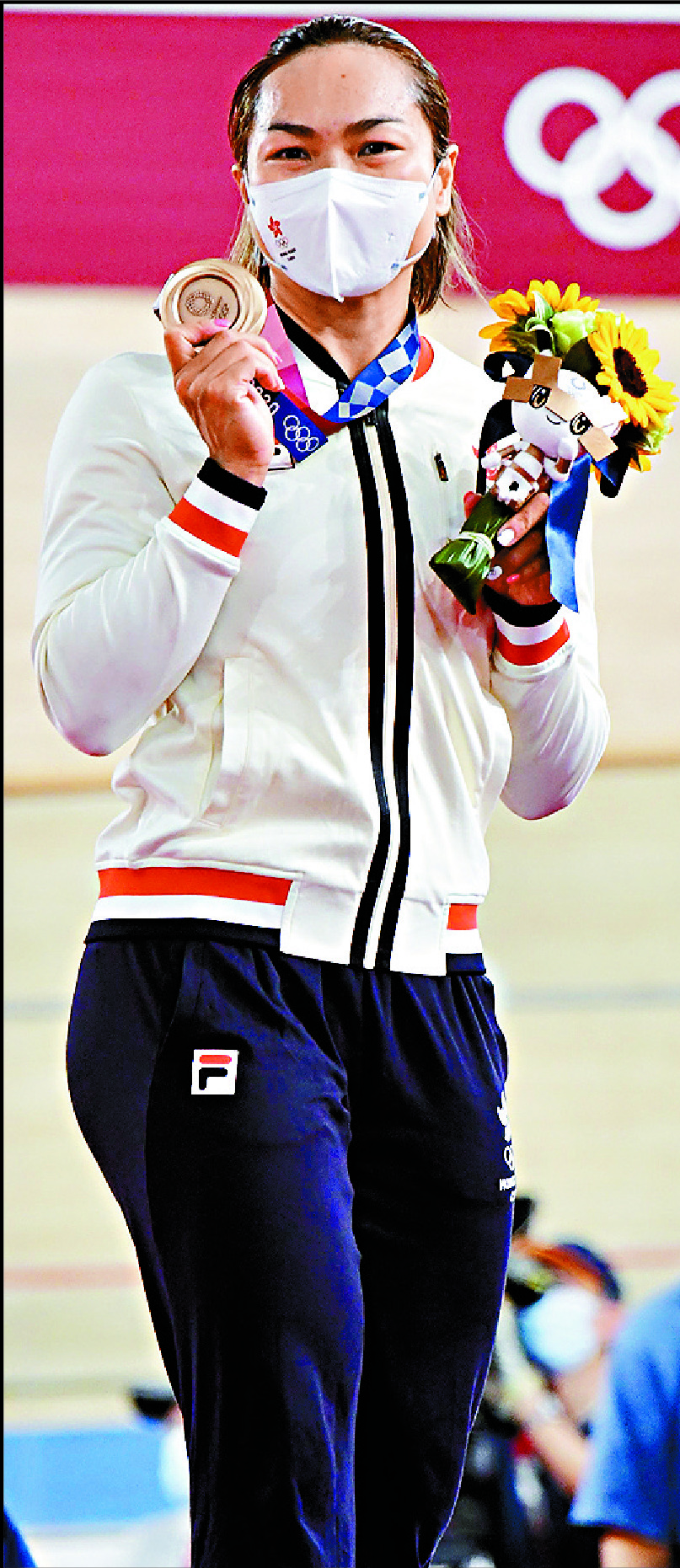
We saw how Sarah Lee Wai-sze snatched a bronze medal from a key competitor in Olympics cycling by slipstreaming behind her at high speed and then pulling out to move ahead and accelerate to the finishing line.
Lightness and minimum air drag are key winning features of cycle racing.
The effect of weight is felt to a greater extent at low speeds, but at higher speeds it is air drag - or the lack of it - that becomes more significant.
A slipstreaming technique is very common in motor racing.
The theory is that at high speeds, machines cut through the air and create an air stream.
Immediately behind, a low-pressure area is created as the air rushing past the surface of the machine cannot return quickly enough to occupy the space and a partial vacuum is created.
By staying behind this low-pressure area, the energy required by another machine to maintain running speed is greatly reduced, and some effort can be saved for a higher acceleration rate later to overtake an opponent.
Although bicycles go at speeds far below that of a racing car (typically 50 kmh compared to 100-200 kmh), the lighter weight of a bicycle allows for a faster acceleration rate.
Sarah Lee is an expert in applying such techniques to pull ahead near a finish, and this proved successful once again in Tokyo.
Naturally, a racing bicycle employs state-of-the-art design, with a carbon fiber frame for lightness and strength and a narrow cross-section to minimize air resistance.
Fairings over the front wheel cover the spokes to minimize disruption of airflow path at high speed, but the rear wheels are not covered so any eddy currents of air created behind the bicycle would not affect the performance of the machine and may even break the streamlining airflow, negating any advantage to following cyclists.
The overall width of a cycle, with the rider on board, is also limited by the size of the human body, so there is no particular need to build it narrower for speed.
Cyclists' helmets are also designed for maximum lightness and air drag.
Notice too the clothing riders use in a race.
Not only does it fit a cyclist like a body stocking, but the surface of the material is very smooth so that air drag is reduced significantly.
In cases where narrow wins are often observed, every little bit of air drag saved can mean a bicycle length of a lead in a short-distance race.
The increasingly common use of wind tunnels to fine tune airstream patterns and drag values helps refine designs of a cycle, helmet and clothing, and wider use of such facilities combined with aerodynamics analyses finds the best posture for a rider to achieve the best performance.
As in other competitive sports, cycle racing depends not only on training but also on use of technology.
When applied effectively, they give the athletes a winning edge.
Engineers are proud to play a vital role in every aspect of life, including competitive sports, to improve performance, enhance safety and to provide comfort for all.
Veteran engineer Edmund Leung Kwong-ho casts an expert eye over cycle race techniques
Sarah Lee keeps an eye on Germany's Emma Hinze in the race for the finish line and the Olympic bronze after passing her. Far left: Lee with her bronze.