Read More





The magic of Yann Arthus-Bertrand | La Vie en Rose | Joanne Chan
24-09-2026 05:20 HKT



Why HKIA's ground transport experience matters | Fongmula | Francis Fong
22-09-2026 02:34 HKT



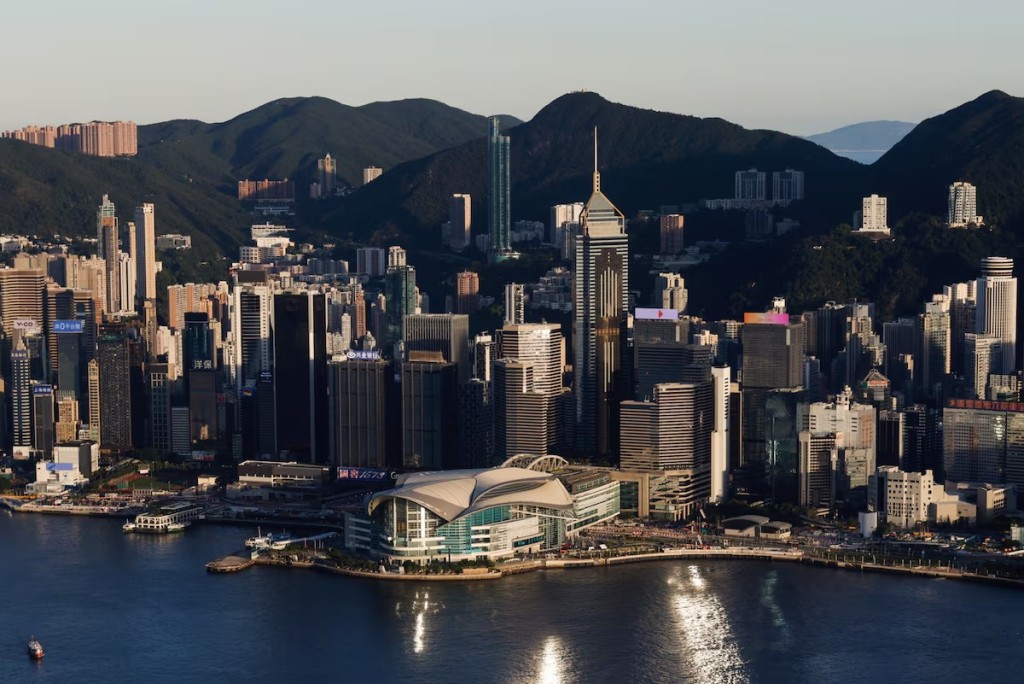
When the Legislative Council passed my motion "Developing a Strategic Tax Regime to Consolidate Hong Kong’s Status as an International Financial Centre" on 27 May 2026, few realized it would trigger a paradigm shift in how Hong Kong competes for global capital. Recently, the Government submitted a progress report of July 2026, revealing something far more consequential than a routine policy update: Hong Kong is quietly engineering a paradigm shift, from competing on tax rates alone to competing on tax certainty, substance, and strategic alignment.
For international investors, this shift matters more than any single concession rate.
The global tax landscape changed irrevocably since 1 January 2025, when Hong Kong implemented the OECD's BEPS 2.0 global minimum tax of 15 percent and the Hong Kong Minimum Top-up Tax. For in-scope multinational enterprise groups—those with annual consolidated revenue of Euro 750 million or above in at least two of the four preceding fiscal years, this indicates the era of jurisdiction-shopping for the lowest nominal rate is over.
This is not a threat to Hong Kong; it is an opportunity. Official assessments confirm that Hong Kong's tax policy competitiveness has ranked No. 1 globally for two consecutive years in the IMD World Competitiveness Yearbook 2026, while Hong Kong's overall competitiveness rose to second globally—its third consecutive year of improvement.
In a world where the nominal rate is effectively floored at 15 percent, what differentiates jurisdictions is no longer the headline rate but the quality of the tax regime: predictability, administrative sophistication, alignment with substantive economic activity, and integration with the real economy. This is precisely where Hong Kong's strategic tax regime is being architected.
So what exactly does this new approach look like? The Government's tax policy framework provides the answer. The framework articulates guiding principles that signal a maturity rarely seen. First and foremost, Hong Kong should preserve the simple and low tax regime as a fundamental edge. Further, prudent management of public finance is essential, particularly given that profits tax accounts for approximately 32 percent of government operating revenue in 2025-26. From a strategic perspective, the effectiveness of tax concessions ensures economic gains commensurate with revenue loss.
The principle of full compliance with international tax obligations under OECD and EU frameworks deserves particular investor attention. Hong Kong's preferential regimes are deliberately designed to avoid "ring-fencing" (i.e., restricting benefits to non-residents), to ensure non-negotiable and consistently applied concessionary rates, to require substantial economic activity, and to maintain full transparency. This is not bureaucratic box-ticking but a reputation safeguard that protects Hong Kong-based enterprises from defensive measures by other jurisdictions.
The OECD introduced the ‘Side-by-Side’ package in early 2026, allowing in-scope MNE groups to treat qualified tax incentives as additions to adjusted covered tax, thereby potentially eliminating or reducing top-up tax burdens. Hong Kong is actively assessing how to leverage this to maintain competitiveness. This is strategic thinking at its finest.
The headline investor takeaway from the 2026-27 Budget is the Government's commitment to introduce, within 2026, an amendment bill for a preferential policy package offering half-rate or 5 percent concessionary tax rates to attract high-value-added industries and high-potential enterprises. These rates will apply to eligible enterprises setting up in the Northern Metropolis and other areas.
This is not a blunt instrument. The policy framework clarifies that these new incentives will complement rather than replace existing preferential regimes. Enterprises fulfilling stipulated requirements may still access sector-specific concessions under the Inland Revenue Ordinance. The new package places "greater emphasis on flexibility in execution and enterprises' economic or technological contributions to Hong Kong".
For multinational enterprises evaluating Asian headquarters locations, this creates a total tax cost advantage that—when combined with Hong Kong's simple tax base, absence of capital gains tax, and extensive double taxation treaty network—rivals or exceeds competing hubs in Singapore, the UAE, and beyond.
Where Singapore offers headline concessionary rates of 5–10 percent for its corporate treasury and fund regimes, Hong Kong's combination of a simpler tax base, no capital gains tax, no VAT, and now a binding five-year pre-approval mechanism creates a superior total effective tax cost proposition for most MNE structures.
Beyond the headline 5 percent rate, the Government has taken decisive legislative action to reinforce Hong Kong's position as the world's leading asset and wealth management centre. The Inland Revenue (Amendment) (Preferential Tax Regimes for Funds, Family-owned Investment Holding Vehicles and Carried Interest) Bill 2026, introduced into the Legislative Council on 24 June 2026, represents the most comprehensive overhaul of Hong Kong's fund tax regime since 2019.
The Bill addresses longstanding industry pain points with surgical precision, directly targeting ultra-high-net-worth families seeking bespoke investment structures. Equally significant is the introduction of an economic substance requirement that aligns Hong Kong with OECD standards against harmful tax practices while ensuring that tax concessions reward genuine economic commitment. These amendments send a powerful signal: Hong Kong is not merely maintaining its lead in asset management but it is actively redesigning its tax architecture to capture the next wave of global capital flows.
Nowhere is the strategic evolution more evident than in the proposed revamp of the corporate treasury centre (CTC) tax concession regime. The 8.25 percent concessionary rate (half of the standard 16.5 percent) existing regime has already demonstrated tangible success by over 900 successful claims up to year of assessment 2024/25, with the number of CTCs in Hong Kong growing from about 200 in end-2014 to about 500 in end-2024.
But the proposed two-tier regime announced on 27 July 2026 by Financial Services and the Treasury Bureau (FSTB) and the Inland Revenue Department (IRD) represents a quantum leap. Tier 1 refines the existing regime by allowing deferral of interest deduction claims, expanding deduction scope to broader corporate treasury activities, and clarifying substantial activity requirements (an illustrative threshold of at least two professional staff and at least HK$4 million annual operating expenditure on corporate treasury activities). It further enhances by introduction of a pre-approval mechanism in Tier 2—a first of its kind for Hong Kong tax incentives. Pre-approved CTCs and their associated corporations would enjoy a five-year validity period.
For multinational enterprises, the pre-approval mechanism transforms tax planning from ex-post uncertainty to ex-ante certainty. A multinational can now secure a binding five-year tax rule before structuring its treasury operations, which eliminates the single biggest friction point in international tax planning. This is "certainty engineering" at its most sophisticated, positioning Hong Kong not merely as a low-tax jurisdiction, but as a predictable, rules-based, internationally compliant platform for "bringing in and going global".
Sectoral Depth: A Comprehensive Incentive Architecture
Beyond the headline measures, Hong Kong's strategic tax regime is being built layer by layer across multiple sectors, each carefully calibrated to reinforce the city's competitive edge in the global economy.
In wealth and asset management—where Hong Kong already leads the world with HK$35.1 trillion in assets—the Government is expanding qualifying investments to include digital assets and private credit, and broadening eligibility to pension funds and bespoke single-investor structures. This is not incremental; it is a deliberate effort to future-proof Hong Kong's dominance.
The R&D super-deduction in innovation and technology offers up to 300 percent tax relief on qualifying expenditure. It signals a clear strategic intent to position Hong Kong as a launchpad for high-tech enterprises that can scale across the Greater Bay Area and beyond. In intellectual property, the patent box regime taxing qualifying IP profits at just 5 percent creates a powerful incentive for companies to base their intangible assets—and the high-value jobs that accompany them—in Hong Kong.
For insurance, shipping, and aviation, concessionary rates ranging from 0 percent to 8.25 percent have already attracted global leaders, of which four of the top five aircraft lessors now have a presence here, and the number of captive insurers has grown steadily. These are not isolated concessions but they form an interconnected ecosystem that supports Hong Kong's role as a real-economy hub for trade, logistics, and risk management.
Taken together, these sectoral incentives are not a patchwork of unrelated breaks but are coherent, strategically designed architecture. One that rewards genuine economic commitment, aligns with international standards, and positions Hong Kong to compete not on rate alone, but on the quality and predictability of its entire tax environment.
As a practicing accountant and legislator, the progress report demonstrates that the Government has moved with remarkable speed from my motion on 27 May, to the Tax Policy Advisory Committee's first meeting on 29 June, to cross-bureau discussions in July and public consultation until early September. This "Hong Kong speed" sends a powerful signal to international investors: the city is not resting on its laurels but actively redesigning its competitive edge.
As I stated in my motion, Hong Kong must fully leverage its unique and distinctive advantage of "Strong support of the Motherland and being closely connected to the world". The strategic tax regime now taking shape embodies this vision by deploying smart taxes to empower industries, predictable taxes to attract capital, and precise taxes to serve national strategy.
For investors seeking certainty, transparency, and competitiveness in Asia's premier financial hub, the direction is clear. Hong Kong is not merely reforming its tax code; it is building the institutional infrastructure for a new era of prosperity.
The CTC consultation closes on 4 September 2026. Investors and professional firms should seize this opportunity to shape the rules that will govern Hong Kong's tax competitiveness for the next decade. Let us watch this space closely and participate actively in the consultation processes ahead.
Webster Ng is a Legislative Councilor (Accountancy Functional Constituency)