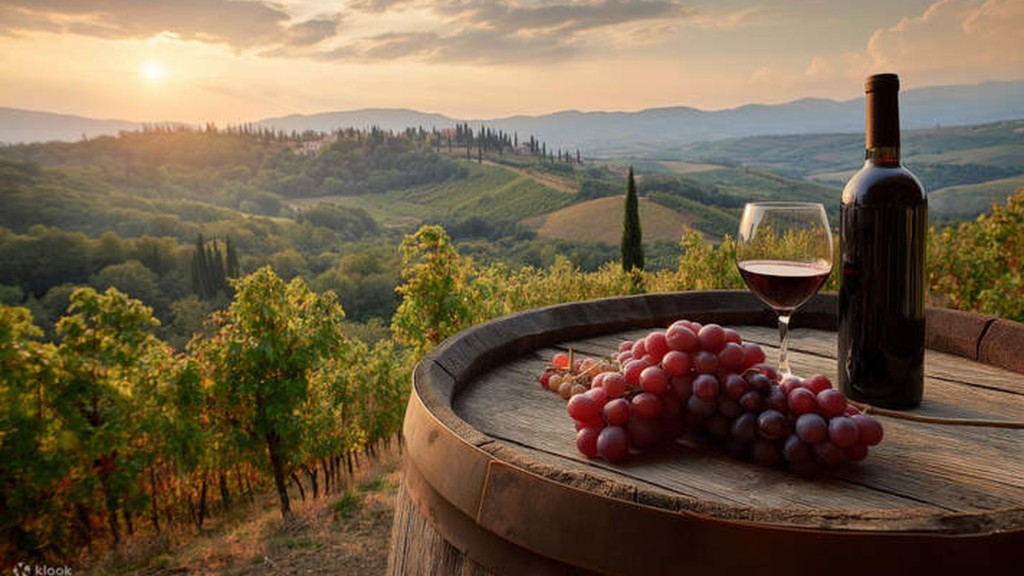
In addition to the second most planted black grape variety in Italy, Montepulciano also refers to the picturesque winemaking region and its wines in the southeastern part of Tuscany, close to the border of Umbria.
Speaking of Tuscan wines today, most people would quickly jump to Chianti or Chianti Classico and Brunello. However, back in the 17th century, Montepulciano was known to produce the most famous wines in Tuscany. At that time, the Chianti region focused on Canaiolo Nero, a grape variety capable of generating deeply-colored wines. Brunello, on the other hand, was mostly planted with the aromatic white grape variety Moscadello.
It was in Montepulciano where wine lovers would find the best Sangiovese wines, and hence the region was known as the “king of wines” and its flagship red wines as “Vino Nobile di Montepulciano.”
It was not until another one hundred years later when the consistency and reputation of Chianti had improved with the introduction of the famous “Chianti recipe” by the Iron Baron Bettino Ricasoli.
The dry red wine, Vino Nobile di Montepulciano, is made with a specific biotype of Sangiovese, Prugnolo Gentile, and generally produces notably deeper-colored wines compared to Chianti and Bruenllo. Sharing a similar southerly location as Brunello di Montalcino, the wines of Montepulciano are fuller-bodied with generous flavor. The denomination allows the addition of up to 30 percent of other grape varieties, and therefore depending on the blend, some of these wines may exhibit a softer perfume and elegance reminiscent of Chianti.
Vin Santo di Montepulciano, the sweet wine of the area, can be made from black or white grape varieties that have gone through a period of raisining to concentrate the sugar and flavor contents.
If more than 50 percent of the blend is made with Sangiovese, the rare product will be given the special name of Vin Santo Occhio di Pernice, which means “eye of the partridge.”
One way or another, the red wines of Montepulciano in Tuscany are strikingly different from the wines made with the grape variety Montepulciano. Best way to remember which is which? Taste the two wines side by side and the confusion will certainly clear up!
Alice Wong is a certified wine educator based in Hong Kong