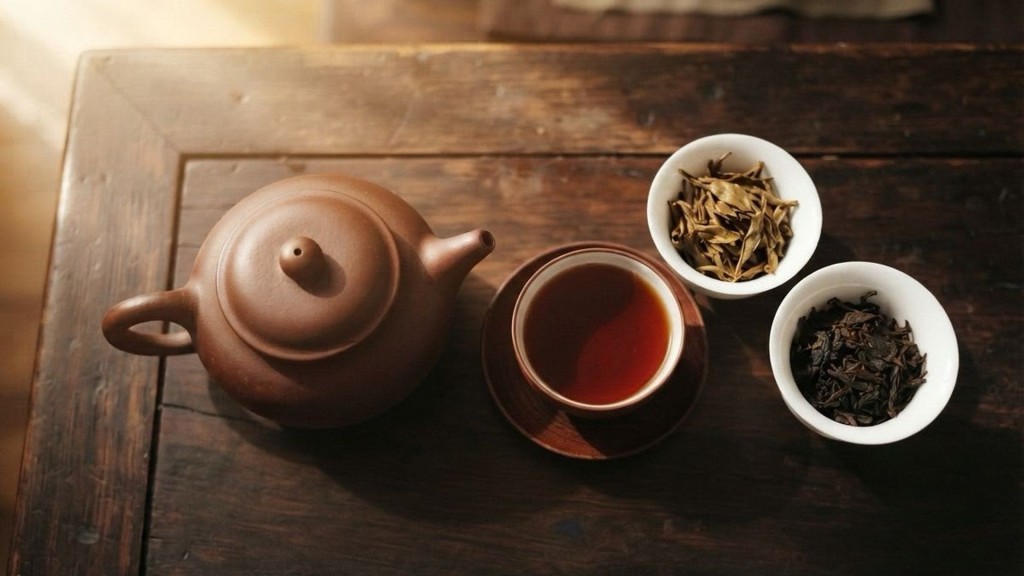
For many years, serious tea drinkers treated blending as something slightly improper. A fine tea, after all, was meant to stand on its own. I used to think the same way. But age has a way of softening rigid opinions, and I have come to see that mixing two Chinese teas can be a deeply intelligent practice when done with restraint. Like music, it depends on harmony. If the structure, aroma, and temperament of the leaves can speak to one another, the result can be far more interesting than either one alone.
The first rule is simple. Compatibility of flavor must come first. Teas with similar aromatic families, or those that naturally complement each other, tend to work best. This is why Longjing and jasmine tea (Mo Li Hua Cha) can be such an elegant combination. At a ratio of one to one, Longjing brings chestnut, bean sweetness, and a clean green body, while jasmine adds lift, perfume, and a softer floral edge. Done well, the cup feels brighter and more sociable, especially in the warmer months.
A more philosophical pairing is raw puerh (sheng puerh) and ripe puerh (shou puerh). I rather like a ratio of one part raw to three parts ripe. Raw puerh can be forceful, sometimes too assertive on its own, especially for those who do not drink it regularly. Ripe puerh adds sweetness, roundness, and a darker calm. The result is smoother, more fragrant, and generally easier to enjoy. You keep some of the lift and structure of the raw leaf, but without its sharper edges.
Another blend I find fascinating is aged dancong (lao dancong) with a very small touch of Ya Shi Xiang, perhaps no more than 5 percent. The older dancong provides depth and maturity, while that tiny measure of Ya Shi Xiang introduces a high, fragrant note that opens the cup without turning it perfumed. This is not a blend for beginners, but when handled carefully, it can feel wonderfully composed.
There can be benefits to this approach. Blending may improve balance, reduce astringency, and create a gentler drinking experience for the stomach, especially when a stronger tea is softened by a mellower one. It can also widen the aromatic profile and make certain teas more approachable in the evening or after a meal. Yet there are risks. Poorly chosen combinations can create muddled flavors, excessive stimulation, or digestive discomfort, particularly if both teas are naturally strong in caffeine or tannin.
In the end, blending tea is not an act of rebellion. It is an act of judgment. It asks for the same sensibility one applies to wine pairing, tailoring, or music. Not every combination deserves to exist. But the right one can feel like a conversation between two old minds, each made more charming by the presence of the other.
Dixtionary is a global citizen and seasoned entrepreneur who views luxury through the lens of philosophy and heritage / @dix.tionary