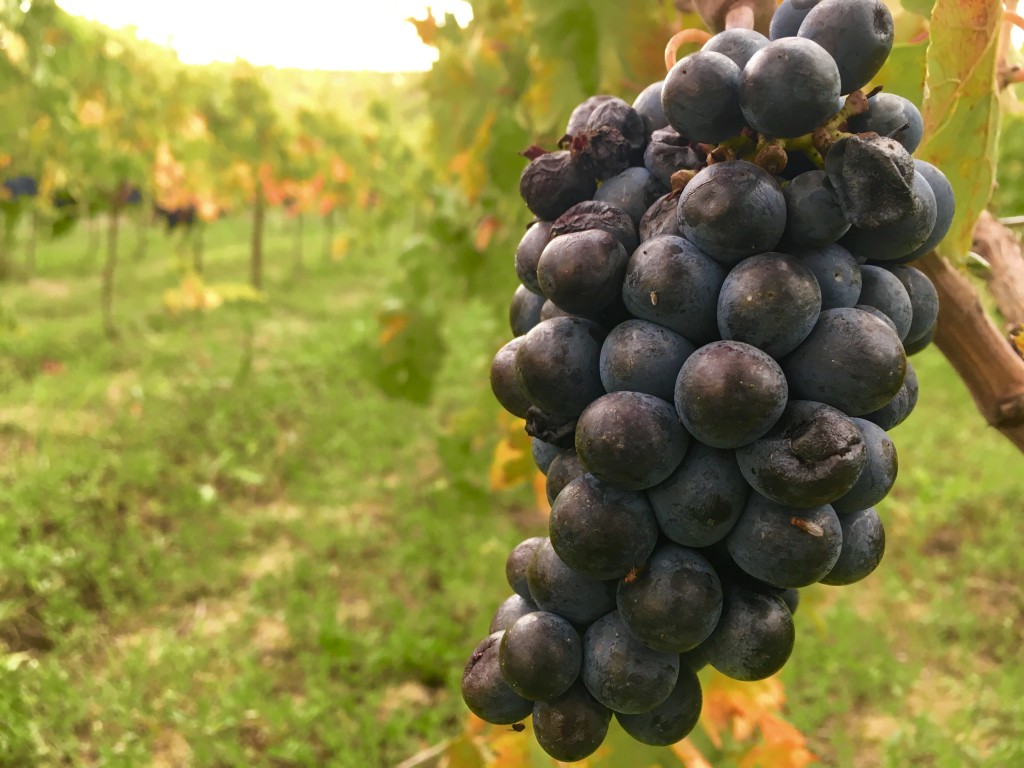
It is the second most common black grape variety in Italy, only behind Sangiovese, with its planting taking up over 30,000 hectares as of 2022. Globally, it is also among the top 20 most common varieties, especially popular in countries such as Argentina, Australia, New Zealand, and the US, and covers another 50,000 hectares worldwide.
It is a historic grape, first mentioned in the 1700s, and was widely grown amidst the mountain valleys of the Apennines, later dispersed along the Italian coasts. Today, it is primarily found in Abruzzo. It is also the most important black variety of Marche.
In general, it gives bold wines a deep purple hue and exhibits intense aromas of red cherry, dark plum, baking spice, and bitter herbs. An entry-level sample is generally juicy and uncomplicated, fits the budget, and is perfect for everyday consumption. On the other hand, a serious riserva can rival some of the most structured wines, such as a Taurasi, a GSM (Grenache, Syrah, Mourvedre), or a Bordeaux blend from the New World. It pairs well with hearty dishes such as stewed beef, lamb chops, Shepherd’s pie, and Chicago deep dish.
In addition, it also makes one of the world’s most complex rose wines. They are fleshy, full-bodied, and tannic. Unlike their counterparts from Provence, these rosé wines rarely contain residual sugar and are age-worthy.
It is Montepulciano, one of the most underrated Italian grape varieties. Thanks to better research and understanding of Montepulciano in recent years, wines from producers such as Valentini, Emidio Pepe, Masciarelli Marina Cvetic, and Torre dei Beati have become among the most sought-after items in the market.
However, if the Montepulciano you’ve had sounds nothing like what was described above, it is most likely that your experience was related to a completely different Italian product bearing the same name. (To be continued)
Alice Wong is a certified wine educator based in Hong Kong