Read More





Are we well, Chaps? | Boarding Pass | Aidan Leung
27-04-2026 01:24 HKT


What’s in a name? | The Stellar Cellar | Alice Wong
24-04-2026 04:55 HKT
A home for our profession | The Weekly Reformer | Roden Tong
24-04-2026 04:52 HKT

Most of Britain’s fee-paying schools are legally required to demonstrate public benefit. What does that actually look like?
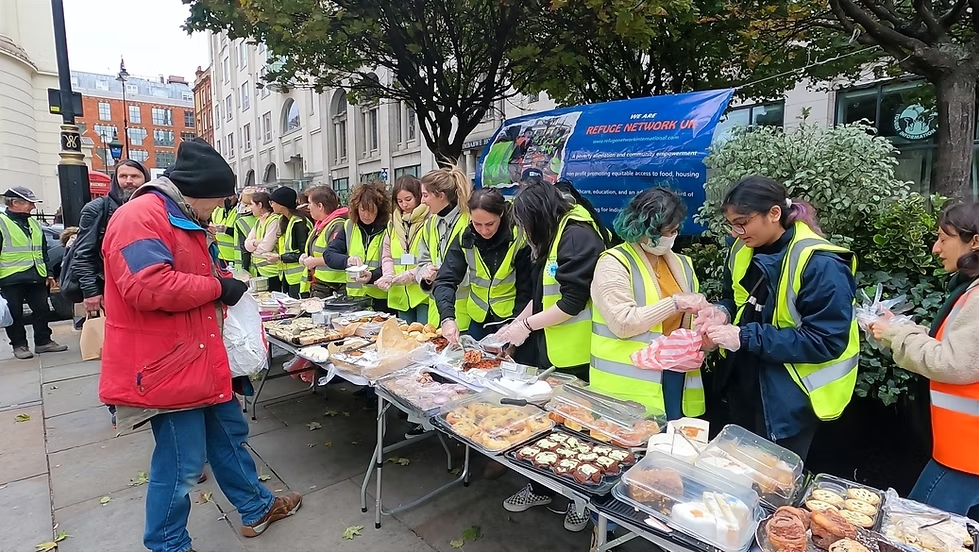
The photograph went up the following morning. Three boys at a soup kitchen, expressions purposeful, and aprons on. The caption read “Service Day was a resounding success! At this school, our commitment to service and social impact remains a core value.” It received hundreds of likes.
I was one of those three boys. Here is what the photograph shows behind the scenes.
Once a year, our school suspends its timetable for a community outreach day. Students are distributed among local charities and food banks with a photographer moving between sites. The next day, the images go live.
This year, I was assigned to a soup kitchen. Our host, Jared, explained the task which was to help prepare fifty portions of beef stew. My peers and I knew how to cook and wanted to help.
Our help seemed not to matter. Health and safety regulations meant there was little we could actually do. We could not handle certain equipment, nor could we work unsupervised near the stoves. Jared, who had been running a professional operation long before we arrived, was gracious about it, but the shape of the day became clear quickly. We were mostly observers wearing aprons.
Our teacher photographed us at the entrance with our aprons on and the kitchen visible behind us before leaving for a nearby café, where she spent the remainder of the morning.
In fairness, the program had given her nothing meaningful to supervise. The photographs seemed to be what the morning required her to collect.
This matters beyond one afternoon at one soup kitchen. Most of Britain’s boarding schools are registered charities, legally required to demonstrate public benefit beyond educating their own pupils. I looked up the Annual Reports filed by several schools to the Charity Commission. One counts grounds maintenance at a neighboring state school as outreach. Another cites hosting young carers for archery and orienteering. A third calculated that its pupils’ attendance “saved the public approximately £4.7 million” — by the logic that educating children privately spares the state from doing so.
Our school sent us to charities for one day. One box ticked.
Jared thanked us at the door when we left. He ran a kitchen that fed vulnerable people in the local area. We spent the morning mostly watching and he would have worked faster without us.
We wanted to help and learn. The school wanted us to engage with the community beyond the school gates. Whether the community received anything truly meaningful from our presence is debatable. The intention of good faith is not to be condemned, but what follows from it needs to be improved.
Boarding Pass is a series of dispatches from inside a British fee-paying boarding school.
Aidan Leung is a sixth-former studying at a boarding school in England.
𝗙𝗼𝗹𝗹𝗼𝘄 𝘁𝗵𝗲 𝗰𝗼𝗺𝗺𝘂𝗻𝗶𝘁𝘆 𝗼𝗳 𝗧𝗵𝗲 𝗦𝘁𝗮𝗻𝗱𝗮𝗿𝗱↓