Nearly two months have passed since the United States and Israel launched a full-scale offensive against Iran, and the duration of the conflict has already exceeded the expectations of US President Donald Trump. Both Washington and Tehran continue to claim victory, and regardless of the actual situation on the ground, the entrenched and uncompromising positions on both sides make the prospect of a near-term peace agreement effectively a “mission impossible.”
While global attention has largely focused on whether the US or Iran is bearing the greater cost, far less consideration has been given to those countries seeking to remain on the sidelines – namely European nations such as the United Kingdom, France, and Germany, as well as key Asia-Pacific economies including China, India, and South Korea. In reality, the economic toll on these externally positioned economies may well exceed that experienced by either of the principal belligerents, and this is the issue that warrants closer scrutiny.
At first glance, benchmark crude futures – whether WTI crude oil futures or Brent crude futures – appear to remain within a manageable range, creating the impression that the global economic impact is contained. However, the near paralysis of the Strait of Hormuz has severely disrupted physical oil flows, leaving global supply highly unstable. As a result, the spread between physical crude and futures prices has widened dramatically – reaching as much as US$30 (HK$234) to US$50 per barrel. This divergence underscores the reality that many countries are already grappling with significantly higher effective energy costs. The recent surge in the UK’s inflation rate to 3.3 percent serves as a clear illustration of these pressures.
To be sure, rising oil prices also introduce inflationary risks for the US. However, as one of the world’s leading oil producers – with additional supply support from Canada – the US has effectively achieved a high degree of energy self-sufficiency. In fact, elevated oil prices have incentivized American energy companies to expand exports, positioning the nation as a relative beneficiary of the current price environment.
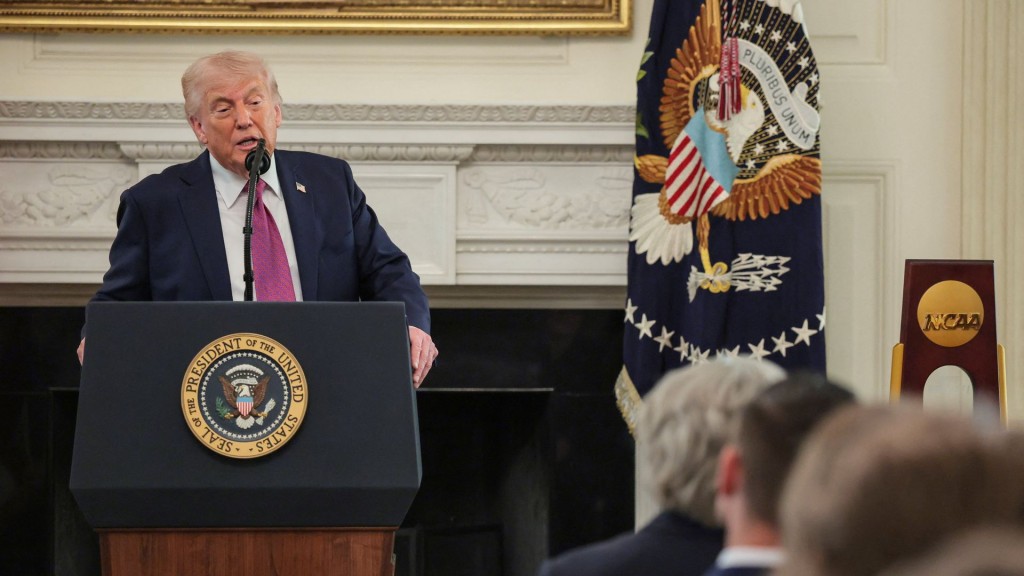
Against this backdrop, Trump’s assertion that he is not overly concerned about a prolonged conflict with Iran may not be mere rhetoric. By leveraging the economic strain imposed by sustained high energy prices, the US could exert pressure on both European and Asia-Pacific economies, thereby advancing a broader effort to reshape the global order. Despite the inherent risks, such a strategy is one that the Trump administration may well be willing to pursue.
Andrew Wong is a veteran independent commentator
𝗗𝗼𝘄𝗻𝗹𝗼𝗮𝗱 𝗧𝗵𝗲 𝗦𝘁𝗮𝗻𝗱𝗮𝗿𝗱 𝗔𝗽𝗽 ↓