My last article went to some length on the technical limits to bridge designs. Let me continue.
From the tree trunk crossing, which in technical terms is a beam involving simple supports, crossings developed into arch bridges to take advantage of the inherent strength of an arch supporting a structure on top, which is similar to that applied to vaulted roofs in buildings.
Both were applied at a time when advanced structural engineering technology had not yet developed, and bridges were built through experience gained from trial and error.
For shallow waters, bridge builders put columns along waterways and laid beams on top.
The design follows through from beams and cantilevers that involve simple supporting structures, but allows longer lengths to be built for bridges.
The problem arises with deep rivers.
Engineers soon developed a system that employs bridge towers erected from the riverbed, which allows them to hang cables to suspend the bridge deck.
They would not be able to do that without the application of steel.
Not only is steel a lot stronger, but the use of tensile force instead of compressive force, as used in arches, opened up the opportunity to span far wider riverbanks.
The Golden Gate Bridge across San Francisco Bay was probably the most famous suspension bridge of its time, before it was overshadowed by far longer bridges such as the Akashi Kaikyo Bridge in Japan, which links its main island with the south island.
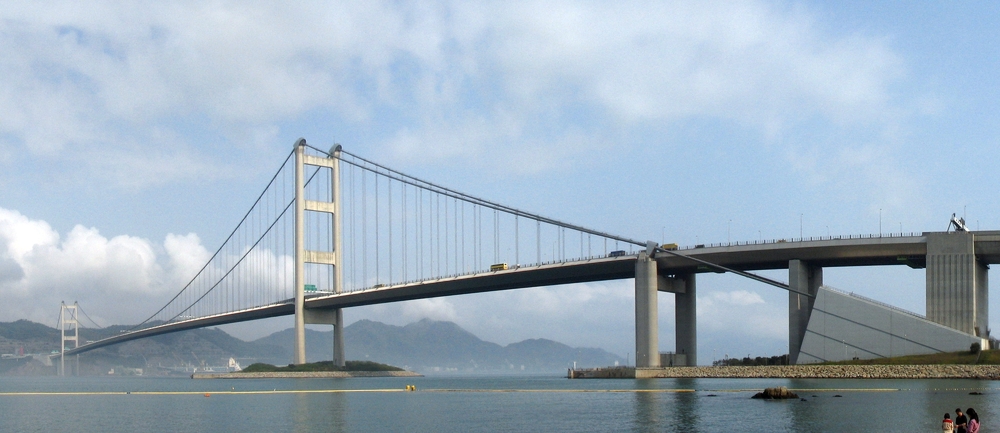
That was before the Bosphorus Bridge linked Asia up with Europe in Turkey and then our Tsing Ma Bridge, which became the longest suspension bridge in the world to carry both road and rail traffic.
Tsing Ma Bridge particularly applies an innovative, streamlined box deck with a central venting gap to allow it to stand up to typhoons.
That brings me to another point I like to stress about bridges.
Essentially, a light and slender structure has only limited carrying capacity.
Bridges to carry railways, such as those in Wuhan across the Yangtze River, require very heavy structures. That is why railway bridges often look bulky compared with road bridges.
Our Tsing Ma Bridge is probably unique in that it combines a very slender structure with a substantial carrying capacity, and we must pay tribute to the designers who were able to design it to look slim, no doubt helped by the long length.
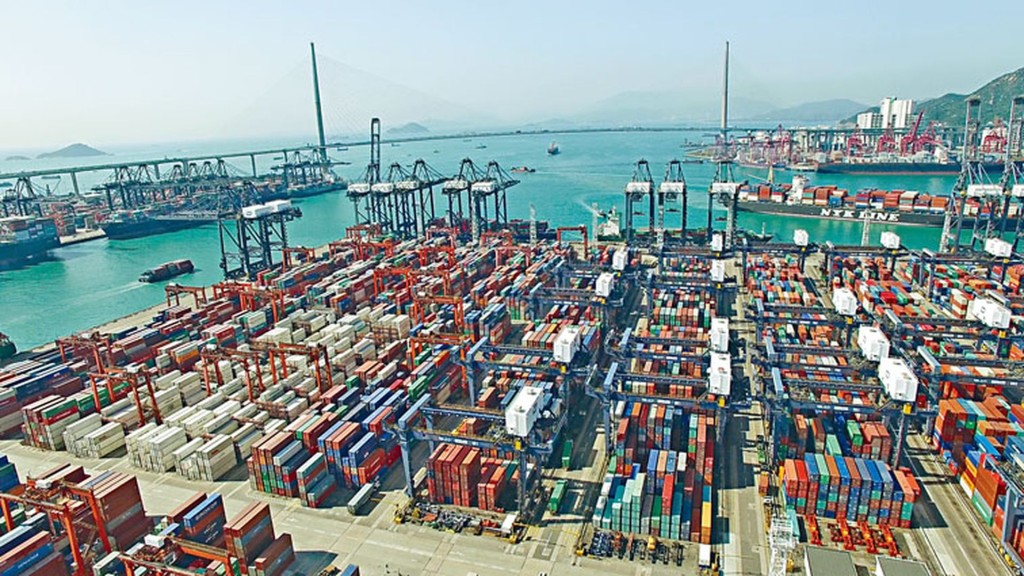
A modern derivative of the suspension bridge is the cable-stayed bridge.
Instead of hanging a huge steel cable across the bridge tower and then suspending vertical ropes to hold the steel deck, engineers devised a much simpler layout by hanging cables directly from the bridge towers, in a fan-shaped layout, to provide hanging strength along the whole bridge deck.
Aesthetically, it is much more elegant and picturesque, and in costs and construction method it is much more economical.
However, the maximum allowable span, under present technology, is shorter than that for suspension bridges.
The spans for cable-stayed bridges are seldom longer than 1,000 meters but suspension bridges can be designed to cater for crossings of up to 2,500 meters.
With ever-improving technology in bridge structure design, and with steel materials capable of sustaining higher tensile forces, we can expect bridges of longer spans to be built in future.
I shall describe how engineers cater for even longer crossings in my next article.
Veteran engineer Edmund Leung Kwong-ho casts an expert eye over Hong Kong's iconic infrastructure
The Tsing Ma Bridge is known for being an engineering feat with a remarkable design. Sing Tao