Read More



Why HKIA's ground transport experience matters | Fongmula | Francis Fong
22-09-2026 02:34 HKT






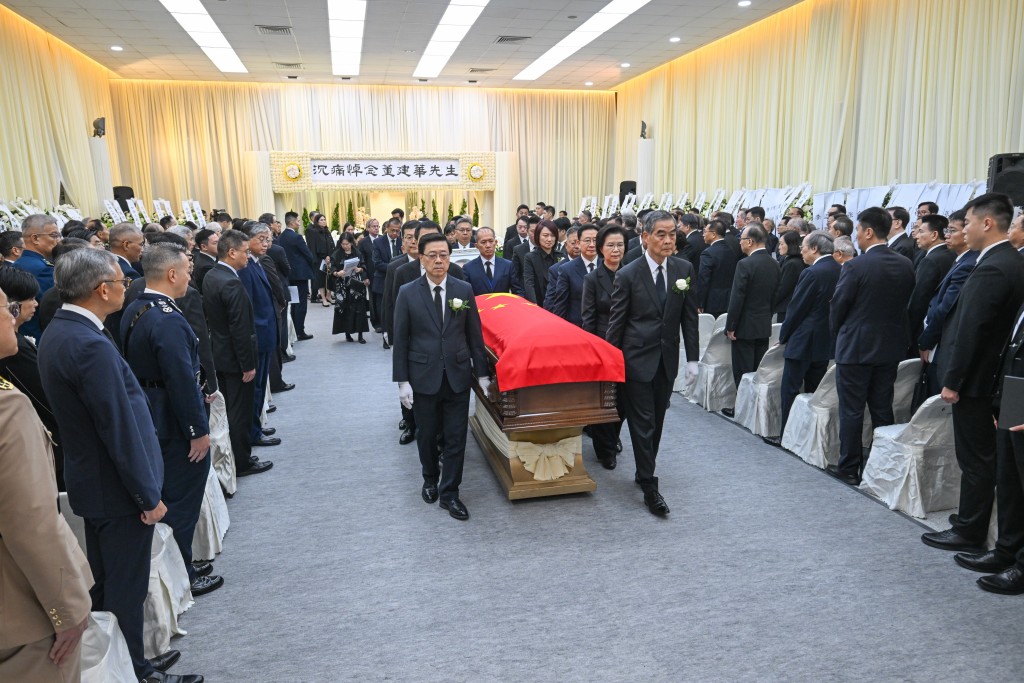
John Lee and CY Leung lead pallbearers for Tung Chee-hwa
20-09-2026 15:54 HKT


In this modern time where most parts of everyday life involve our interaction with some form of built environment or machines, the integrity of building structures and machine components is vital for our safety.
Building facades occasionally deteriorate and bits can fall on the pavement – potentially hurting pedestrians. Beyond that, machine components from aircraft structures to vehicle tires may fail and cause disastrous results to human life when falling from a height.
Though drones, high resolution cameras and AI can help to detect building facade defects, and there are many non-destructive testing, or NDT, methods to help maintenance personnel inspect machine components. Additionally, we should not ignore established testing methods that can provide early warning to supplement these new technologies.
Of all the methods to inspect defects in components and buildings structures, shearography is a technology that had been used for many decades, regarded as an effective non-destructive monitoring system widely used in manufacturing and aircraft industry.
Shearography is a highly effective NDT technique. It works by illuminating the object with a laser light, capturing the image and overlapping it on a camera sensor. It can measure surface strain, capable of showing an undersurface defect, such as a void or delamination.
By providing a fast, full-field inspection that is less sensitive to ambient vibration than similar methods, it shows flaws quickly and can help maintenance personnel detect faults and deterioration of a wide range of machine components to safeguard consumers and commercial operators.
This technology was developed by a University of Hong Kong graduate, Michael Hung Hau-yan, who then emigrated to the US to become a Professor of Oakland University in Michigan. I am privileged to have been his fellow collegemate during our university days. I had the opportunity to meet up with him recently while he was on a visit to City University in Hong Kong and learned from him the development of shearography through the last 40 years.
Shearography plays a critical role in the safety of both air and ground transportation. The Federal Aviation Administration, in the early 80s, mandated that all aircraft tires must be inspected with shearography periodically. With this, aircraft incidents due to tire failure during take-off and landing rarely happened despite the large increase in air traffic. It also significantly reduced automobile incidents due to tire failure.
As the technology developed, shearography was applied to building structures as it can detect concrete delamination and became a quick inspection tool for tunnel and bridge surfaces and building facades, as it can show water intrusion, hollow tiles and bonding defects.
For machine components, it can be used to inspect faults on automotive composites, wings and fuselage for aircraft, wind turbine blades and pressure vessels.
Even for consumer goods, it can detect flaws for high performance sporting goods such as tennis and badminton rackets with carbon fiber construction.
And for electronic goods it can detect hermetic seal defects to prevent damage to printed circuit boards and other components. Its application also facilitated safe and widespread use of retreaded tires for trucks, and longer and more reliable service life for aircraft and automotive composite components.
There is definitely a high potential for shearography to be applied to check the integrity of building facades and detect loosening of plaster and concrete surfaces before they detach and affect residents and pedestrians, though this may require further development to make it easy for trained technicians to spot defects from the shearography images.
I firmly believe that, while we follow new technologies and keep on developing them for everyday use, we should not ignore old-fashioned but tried-and-true ways.
While they may not be a complete substitute, sometimes they can be a good supplementary system for early detection for confirmation by more detailed inspection with new and sophisticated systems.
Engineering is about finding the most efficient and effective ways to solve a problem. A combination of established practice and modern technology is probably the best way for most applications.
Veteran engineer Edmund Leung Kwong-ho casts an expert eye over features of modern life