Read More




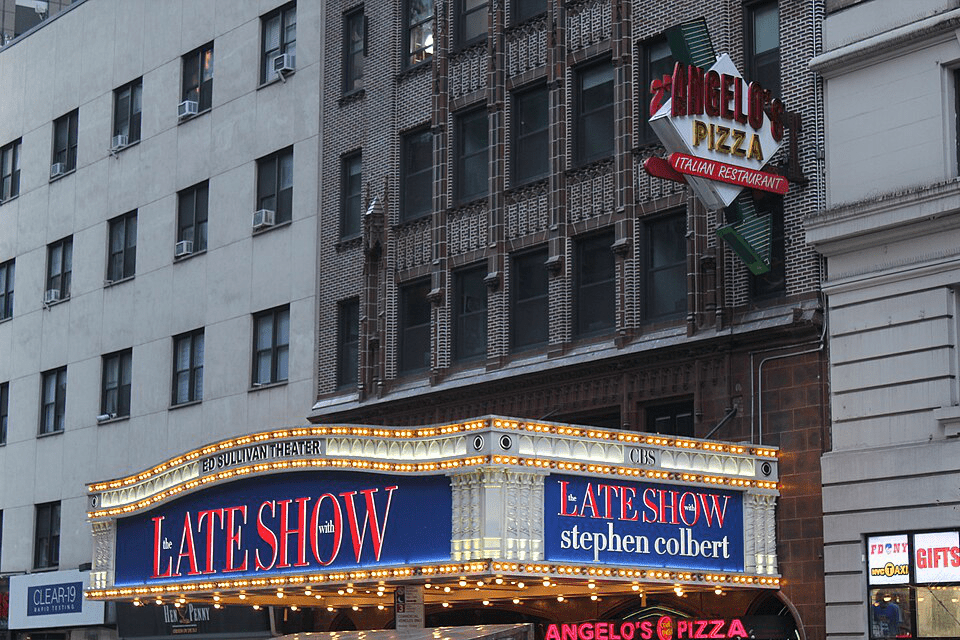
The Death of Late Night? What Colbert’s Final Bow on May 21 Means for TV
18-05-2026 21:09 HKT



ImmD crackdown targets moonlighting domestic helpers arresting 17
19-05-2026 17:52 HKT
Apart from those who live and work on top or adjacent to railway stations, some form of road transport is required for most of us to reach a destination.
The layout of any city, which is usually of a rectangular grid type, invariably results in a lot of road intersections.
For light traffic, pedestrian crossings and halt signs at intersections will ensure pedestrian and vehicle convenience and safety. But for more heavy traffic, a traffic light system is commonly employed to control access through an intersection with the appropriate priorities.
A refinement of the conventional traffic light system allows left and right turns at road junctions to increase the traffic volume through them.
On US highways, right turns and a red-light period allow vehicles to merge with moving traffic travelling in the perpendicular direction.
This is not used in the British and Commonwealth system, probably because the culture is different and such merging activities could result in increased risks of collision.
Instead, to increase traffic flow, a twin light system is used, one for straight ahead and another one for right turns or left turns.
For left turns, a single green arrow (without red or amber on top) allows left-turn traffic to move when there is no traffic running across the intersection.
This is similar to the "right filtering" in the American system but it only limits when the cross traffic is making right turns.
Safety is ensured with such a system.
To allow right turns during bi-directional traffic with cross-lane traffic at a red light, two systems are used.
One is to allow vehicles to wait at the center of a section to turn right when there is light traffic in the opposite direction.
In Hong Kong, the Chatham Road/Austin Road junction is a typical example.
There is an increased risk of collision when impatient drivers try to cut across the opposite lane's moving traffic.
The other system involves a double traffic light system, which clearly controls movement of vehicles with conventional red-amber-green signals.
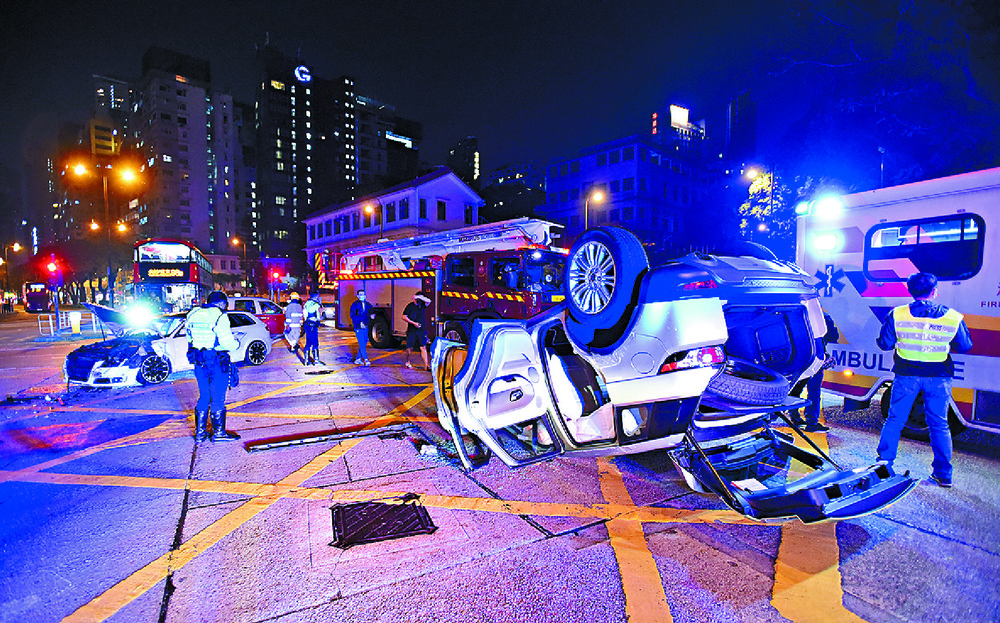
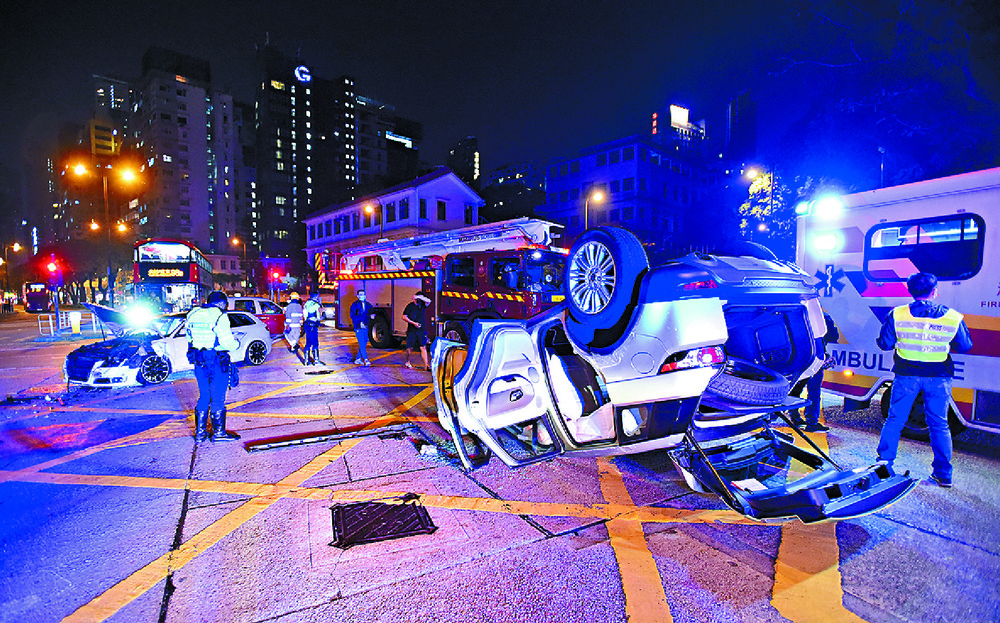
In theory, this system is foolproof as it does not call for any judgement from the part of the vehicle driver, but recently in Sha Tin, this has proven to cause confusion to some drivers who may be careless or inattentive.
In some isolated cases, inattentive drivers could be misled by the moving right turn traffic movement, failing to note the red signal for straight-ahead traffic, and end up colliding with cross-lane traffic.
Some experts suggest the twin traffic light system, mounted at the side and center of a road, can be confusing to inexperienced drivers and recommend the use of gantry-mounted lights so that the red light, when lit, is directly ahead and fully visible to drivers.
But the fact that the majority of drivers are able to read these signals correctly and drive safely through the intersections day in and day out points to inattentiveness being the main reason behind the accidents.
Traffic engineers design road crossings for maximum traffic flow, and make continuous adjustments to lane markings, traffic signal time periods and traffic light locations to be most effective.
But as there is a human element involved, it can never be 100-percent foolproof.
Training and continuous attention are the key to safe driving for all.
Veteran engineer Edmund Leung Kwong-ho casts an expert eye over Hong Kong's iconic infrastructure