Read More





The Central Asia visit is just the beginning | High-flier | Jeffrey Lam
09-06-2026 05:24 HKT
Can the market keep up with mega IPOs? | Cash Call | Andrew Wong
08-06-2026 04:48 HKT

The tragedy that is the pandemic has been bad enough. But the disintegration of Chinese-American relations is, to my mind, even more tragic.
Sadly, no vaccine can cure a frayed diplomatic relationship, and any hope that Donald Trump's successor can heal wounds appears misplaced.
During his first five months as president, Joe Biden has not given any sign he hopes or even wants to resolve America's differences with China.
The dismal reality is that being against China makes for popularity in America, and Biden needs to be popular.
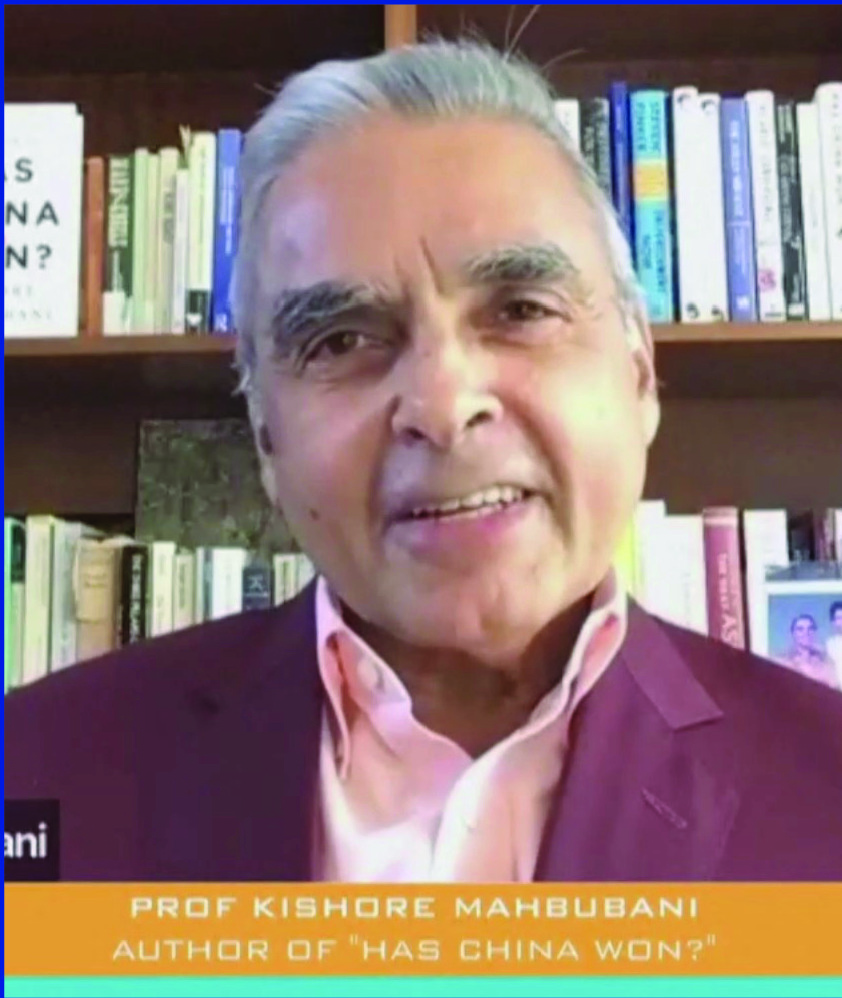
It was against this backdrop that, a few weeks back, I acted as moderator of a webinar event organized by the SAR's Malaysian and Singaporean chambers of commerce with their membership of mostly affluent businessmen.
The speaker was Professor Kishore Mahbubani from Singapore, and his chosen topic was the increased tensions between the two superpowers.
Mahbubani is no doubt known to many readers because his career has taken him from diplomacy (such as Singapore's ambassador to the UN), to a life in academia as a historian, philosopher and "a provocative writer and an intuitive thinker." He has authored eight books, with the latest, Has China Won?, being a lively dissertation of the often fraught relationship between Beijing and Washington.
He has argued that even though fundamental differences in politics, culture and outlook separate the nations, there are many areas where cooperation is both possible and imperative for the sake of mankind.
I particularly like his optimistic outlook and analysis that Chinese communism is not an inherent threat to democracies because there are many nations that do not perceive that to be the case.
Mahbubani also observed that "since both India and Indonesia are geographically much closer to China and have many more links with China, they understand China well."
He has also come to the important conclusion that the Chinese Communist Party is in important respects the exact opposite of its old Soviet counterpart.
The Americans, he says, continue to confuse communism as practiced in China today with the defunct communism practiced in the old Soviet Union, and this misunderstanding by America is a serious strategic mistake that has bedeviled China-US relations.
Mahbubani also talked about the importance of India as a potential world power, the national security law in Hong Kong, the future of the US dollar and the imminent arrival of a digital Chinese currency.
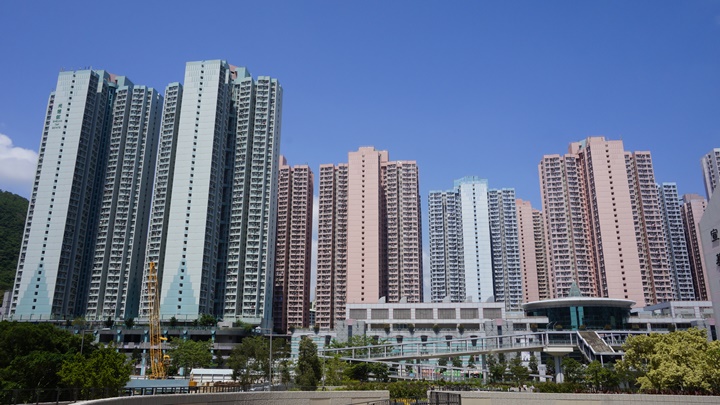
A subject the professor has spoken and written about is the fundamental reason why Hong Kong in recent years suffered from such damaging and serious demonstrations. He believes Hong Kong's troubled times, and I share his view, have been driven not by ideals but by deep socio-economic grievances - and by far the greatest such grievance is the availability and cost of housing. He compares the incredible - and absurd - truth that in Singapore, US$1 million (HK$7.78 million) can buy four 1,000-square-foot units of public housing, but in Hong Kong the same sum can only buy one flat of a mere 250 sq ft.
China, he contends, made one strategic mistake with Hong Kong.
The story is perhaps well known by now but it is worth repeating.
When the first chief executive, Tung Chee Wah, proposed in 1997 to build 85,000 flats a year, some no doubt horrified real estate tycoons promptly flew to the Chinese capital and "seduced Beijing to overrule the housing plans of Tung."
Mahbubani remains convinced that "... if Beijing had heeded Tung instead, and 1.7 million units of public housing had been built over 20 years, there would probably have been fewer or no public demonstrations "
While I am sure he is correct, I am also certain there are so many vested interests at work in Hong Kong housing that reform will be a gargantuan task.
It looks as if at the end of the day, only the sovereign power will have both the wherewithal and authoritarian capability to do whatever it takes.
Cheng Huan is an author and a senior counsel who practices in Hong Kong