Read More






AI’s greatest constraint | Cash Call | Andrew Wong
27-07-2026 05:51 HKT





Ocean Park cable car sends passengers on swing as typhoon winds blow
26-07-2026 18:05 HKT


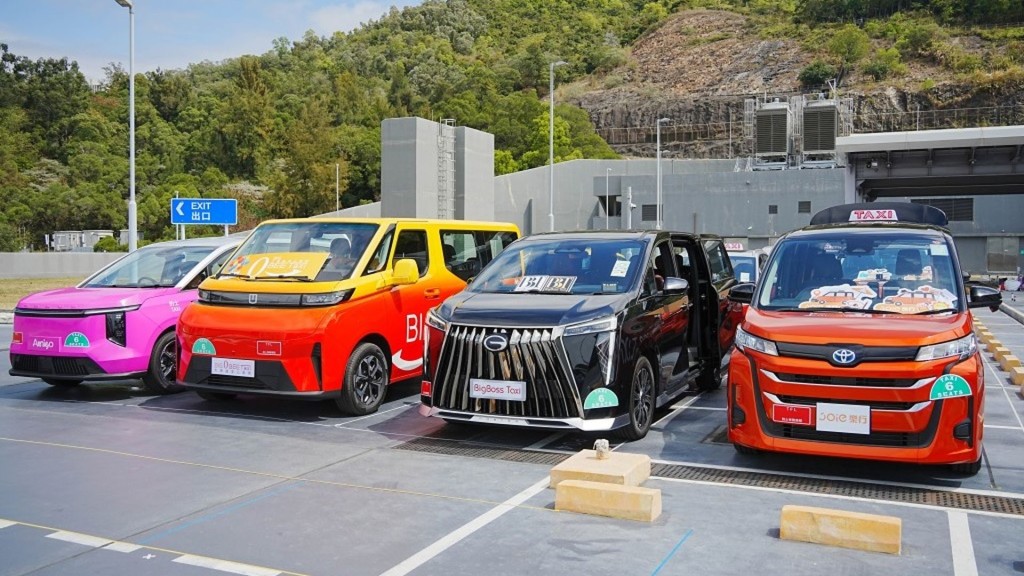
In any city, commuter transport can take many different forms. The Mass Transit Railway provides an efficient backbone to transport masses of people, but for locations that are not adjacent to railway stations, there is a need for supplementary transport.
In Hong Kong, we have an efficient system of buses and minibuses that can complement railway transit. But there is still a large demand for personalized transport, to cater to a whole range of demands, especially for the business sector, which needs high-quality, personalized point-to-point transport that conventional public transport services systems are unable to provide.
Traditionally, taxis were designed to provide such personalized point-to-point transport services, but due to the ever-increasing expectations of some discerning passengers – such as the wish to have high-quality personalized transport ready immediately when called, regardless of the remoteness of locations – the cabs have fallen short of expectations.
Firstly, the existing licensed taxis are limited by numbers, and at peak demand times – such as during rush hour to work and home, busy holiday periods, and under adverse weather – quite often, taxis may not cope with the large demand. Secondly, not all taxis are kept to the high standards expected by some businesspeople and tourists. Thirdly, even with the wide range of taxi vehicles available – including EVs – as taxis are flagged down on the street randomly, there is limited availability of choice to obtain a higher level of comfort, both with the vehicles or with the drivers.
Ride-hailing services, commonly now provided in major cities across many other parts of the world, especially with those systems that provide a range of vehicles from basic to luxurious levels, are regarded as a solution to this.
The additional advantage of over-the-air payment of predetermined fare is an added bonus to users, as it eliminates unnecessary arguments.
But in Hong Kong, the current laws do not cover this new form of transport provision with sufficient protection for the safety of passengers and other road users.
Typical shortfalls are insurance cover in case of accidents, and no assurance system for competence of drivers. In the latter case, as some ride-hailing service providers are part-timers, the level of competence cannot be guaranteed.
To meet this need, the government is presently proposing new regulations to be enacted. The new regulations aim to protect passengers in both safety and in quality of service.
To start with, ride-hailing transport must be tested annually like all commercial vehicles, as they cover a much larger mileage and have the responsibility of carrying passengers. The initial proposal limited vehicle age to seven years at the time of application for a ride-hailing vehicle permit. Such permits may be renewed annually, subject to a cap of five years. Upon consultation with various stakeholders, the vehicle age has now been relaxed to 12 years at the time of application and renewal of permits. Hopefully, this will not take away the opportunities of some existing ride-hailing vehicles and drivers from their present business, notwithstanding that they are not operating in full compliance of the law.
Secondly, all drivers must go through a designated test and complete a pre-service course prior to the application of a ride-hailing vehicle driving permit. This is to ensure that they have the competence at least equal to that of taxi drivers to provide safe, effective and comfortable driving standards with good knowledge of transport-related laws. Though modern GPS navigation and similar systems now provide the accurate location of destinations and suggest preferred routes, due to the need to address special or unforeseen circumstances, some knowledge of street locations would be desirable. To ensure a sufficient supply of competent drivers, those who drive taxis can qualify to apply for ride-hailing vehicle driving permits without going through the relevant test and pre-service course, by virtue of their recognized competence level.
But each driver with a valid ride-hailing vehicle driving permit can only operate the vehicle registered in his or her own name – not others. This should help prevent ride-hailing vehicle permits from being regarded as assets with speculative value, and help ensure service quality.
Most important of all, the government intends to maintain a good balance between taxis, which now include fleet taxis, and “private cars that are approved for providing ride-hailing services.” These ride-hailing vehicles must not be allowed to pick up passengers without prebooked orders on the street, as they would then directly and unduly compete with taxis which are regulated by law to charge the metered fare for street-hailed trips. The overall control of the total number of ride-hailing vehicles will help ensure a healthier balance between the two transport modes, which is beneficial to the overall sustainable development of the personalized point-to-point transport industry.
Hopefully, with the expanded available range covering conventional taxis, fleet taxis, and ride-hailing vehicles, a wider variety of demands can be accommodated.
Our taxi service, while having generally provided efficient service over the past years, is facing challenges in transforming to meet modern demands, and risks falling behind the services offered in other major cities. Hopefully, with the implementation of the new regulatory regime for ride-hailing services, the long-standing pain point in our public transport needs can finally be addressed. I am optimistic that it will work this time.
Veteran engineer Edmund Leung Kwong-ho casts an expert eye over features of modern life