Read More









The Death of Late Night? What Colbert’s Final Bow on May 21 Means for TV
18-05-2026 21:09 HKT



ImmD crackdown targets moonlighting domestic helpers arresting 17
19-05-2026 17:52 HKT
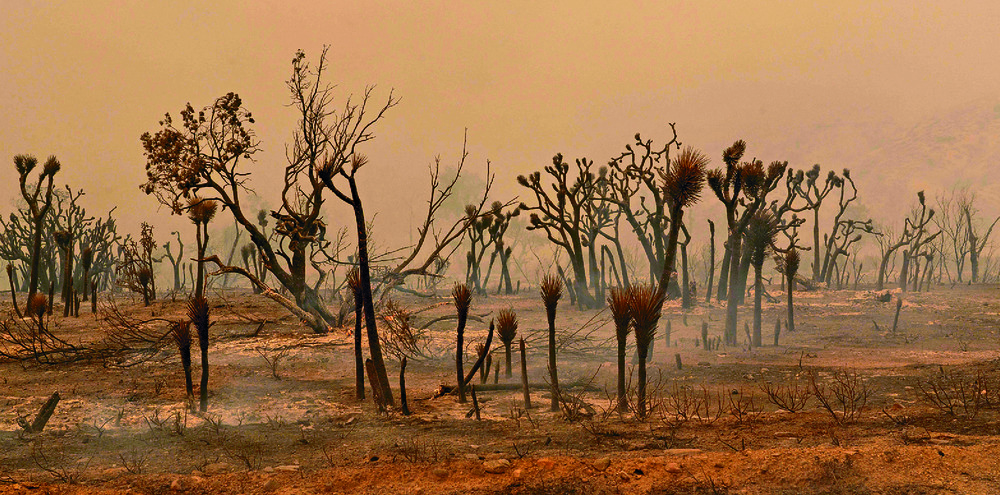
Wildfires among ponderosa pines and Douglas firs in the US West have long been part of nature's cycle of renewal, as much as the changing of the seasons.
But as climate change makes the region more arid, wildfires have grown more frequent and ferocious. Scientists worry the hottest blazes could end up obliterating swaths of some forests forever.
"When you get large areas burned there are no surviving trees to reseed these areas," says Jon Keeley, a research scientist with the US Geological Survey. "It's causing a shift from forest to other vegetation types, mostly shrublands and grasslands."
Climate change has made these landscape-changing wildfires a concern worldwide. This year, record fires made worse by climate change have also raged in Australia, Argentina and the Siberian Arctic.
"What we're seeingis that fire is really responsive to climate change," says Jennifer Balch, a fire ecologist at the University of Colorado Boulder.
That's bad news for temperate and boreal forests, which unlike tropical forests such as the Amazon have evolved over millennia to need occasional fire outbreaks for their own renewal, scientists say.
Whether these woodlands can survive more intense wildfire scenarios will depend on two key issues: the frequency of fires and how hot they burn.
This year's fires in the US had devoured more than two million hectares by Sunday, a scale of devastation that fits the longer-term trend of more area scorched.
Historically, fires in the region tended to burn low to the ground, eliminating dead conifer limbs, keeping competing species in check and prompting pine cones to open and disperse seeds.
These days, there are increasing cases of "tree-torching" fires that engulf forests from the ground up through the canopy.
"Fires are not unnatural, but the kind of behavior and the times, places and conditions they ignite in are very, very unusual," says Timothy Ingalsbee, who heads advocacy group Firefighters United for Safety, Ethics and Ecology.
If fires sweep a forest too frequently, they will wipe out immature saplings. Too hot, and a fire can turn areas into a moonscape barren of the seeds needed for growth.
Climate change can fuel conditions for both scenarios.
In California, a rise of 1.4 degrees Celsius in average summertime temperatures since the 1970s coincided with a five-fold increase in the area burned annually.
The same dry conditions that aggravate fires also undermine new forest growth.
"In some hotter and drier areas, the climate has shifted to the point where it's no longer suitable for tree regeneration," says Kimberley Davis, an ecologist at the University of Montana. "In those areas, once there is a fire, trees won't grow back."
In the Rocky Mountain region, climate change and wildfires could shrink ponderosa pine areas by 16 percent and Douglas fir areas by 10 percent over the next 30 years, according to research by Davis and colleagues in Environmental Research Letters.
Scientists in Australia are already seeing evidence how fire is reshaping landscapes.
A series of unusually frequent blazes in the southeastern Australian Alps since 2003 has caused forest systems there to collapse, says David Bowman, a fire scientist at the University of Tasmania.
"The system crashed. It went from a forested state to a non-forested state. No forest, no trees. Kaput," he said.
Even more worrying, scientists say, is an apparent increase in wildfires in the Siberian Arctic, which can thaw permafrost and release climate-warming methane.
Recent satellite observations reveal frequent burnings in Siberia's boreal forest, which might have required a fire only once every 80 to 200 years to regenerate.
That could be evidence of a fire regime change, says Thomas Smith, a geographer at the London School of Economics.
"It's very difficult for ecosystems to adapt to that pace of change," Smith adds. "It's going to be catastrophic in terms of the loss of carbon when you move from forest to non-forest - and that's part of this positive feedback cycle."
REUTERS