Industry 4.0, aka the Fourth Industrial Revolution, is taking the world by storm.
This idea of a novel "technological revolution" was first conceived in 2015 by Klaus Schwab, executive chairman of the World Economic Forum, who opined that it will be driven by such things as big data and machine learning.
As the term suggests, it is the culmination of past industrial revolutions.
The first was characterized by machine tools and steam power; the second by standardized manufacturing and electrified production lines; and the third by information technology to automate production.
The fourth brings together tech advancements in robotics, AI, the industrial internet of things, virtual and augmented reality, and 5G wireless communications.
These transformative technologies form a cross-domain system, widely known as a cyber-physical system, from which a digital copy of the physical system, known as a digital twin, can be used to perform real-time production optimization.
In Hong Kong, Industry 4.0 is driving reindustrialization. This is a focused development to revitalize the "made-in-Hong Kong" label, based on smart technologies and high-end production processes.
The administration has launched a HK$2 billion matching fund scheme since 2018 to subsidize manufacturers in setting up smart production facilities, the 50 mask production lines in recent months included.
A good way to understand how this giant connected system of intelligent machines works is to compare it to the human body.
Cameras, sensory technology, data analytics and business-intelligence capabilities provide the machines with eyes and ears.
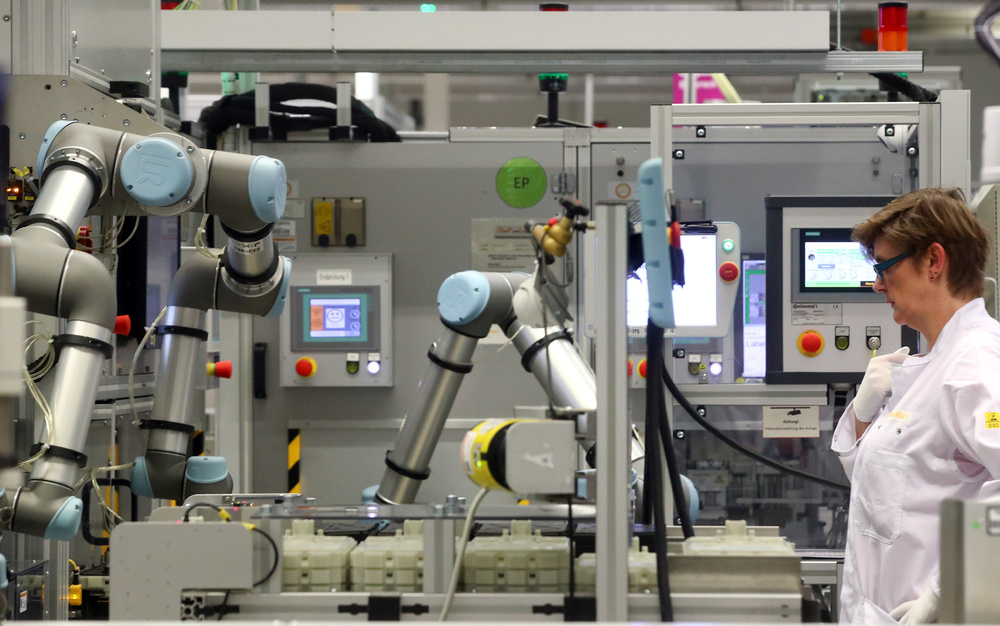
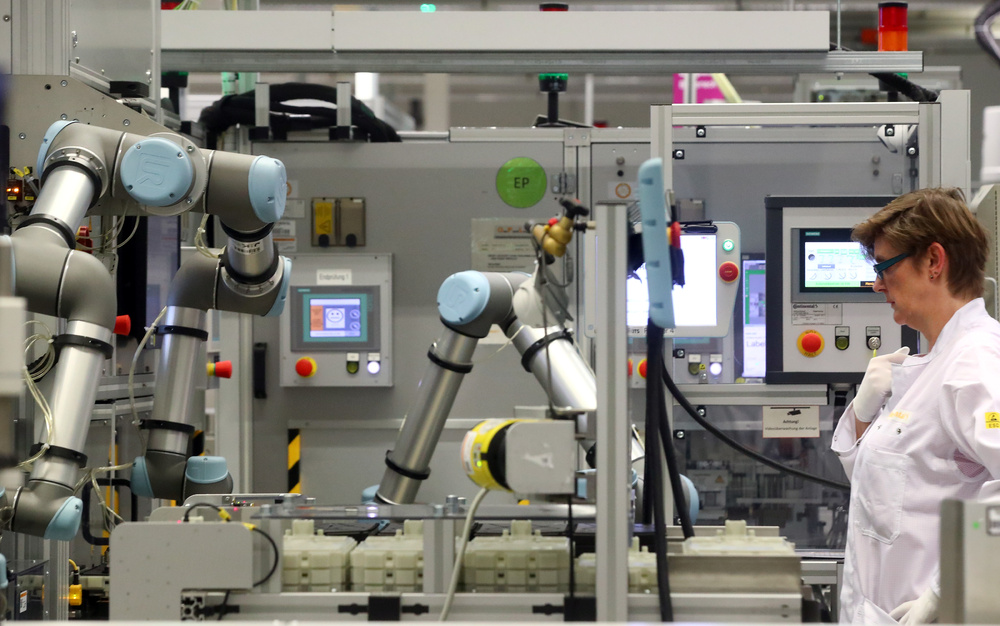
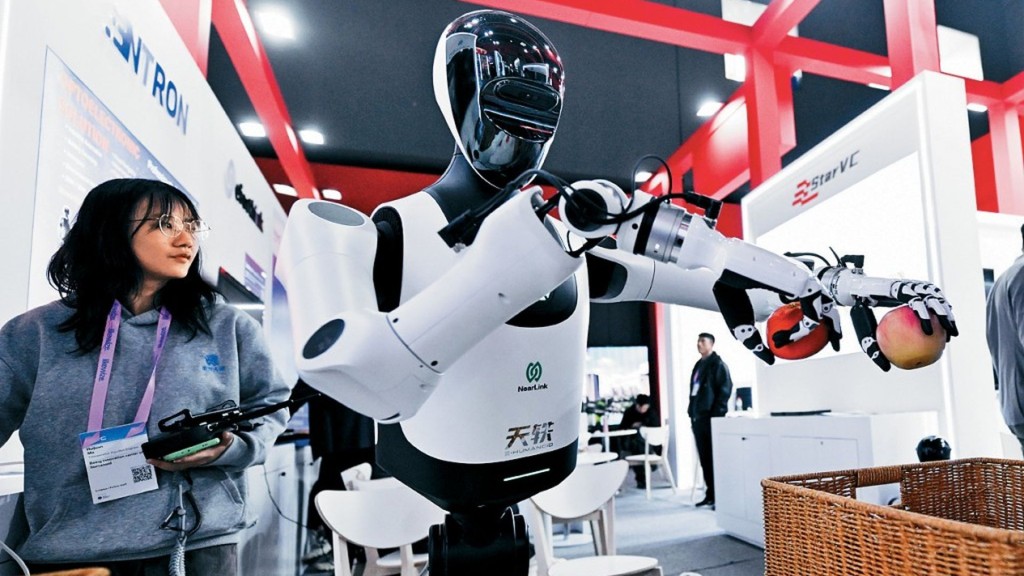
Advanced automation and robotics, including collaborative robots, or "cobots," enable intelligent machines to move.
New forms of human-machine interaction, such as touch interfaces, augmented and virtual reality systems and machine-to-machine communication, are the equivalent of human feeling and transmitting signals through our nervous system.
AI and machine learning are the brains behind machines that use transformative technologies with rising real-time data volumes and greater computational power to connect the physical with the digital world.
There are at least three major benefits and opportunities to embracing Industry 4.0.
First, it helps firms monitor and improve supply chains. Machines can, for example, collect, process and analyze massive volumes of real-time data to identify patterns and insights that would have been impossible for humans to do over a certain period.
Second, it gives businesses greater flexibility to produce differentiated products and services to tap unmet consumer demands, compete in global markets, and capture emerging opportunities. For example, a customer here will be able to choose the size, color and fabric of her clothing online directly from a distant garment factory and have it delivered by drone.
Third, it supports enhanced workplace safety, production and improvements across the entire value chain. For example, robots may become helpers at nursing homes, and refrigerators will be monitoring the condition of food and get fresh supplies delivered.
According to a 2018 WEF report, Canada, Japan, Germany, Australia, Austria and Switzerland are the leaders in embracing Industry 4.0.
Their industries realize real-time production planning and dynamic optimization by using real-time data and supply chain. Significant savings from production losses are evident.
The tools and tech advances these countries pioneered have not only enabled businesses to thrive but also improved the quality of life.
However, this does not mean we ought to embrace all technology without exercising critical judgment. They may help us in some settings, but not all.
Next week I will discuss how it is applied in some sectors to make societies "smarter."
Dr Jolly Wong is a policy fellow at the Centre for Science and Policy, University of Cambridge
A robot in action on a Continental Automotive production line in Klaus Schwab in Regensbury, Germany, 2015, Inset: Klaus Schwab. Reuters