Read More








The Central Asia visit is just the beginning | High-flier | Jeffrey Lam
09-06-2026 05:24 HKT

Can the market keep up with mega IPOs? | Cash Call | Andrew Wong
08-06-2026 04:48 HKT



Innovative technology is not just interesting, it also helps to make our lives easier.
We are already enjoying the benefits of rapid development of drones. The aerial videos they take allow us to see our landscape from different angles, often with clarity and details that hitherto were not available to us. Drones also help to make courier services much more efficient and reliable in many areas.
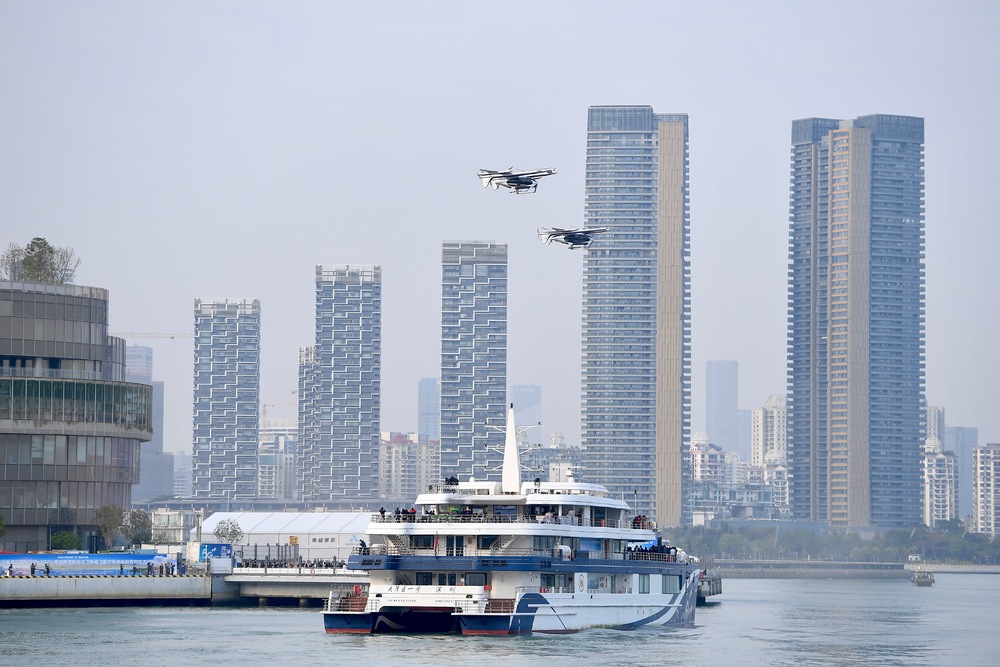
The latest development that will help us to enjoy modern life is the advent of drone taxis, echoing Beijing's plan to promote a "low-altitude economy."
That may be welcome, with roads becoming ever more congested and helicopter and other flight services restricted by limited landing facilities and cost factors as they invariably require specially trained pilots to operate.
And pilots are also susceptible to human error and tiredness, apart from the occasional industrial actions leading to service interruptions.
Drone taxis, operated by computerized control using GPS signals and using battery power instead of fossil fuels, ensure environmental friendliness and do not require trained pilots.
Flying at low altitudes, they can travel in a straight line from take-off points to destinations, avoiding congested roads.
They can also reach remote sites normally not accessible by road transport.
As they do not depend on visual guidance, services at night and in inclement weather, when visibility is impaired, can become safer and more reliable.
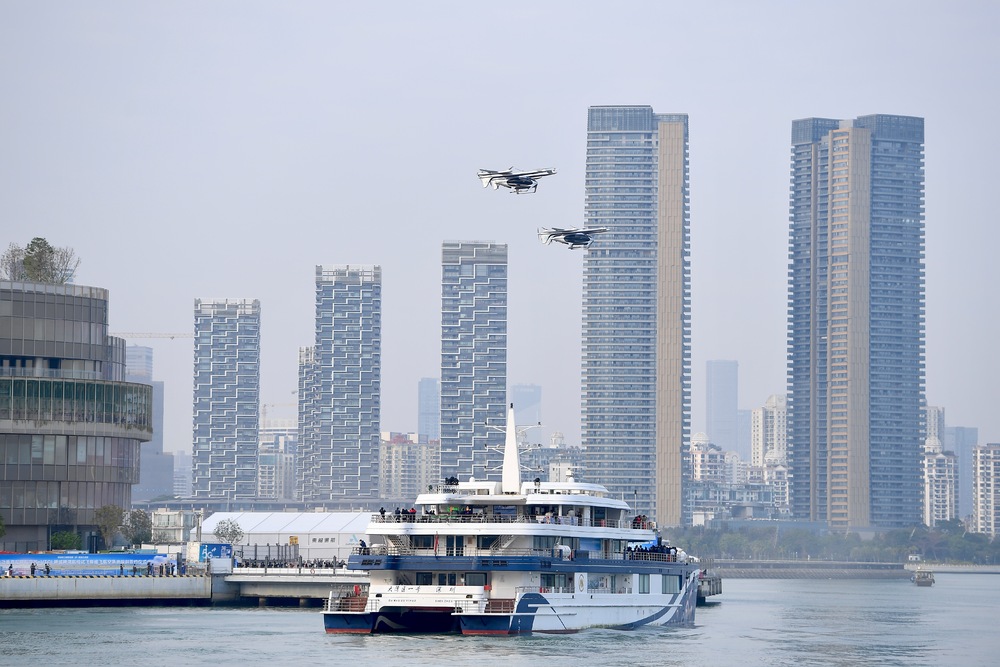
An electric vertical take-off and landing service is expected to start serving people between Zhuhai and Shekou soon.
Travel time is estimated to be about 20 minutes, compared to a journey of one hour by sea and some three hours by road.
The drone can carry five passengers, fly 200 kilometers per hour, carry a payload of 400 kg and has a range of 250 km.
Being compact and light, the landing pad can be located in most places in built-up areas without a need for large areas.
The drone taxi fare can be as low as 300 yuan (HK$326) per person and provide services at all hours.
When successfully proven, this system can service hundreds of key locations in the Greater Bay Area, facilitate business travel and enable commercial activities to all at affordable prices.
It further enhances the implementation of the one-hour living circle we envisaged for traveling within this region.
This new dimension in fast and efficient urban travel can be applied to most cities in the world, but obviously, existing regulations for air traffic control need to be updated for use by drone taxis.
Depending on the legal system in each country, such adaptation could take a short time, like in China, or much longer in countries that require exhaustive consultation periods.
And that's not to mention geopolitics, which may hinder the use of drones made in one country to be used in another.
But countries that allow drone taxis to operate will undoubtedly see their economies grow much faster, providing ample opportunities for efficient commercial and domestic activities within a region with very little restrictions on travel time.
Once again, a new innovative technology can improve life, but to make it totally effective, the politics and regulations must catch up quickly to stop them from stifling a rapid technological development.
Veteran engineer Edmund Leung Kwong-ho casts an expert eye over features of modern life