Michael Kahn, Anna Koper
and Alan Charlish
As the Covid-19 pandemic wipes out jobs and empties offices across the world, companies in central Europe that provide remote, lower cost services for multinationals are emerging as winners in the new business order.
From Prague and Warsaw to Bucharest, these firms have long provided outsourced or offshored business services such as software development, administration, payroll handling and research for big European and American customers. Now they're bucking the global trend by expanding and hiring.
"In a time of crisis, more business is shifting here," says Roman Pavlousek, who runs a finance service center for global industrial manufacturer Atlas Copco in Czech city Brno. "This is happening."
Indeed, more than 90 percent of business services companies in the Czech Republic have continued to recruit during the pandemic, with 12 percent winning extra work from the Asia-Pacific region, according to a survey by the Czech branch of the Association of Business Services Leaders.
While service centers in Asia offer lower costs, central and eastern Europe offers geographical and time-zone proximity for Europe and America, with a deep pool of multilingual workers.
The region has drawn a host of big names, from Air France-KLM's BlueLink International to Exxon Mobil. It also boasts expertise in automation, robotics and artificial intelligence - areas where corporate decision-makers increasingly look to expand.
In Poland, emerging Europe's biggest economy, business services companies also continue to bring in new employees.
Iwona Dudzinska, managing director at Citibank Europe's service center in Poland, says the crisis has not slowed growth plans. "We're hiring around 100 people every month and conducting recruitment online."
The business services sector has grown from almost nothing 25 years ago to an industry employing nearly 750,000 workers across central and eastern Europe and it's expanding rapidly, says Romek Lubaczewski, a partner at PwC.
"It's all about timing," he adds.
"This crisis has shown that more things can be done remotely, and this will benefit the region in the medium to longer term."
Lubaczewski lives in the bustling university town of Krakow, whose 85,000 employees in the sector make it Europe's biggest business services center hub.
Pepsico, Shell, State Street and other international companies have set up shop in the Polish city, tapping into a multinational workforce able to deliver complex services in numerous languages.
"When you're sitting in a country that doesn't speak English, central Europe holds a massive advantage," Lubaczewski notes.
Pawel Michalik, managing director of ING Tech Poland, says the pandemic will result in multinationals looking to outsource or offshore services in new areas."This is something that will definitely have a positive impact on business service centers in the region," he says. "Banks may be more willing to outsource certain services such as risk modeling and regulatory reporting," he says. "We launched such services last year in Warsaw and we will probably develop them faster than originally planned."
The region's business services sector has been able to adapt to the requirements of national lockdowns better than most industries around the world. Given the digital nature of the work, two thirds of the sector's employees in Poland were able to work from home even before the pandemic. Now with far more than that number away from offices, firms aim to keep workers at home even after the crisis passes, says National Association of Business Services Leaders.
A widely expected increase in digitalization and a smaller emphasis on face-to-face contact by global companies after the pandemic will further benefit central Europe as a services hub.
"It's going to be a chance for more companies to move work here as they are closing down main operations in other, more expensive countries," says a worker at UBS in Krakow. "It's happening, and it's going to accelerate."
REUTERS
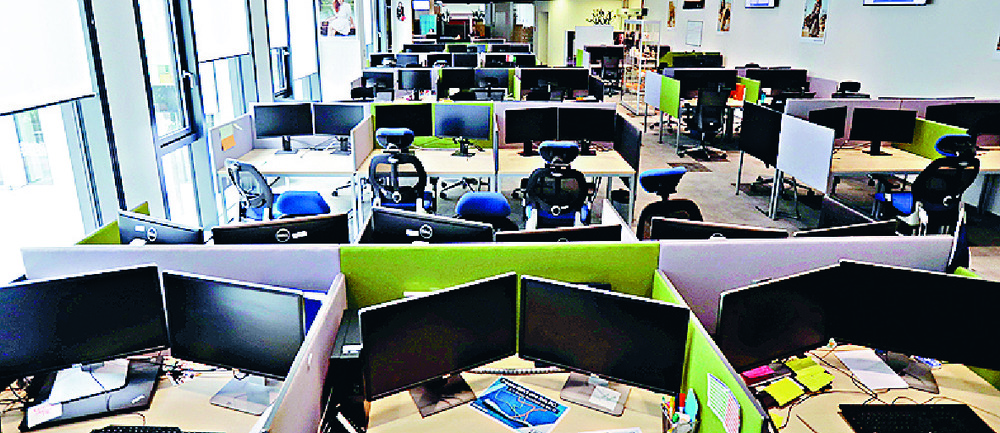
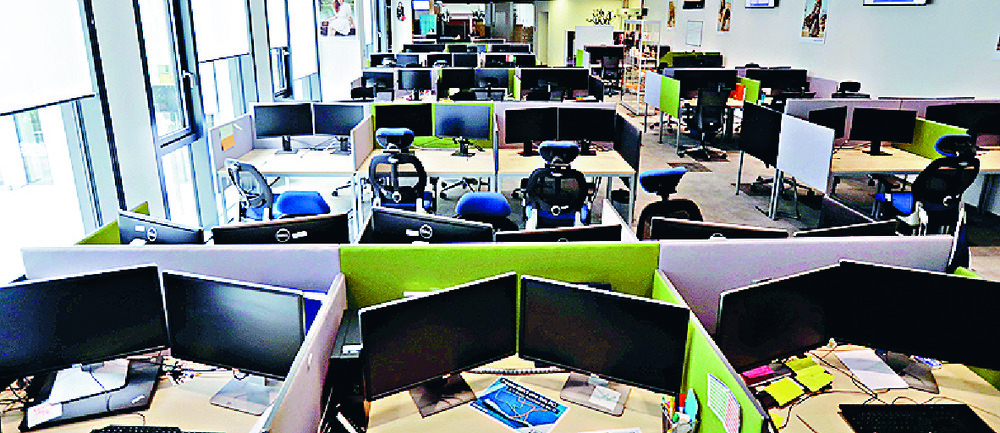
Airline service company Bluelink International's office in Prague is empty as employees work from home. reuters