Last week, I described the shortcomings of monorail systems, although they may appear, at first glance, to be the perfect solution for city transport.
To recap, such systems cannot provide adequate capacity for commuter transport in a busy city.
They are more suitable for theme parks and other light duties but not high capacity mass transit systems that serve office workers on weekday mornings.
They are also difficult to maintain for reliable public transport purposes.
When the Kai Tak development was planned, somebody in the Town Planning Board suggested including an environmentally friendly transport system to link it up with east Kowloon, providing an essential connection to the city without overloading the congested road system.
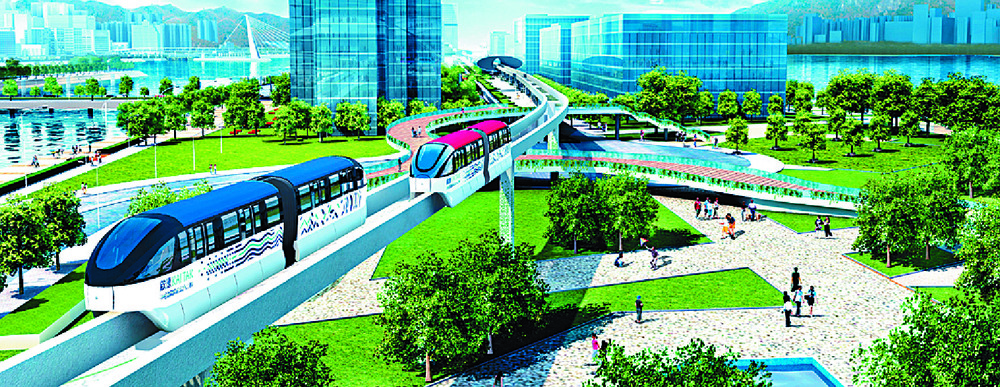
Somehow it suddenly became a plan, with a monorail system connecting Kai Tak with Kwun Tong MTR station.
Transport planners will tell you that a monorail will not suit this application.
First, its capacity would be inadequate.
Second, it will be extremely difficult and inefficient to design a viaduct system across the Kai Tak Nullah exclusively for a monorail system.
Third, it will be even more difficult to connect it to Kwun Tong station as the urban development around that area is already extremely congested, with no space to build viaducts and to accommodate more traffic.
It would be far better to plan a connection further away from Kwun Tong.
I can see a much easier connection point at Yau Tong MTR station.
It is an overhead station situated in an area that still has development potential.
The area adjacent to it is far less congested than Kwun Tong.
Yau Tong station is also an interchange station to Tseung Kwan O Line, which in turn connects to the Island Line, facilitating dispersion of passenger traffic to other parts of our city.
An opportunity existed to connect with the Kai Tak station if we were able to implement the planning a few years earlier, but it may be a bit too late now.
Returning to environmentally friendly transport, I must point out that there are more systems than just monorails.
Light rail systems, as in Tuen Mun, or the tramways running in the northern parts of Hong Kong Island, are proven systems, but they tend to cause conflicts with other road traffic.
A guideway system could be a novel method for Hong Kong.
In its simplest form, it is a dedicated bus lane system to allow buses to run without interference from other transport systems.
We already have dedicated bus lanes on some parts of Tuen Mun Highway and in entrances at cross-harbor tunnels to give priority to buses as they carry a lot more passengers for a given road space.
Guideways, which could be at grade or on viaducts over congested areas, will provide effective transport systems for commuters.
Guideways can be designed for medium capacity railway systems but in the interim, use buses for transport.
These can provide quick and flexible transport systems starting with minibuses and buses, and when traffic demand grows to a certain level, railways can gradually take over, using the same guideway structure.
Transport demands grow with time and city development.
To build transport systems ahead of demand may be seen as a waste of resources and will face a lot of political resistance.
However, a better way forward is to offer a flexible transportation system that can grow with increasing demand.
Veteran engineer Edmund Leung Kwong-ho casts an expert eye over Hong Kong's iconic infrastructure
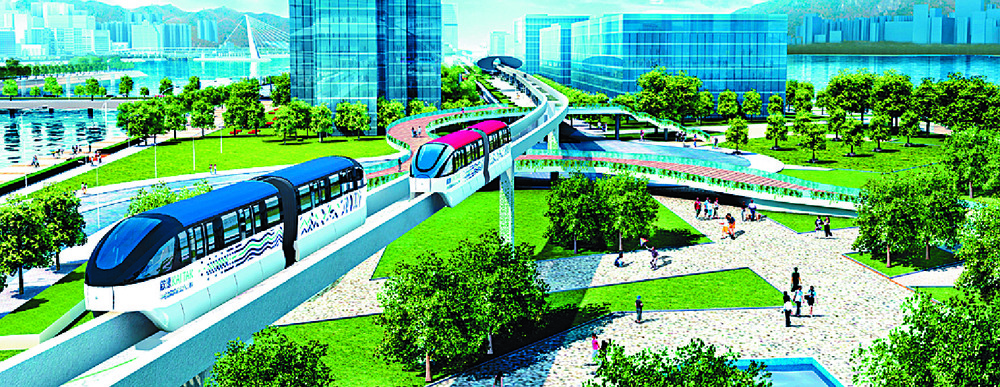
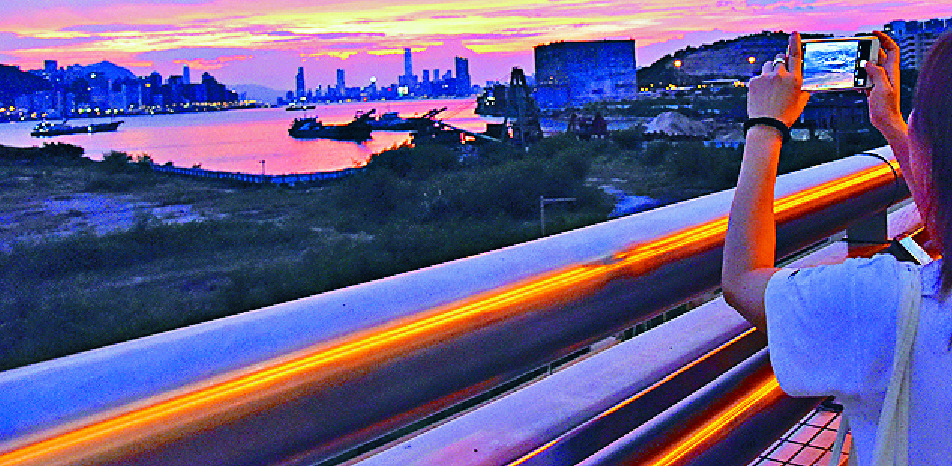
If we have to have a monorail system for Kai Tak, an artist's impression above, a sunset photograph from the uppermost level of Yau Tong MTR shows comparatively clear access to the site of the former airport.