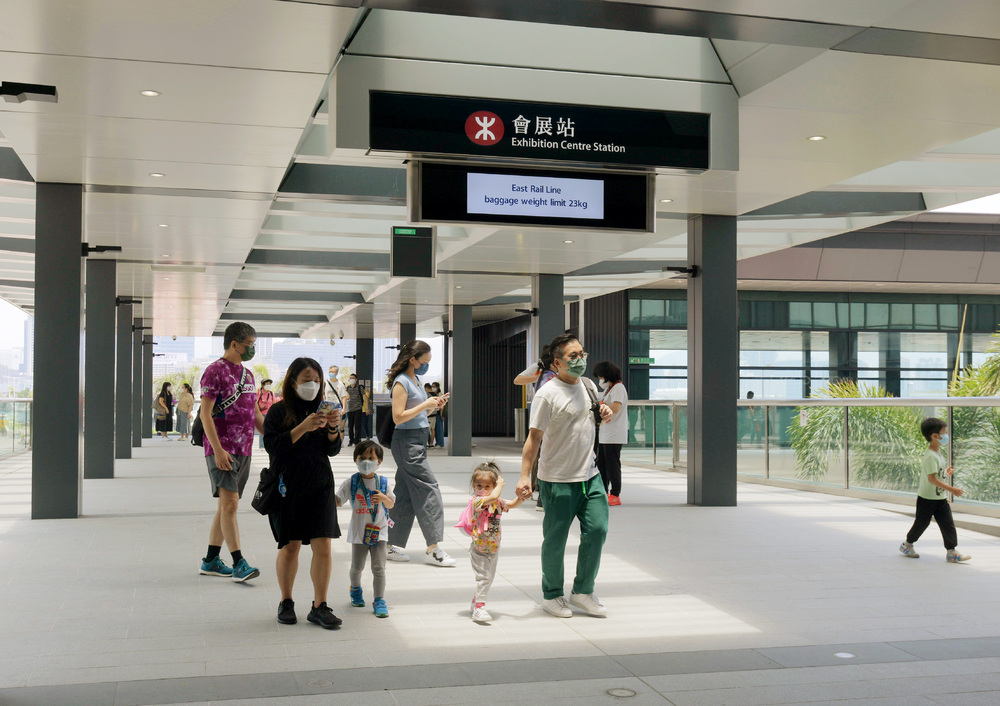
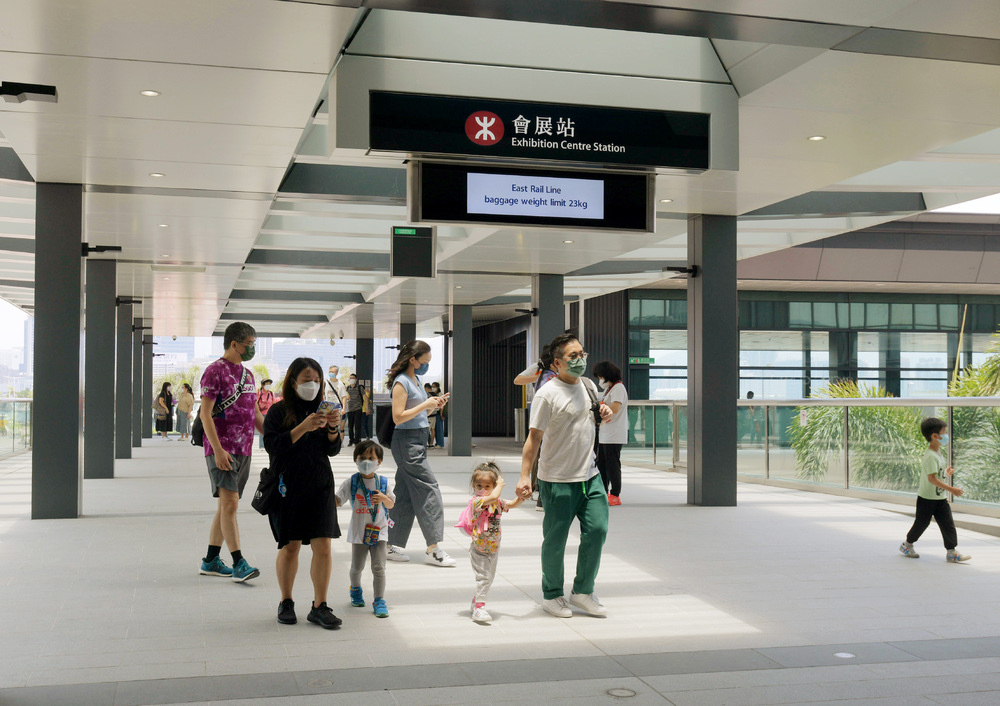
Commuters are most delighted to see the fourth railway harbor crossing coming into service this week, providing an express link from northeast New Territories to Admiralty.
But not many of us may know it has been deferred by almost 30 years.
The Shatin to Central Link was conceived at a time when MTR Corp lived up to its name as an urban system and Kowloon-Canton Railway Corp was a suburban railway.
The Tsuen Wan extension and then the Airport Express was regarded as expansions of the urban system to the New Territories, and the KCRC was keen to extend its system into the city center.
It was the severe competition between these two firms that caused the delay in implementing the Shatin to Central Link, which some people dubbed, in Chinese, as the "Missing Link."
I recall the SAR at that time, instead of just naming either the KCRC or the MTRC to proceed, had the strange idea of asking both, which it totally or majority owns, to bid for the link.
They were asked to come up with a proposal on what link was the most effective one and the method to finance it.
As the KCRC already has a network in east NT, it eventually won the bid.
But the saga continued.
Unfortunately, at that time the public perceived KCR operations as less efficient, which eventually led to a railway merger in the early 2000s.
The slow progress of the plan caused the railway company that won the bid for the link to have its operation merged into the other company, and once again, the MTRC (as it is now called) regained the right to build this all-important line, despite its being a KCR system, based on the suburban East Rail Line.
But meanwhile, with continued development in the city, the connection into Central has become much tougher.
It was no longer possible to loop the line through Happy Valley and lead it back to Central station.
Admiralty station then become the only feasible connecting station, but with the constraints of existing building foundations and other obstacles, the space available can no longer accommodate the full length of 12-car trains.
East Rail Line trains now need to be shortened to nine-car ones, requiring a much more sophisticated signaling system to facilitate a shorter headway to try and minimize the reduction in passenger carrying capacity.
By this time, the South Island Line has already been planned and again Admiralty was selected as its city terminal. The Shatin to Central Link can only connect to Admiralty by adding a further layer of platform to the busy layout.
Admiralty has suddenly become the busiest station in the railway network, accessing four different lines: Tsuen Wan, Island, South Island and East Rail.
That is why it has taken so long to construct and complete, and at a much higher cost. To add to this misery, there was a construction issue over a concourse platform at Hung Hom station a few years ago, and a signaling issue of the new extension some two years after, causing further delays.
Once again, Hong Kong learned a hard lesson in planning and construction of an essential railway link.
The longer we delay the implementation of an infrastructure plan, the more costly in time and money it will be.
We would rather see the system being completed early for service than forever trying to fruitlessly enhance the design and procedures for perfection of process.
In the end, the "beast" will be more of a camel than a lion.
Veteran engineer Edmund Leung Kwong-ho casts an expert eye over Hong Kong's iconic infrastructure