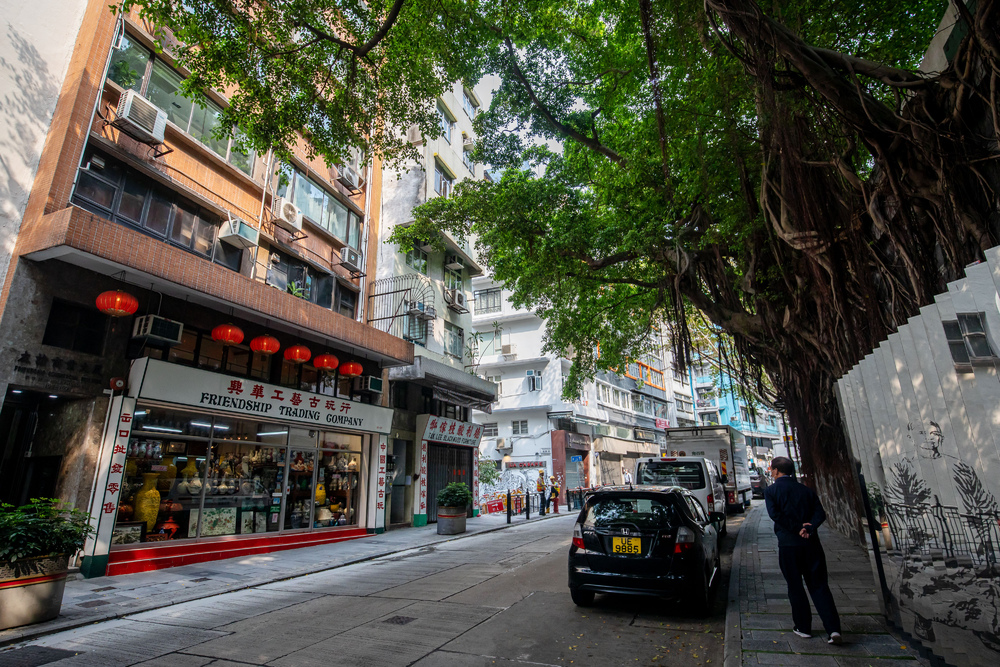
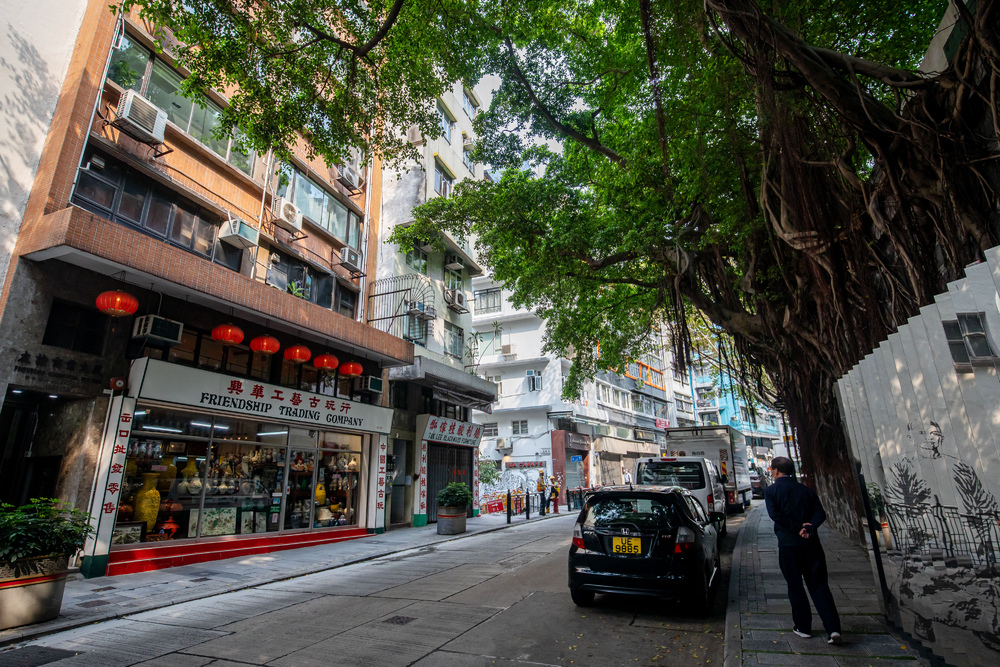
Long-time residents who collect antiques will remember Hollywood Road from the 1970s to the early noughties.
They were the glory days for antique shops, when rare and valuable artefacts from China could be bought. All you needed was money and a good eye - that crucial ability to spot fakes and repairs.
A constant stream of smuggled treasures, routed via Macau and often concealed in vegetable shipments, reached Hong Kong.
Artefacts from Tang dynasty tombs known as "tombware," even earlier Shang era bronzes, jade of all ages, and imperial porcelain and old scroll paintings by masters could be bought by the rich, the discerning and the brave.
I was one of the brave collectors with a passion for Buddhist bronzes, especially gilded ones. Those were years of huge enjoyment and great satisfaction.
A new book by Alexander Herman of the Institute of Art and Law Ltd has rekindled memories of my collecting days.
Restitution: the Return of Cultural Artefacts explains how returning objects to their original homes rights wrongs. It also helps to explain why today's Hollywood Road is but a shadow of its past.
A very competent dealer, whose judgment I trust completely, recently told me that today it is near impossible to find genuine Chinese artefacts of significant importance along Hollywood Road, cautioning that "80 or 90 percent are fake, and what is genuine is not important."
In the 19th and early 20th centuries, there was uncontrolled looting of foreign treasures by westerners. In Egypt the tombs of the pharaohs were opened by British archeologists like Howard Carter and William Petrie, and many of their discoveries landed in western museums.
In China, British archeologist Aurel Stein discovered the Buddhist treasures of Dunhuang and bought thousands of ancient sutras and artefacts from Taoist abbot Wang Yuanlu.
His vast collection made its way to Europe and into museums in London, Berlin and Paris. The Diamond Sutra from Dunhuang, the world's earliest dated printed book, is now in a specially-built vault in the British Museum. China, of course, wants it back.
In 1860, French and British armies plundered the Old Summer Palace or Yuanming Yuan ("Gardens of Perfect Brightness"), looting and destroying the buildings.
Thousands of artefacts were stolen - sculptures, porcelain, jade, silk robes, elaborate textiles, gold objects and more. Much of the loot landed in 47 museums around the world, but not in China.
In more recent times, tomb robbers in China removed huge quantities of artefacts which then went through the underground black market to Hong Kong. Thankfully, that trade is now dead, largely because the market for Chinese treasures is dominated by collectors inside China.
Because of Unesco conventions to protect cultural property and international deals to prohibit such trade, the antique business has become progressively more difficult.
Auction houses now require proofs of provenance, and customs departments often seize cargoes they deem to be protected cultural property.
Life for Hollywood Road's antique shopkeepers has become problematic, which is one reason they sell copies rather than genuine articles.
Some people joke that more money can be made selling fakes.
The latest twist in this story is that western countries are using the restitution of treasures as a diplomatic strategy.
In diplomatic deals, America has returned treasures to Iraq and Pakistan, Britain to Ethiopia, Germany to Namibia.
France's President Emmanuel Macron is particularly active, using restitution of looted art as a means to improve France's image in French-speaking Africa.
China also uses art for power purposes. It paid about HK$300 million for a museum in Senegal to house restituted art from France. Senegal was also the first West African country to sign up to the Belt and Road Initiative. Art and politics have never been such close allies.
Cheng Huan is an author and a senior counsel who practices in Hong Kong