Read More









The Death of Late Night? What Colbert’s Final Bow on May 21 Means for TV
18-05-2026 21:09 HKT



ImmD crackdown targets moonlighting domestic helpers arresting 17
19-05-2026 17:52 HKT



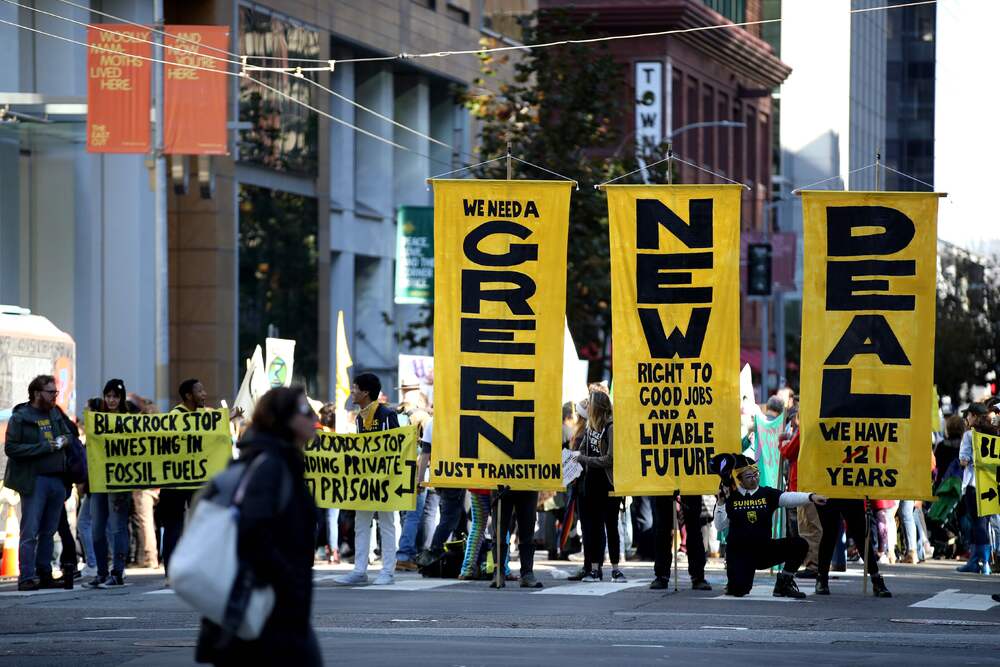
After introducing ways technology helps us reduce and offset greenhouse gas emissions in the energy and transport sectors, I now look at how technology in the financial sector can help achieve a net zero emission.
The relationship between fintech and emissions reduction is well documented.
Mark Carney, a former governor of the Bank of England, and John Kerry, a climate-change tsar in the United States, have emphasized the importance of "green" investments that incentivize businesses to produce less waste and reduce emissions.
Investment in companies that satisfy and even exceed environmental goals, the theory goes, means other firms must improve standards.
The general role the financial sector - not just fintech - plays has also come under scrutiny.
In November, the Council for Sustainable Development here reported 55 recommendations in line with the ambitious pledge to be carbon neutral before 2050, and among them were policies related to "green finance."
For example, it recommended direct and indirect public investment in green- and climate-themed bonds issued by the Hong Kong Monetary Authority and other financial products that support projects to deliver carbon reductions, such as tech startups developing sustainable products.
There is also pressure globally for the sector to move on green financing.
According to the OECD, a club of mostly wealthy countries, huge investment is required to fund public and private projects, many of which aim to develop cleaner technology to replace existing practices.
Interestingly, many challenges facing green financing do not necessarily arise from the lack of resources and interest but from institutional investors sometimes not knowing what to invest in.
This is because while there are good quality standards like environmental, social and corporate governance goals, the quality of information for investors remains inconsistent.
For example, the Hong Kong stock exchange requires listed companies to publish an annual ESG report disclosing their practices relating to environmental themes. Climate change is explicitly mentioned as something firms must refer to.
However, unlike the established financial accounting system, ESG reporting requirements are limited as standards and rules for disclosures are not comprehensive.
A dual response is needed to improve the current situation.
First, it should be made clear how firms ought to assess their environmental goals with clear, measurable indicators, and consistent requirements should extend to all companies.
Second, such information should be provided in an accessible format to investors - an "ESG data dashboard," say.
Such a dashboard would be helpful in a number of ways, like streamlining the collection and presentation of data from businesses. Investors can use the data platform to track businesses' ESG performances against performance in the stock market.
Moreover, it can enable listed companies to monitor their ESG performances against competitors. Businesses know that the public - their customers - are increasingly environmentally and socially aware, so they have the incentive to perform well.
Any change in the level of ESG performance will signal problems a business should want to address.
Additionally, the data platform should provide a source of evidence for regulators and auditors.
Of course, such a platform is an ambition, and its development will require regulatory overhaul and must consider risks such as the overreporting of sensitive information or even "greenwashing" by providing misleading information about a company's products.
But if the financial sector is serious about climate change, it must act.
Dr Jolly Wong is a policy fellow at the Centre for Science and Policy, University of Cambridge