Read More
The Urban Renewal Authority (URA) announced on Monday an annual deficit of HK$2.72 billion for the past fiscal year, with expectations of continuing this trend into the current fiscal year.
ADVERTISEMENT
SCROLL TO CONTINUE WITH CONTENT
The authority described the last fiscal year as particularly challenging, recording an operational loss of HK$41 million, compounded by a HK$2.68 billion provision due to declining market prices.
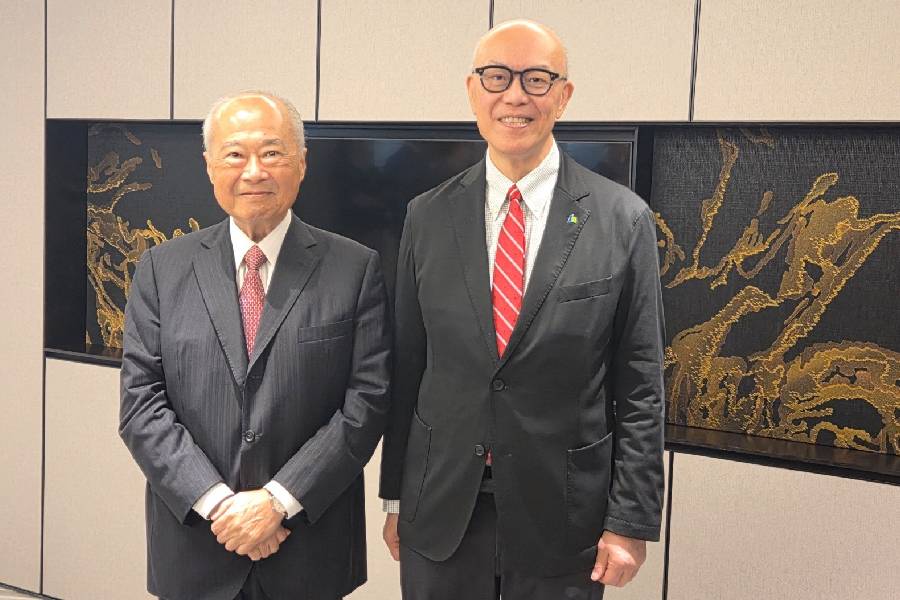
However, URA chairman Chow Chung-kong expressed confidence in the authority’s finances, citing HK$21.2 billion in liquid funds and a net asset value of HK$43.6 billion.
Speaking at a media luncheon, Chow confirmed the URA will proceed with six ongoing redevelopment projects, with a total expenditure projected at HK$23.5 billion.
Meanwhile, URA Managing Director Donald Choi Wun-hing noted that bond issuance remains a possibility, especially after the borrowing limit was increased from HK$25 billion to HK$35 billion, providing the URA with enhanced flexibility in a declining interest rate.
Choi stressed the authority's commitment to completing current projects by the 2025-2026 fiscal year while employing dynamic management strategies to adjust acquisition and tendering processes based on the market.
Challenges of the "7-Year Building Age" Policy
Raising concerns regarding the "7-year building age" acquisition policy, Choi reported that the average transaction price significantly exceeds market rates.
He warned that this policy not only burdens the URA with high purchase costs but also deters private developers from investing in older neighborhoods.
To prevent a vicious cycle of private redevelopment projects, URA Executive Director (Business) Wilfred Au Chun-ho noted that research into the "7-year building age" policy is underway to explore ways to reduce acquisition costs and develop compensation mechanisms.
Initiatives may include offering higher compensation for well-maintained properties or implementing flat-for-flat exchange schemes to encourage property owners to maintain their buildings, Au added.
Future development considerations
The authority chairman further stated that the research seeks to enhance residents' quality of life and accelerate urban renewal efforts.
Chan also expressed hopes for more options for redevelopment beneficiaries, such as integrating medical facilities or care services in new housing projects for the elderly.
While details are still being finalized, Chow revealed plans to submit recommendations to the government next year.
Amid the financial challenges, Chan remained cautious about reversing losses this year, indicating that any new projects would require careful consideration.
He noted that the URA may select smaller property acquisitions from its reserve of undeveloped projects to maximize planning benefits.
While financial capabilities are limited, he reassured the public that the URA remains committed to advancing urban renewal initiatives.