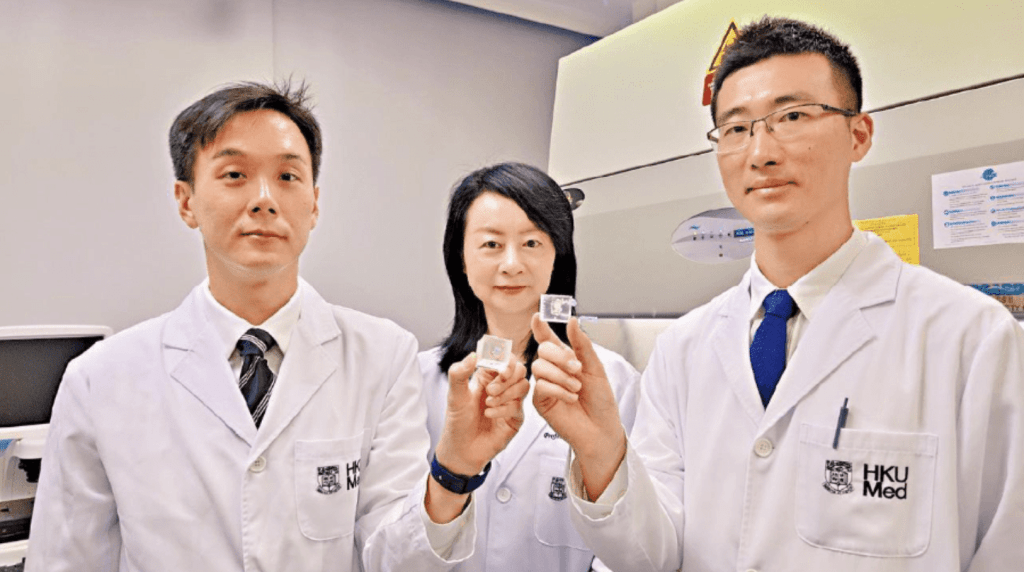
Liver cancer is the sixth most common cancer globally and the third leading cause of cancer death. A team from the University of Hong Kong's Li Ka Shing Faculty of Medicine has successfully developed the world's first "Bionic Liver Cube." Utilizing 3D bioprinting technology, this innovation precisely reconstructs a patient's individual liver cancer microenvironment using their own cells and extracellular matrix, opening a new chapter for fast, reliable personalized drug screening and efficient drug development.
Rising Global Burden: Nearly Double New Cases by 2050
A latest study published in The Lancet indicates that the annual number of new liver cancer cases is projected to surge from 870,000 in 2022 to 1.52 million by 2050—an increase of nearly 1-fold, potentially causing 1.37 million liver cancer deaths. Traditional treatment approaches often overlook individual differences in patients' tumor microenvironments, leading to limited efficacy, significant side effects, and treatment delays.
This innovative technology from the HKUMed team can highly simulate patient-specific tumor characteristics, including cell composition, tissue stiffness, and immune microenvironment. This assists doctors in rapidly evaluating the effects and side effects of various drugs and emerging therapies, enabling more precise treatment planning. The technology has already earned the "Gold Medal with Congratulations of the Jury" and the "China Invention Association Special Award" at the International Exhibition of Inventions Geneva, as well as the "Best Startup Performance Award" at the Asia Summit on Global Health.
From 'Trial-and-Error' to 'Selective' Treatment: Seizing the Golden Treatment Window
Currently, there is a lack of personalized drug screening platforms for liver cancer treatment. Patients often endure multiple treatment failures or struggle to find the most suitable drug regimen, bearing heavy financial burdens and risking delayed treatment. The HKUMed team states that the "Bionic Liver Cube" directly addresses this critical issue, helping to accelerate and assess various drugs' responses and side effects in patients, providing them with more precise treatment plans and reducing the risk of cancer recurrence due to treatment delays. Currently, the Bionic Liver Cube has begun recruiting patients in local hospitals for clinical trials to expedite its clinical application.
Professor Man Kwan, Chair Professor of the Department of Surgery, School of Clinical Medicine, HKUMed, who leads the research project, explained that the "Bionic Liver Cube" can rapidly identify the most effective drugs for a patient, significantly improving treatment efficiency and reducing side effects, potentially greatly extending patient survival. In drug development, this platform could replace traditional animal testing models, helping to enhance R&D efficiency, reduce costs, and shorten development cycles.
In basic research, the model can help scientists deeply explore immune regulation mechanisms and discover new therapeutic targets and strategies. The application prospects for the "Bionic Liver Cube" are broad, and its technical framework can be extended to other liver diseases and cancers, promoting the wider adoption of precision medicine. The technology is currently undergoing clinical trials in both public and private hospitals locally.
The team hopes to accelerate the product's deployment in local and international markets based on scientific data to benefit more patients.
Core Technologies of the 'Bionic Liver Cube'
- Personalized Biomaterial Extraction: Cell and matrix protein isolation technology extracts hepatocytes, tumor cells, immune cells, and matrix proteins from patient tissues, creating a highly biomimetic, customized in vitro liver cancer model—the "Liver Cube"—for each patient.
- 3D Bioprinting Technology: Constructs a biomimetic model containing normal tissue, tumor tissue, and vascular structures simultaneously, more accurately reflecting the actual conditions within a patient's tumor than traditional culture methods.
- AI-Assisted Patient Parameterization & Printing: An AI model trained on a clinical biobank determines the optimal printing geometry and bio-ink composition ratio for each patient by correlating histopathological features, tissue stiffness, and tumor immune microenvironment subtypes.
- Customized Patient-Specific Tumor Feature Measurement System: Precisely measures patient-specific indicators like tumor stiffness and immune features, reconstructing the patient's individual tumor microenvironment in a highly biomimetic manner.
- Built-in Microvascular System: Allows the model to continuously undergo drug testing in the lab, evaluating the therapeutic effects of various treatments on the patient's tumor.
Common Symptoms of Liver Cancer
According to the Hong Kong Hospital Authority, the liver has a remarkable self-repair ability; even if only a small part remains functional, it can still operate normally. Therefore, early-stage liver cancer symptoms are often not obvious. As the tumor grows, it may cause the following symptoms:
- Discomfort/pain in the upper right abdomen
- Right shoulder pain (enlarged liver stimulates the phrenic nerve connected to the right shoulder)
- Loss of appetite, weight loss, nausea, lethargy
- Hard lump in the upper abdomen
- Yellowing of skin and whites of eyes (jaundice), itchy skin (due to bile duct blockage by tumor, causing bile pigment accumulation in blood)
- Tea-colored urine, pale grey stools
- Abdominal fluid accumulation (ascites)