Read More




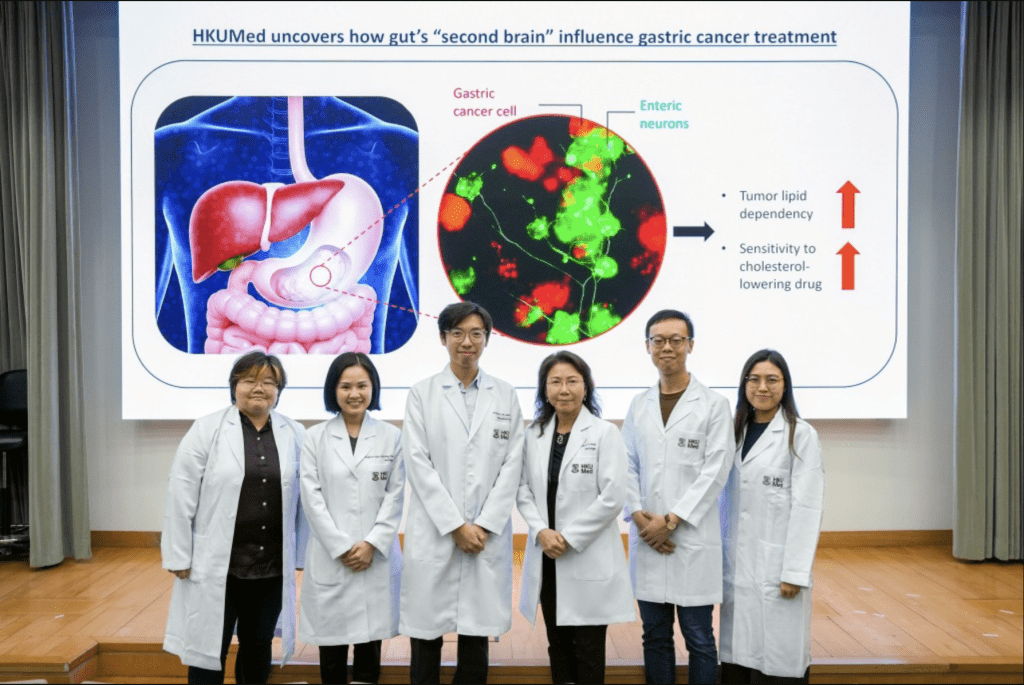
Stomach cancer is the sixth most common and fatal cancer in Hong Kong. Many patients are diagnosed at an advanced stage, where the five-year survival rate is low. The University of Hong Kong's Li Ka Shing Faculty of Medicine recently made a major breakthrough in stomach cancer research, successfully cracking the cancer cells' "metabolic code."
They discovered that the body's "second brain"—the enteric nervous system—is a key "accomplice" fueling stomach cancer growth. Furthermore, a new therapy developed from this finding can increase cancer cell-killing efficiency by 6.3 times. This research opens a new path for stomach cancer treatment, and the findings have been published in the international journal Cell Stem Cell.
Past cancer research often focused on the cancer cells themselves, but the microenvironment surrounding the tumor also profoundly influences its growth. This HKU-led study is the first to reveal that "enteric neurons" in the digestive system interact with stomach cancer cells, altering their metabolic patterns. This interaction makes the cancer cells more reliant on lipids (including fatty acids and cholesterol) to sustain their growth. The research team used gene-editing technology to conduct a large-scale screen of approximately 20,000 genes in cells, ultimately identifying two key factors in lipid metabolism:
These two factors act like the cancer cell's "energy factories," responsible for producing lipids for their growth. The team confirmed in animal experiments that using inhibitors to block these factors significantly slowed tumor growth speed by up to 65%.
The team also developed a new research model to simulate the infiltration of stomach cancer tissue by enteric neurons. The results showed that when combined with a cholesterol inhibitor, the efficiency of killing cancer cells could be dramatically increased by 6.3 times. Professor Alan Wong Siu-lun, Associate Professor from the School of Biomedical Sciences at HKUMed, who led the study, explained: "Enteric neurons can increase stomach cancer cells' demand for lipids, and the cancer cells become more susceptible to cholesterol inhibitors." This not only aids in developing new stomach cancer drugs but also helps predict patients' responses to treatment, advancing precision medicine.
Wong added that in the future, doctors could detect fatty acid metabolism factors in a patient's tumor tissue as biomarkers. This would allow for more accurate prediction of which patients might respond better to lipid metabolism inhibitor therapy, enabling the matching of the most suitable personalized treatment plan to enhance efficacy and success rates.
The research team believes the application potential of cracking this "metabolic code" is not limited to stomach cancer. It could potentially extend to other cancers with dense neuron infiltration, such as pancreatic cancer and liver cancer. This research direction also provides an extremely valuable new perspective. The team will further expand this research to other cancers, aiming to bring innovative breakthroughs to cancer treatment.