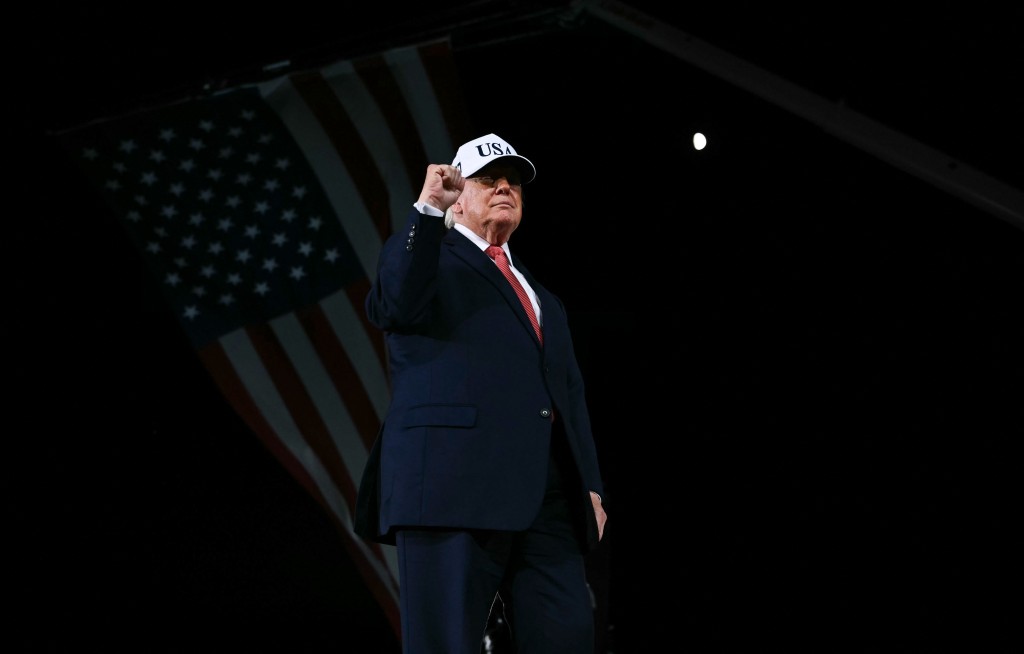
US President Donald Trump announced on Saturday that Audi plans to build a US$4 billion (HK$31.4 billion) assembly plant in Georgia that will produce 200,000 SUVs annually, as he seeks to convince Americans to back Republicans in the November midterm elections.
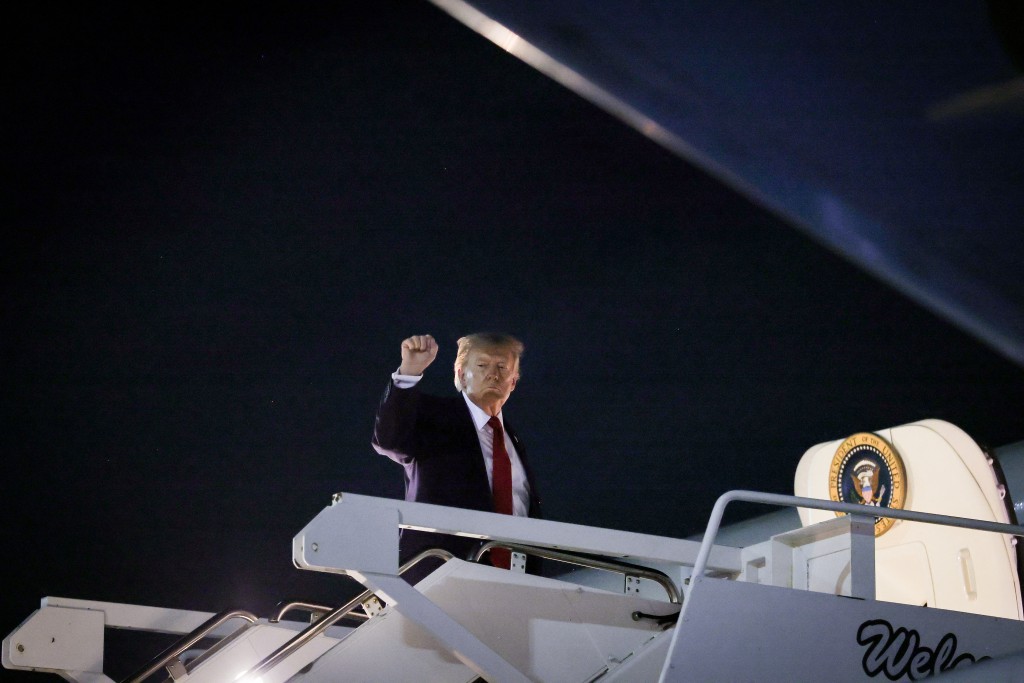
Trump, who has pressured automakers to move production to the United States and has raised tariffs on autos, steel, aluminum and parts, made the announcement at a rally in Perry, near Macon in central Georgia, where Volkswagen's premium subsidiary intends to build its first US assembly plant.
Last year, Trump's tariffs dealt Audi a €1.2 billion (HK$10.5 billion) blow as it imports all its vehicles for the US market from Europe or Mexico.
Georgia has competitive election races for US Senate and governor and Trump is eager to make the case that his auto tariffs are helping the US economy. Critics say they have boosted vehicle prices and that the trade uncertainty has delayed some automaker investments.
"We are planning to bring our biggest and most premium SUVs, and produce them here in Macon, Georgia," Audi CEO Gernot Doellner said at the event. "This is a long-term investment because we believe in the American market."
In Germany, meanwhile, there has been increasing tension between Volkswagen management and workers over massive job cuts in the carmaker's home market, including possible plant closures in light of rising costs and stiff Asian competition.
"It is right and necessary to better tap into the US market via a new plant," said Christiane Benner, head of the IG Metall union and Volkswagen's deputy supervisory board chair. "However, firm prospects for workers at all sites, particularly those here in Germany, must be clearly defined and set out."
She said a final decision on the investment would have to be taken by Volkswagen's supervisory board.
Olaf Lies, state premier of the German state of Lower Saxony, Volkswagen's second-largest shareholder, said that expanded production in the US was an opportunity provided German workers also benefit.
"Growth in America must secure jobs and value creation here and must not displace them," he said.
REPUBLICAN SAYS TARIFFS BROUGHT AUDI PLANT TO UNITED STATES
Audi said the investment will create approximately 4,500 jobs. Construction is scheduled to begin next year, with production starting in the early 2030s, Audi said.
The plant is expected to assemble the Audi Q7, Q8 and Q9 SUVs, a US official told Reuters.
Audi also plans to build 25,000 vehicles a year in neighboring South Carolina, the official said. Some of the vehicles, now built in Europe, would be exported, the official added. Those vehicles will be assembled at a US$2 billion plant of VW's off-road brand Scout Motors that is under construction in Blythewood, near the state capital, Columbia, the official said.
"We regard the region as a key market for profitable growth," Volkswagen CEO Oliver Blume said. "A potential Audi plant in the US would create further conditions for this."
Trump has cut government incentives for electric vehicles, causing a significant reduction in EV and battery production in the country. US vehicle and parts employment has fallen since Trump took office last year.
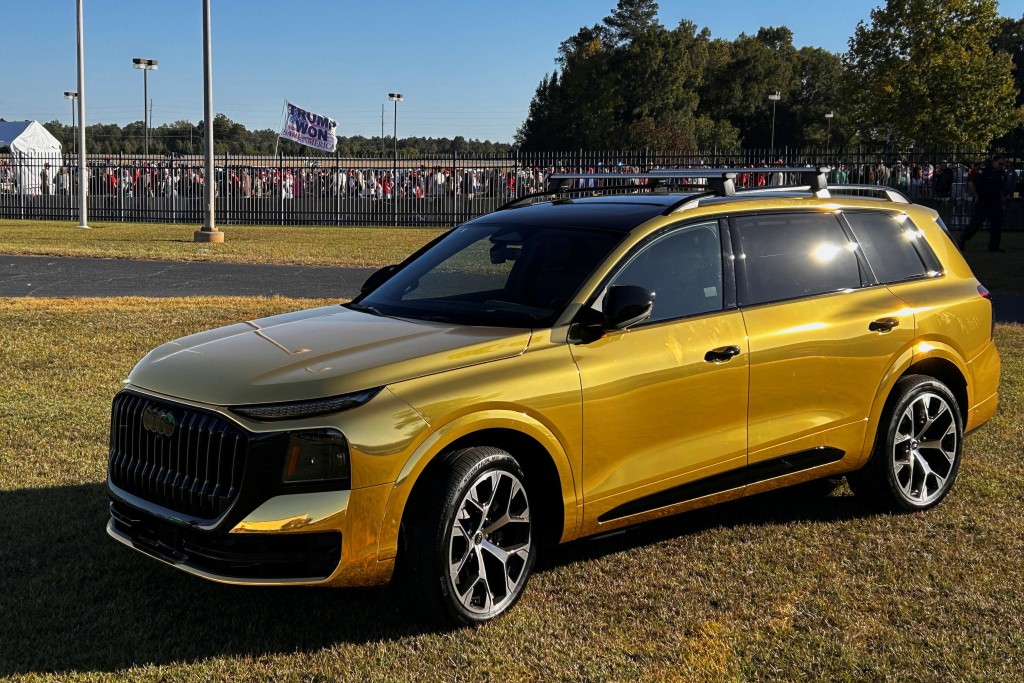
A gold Audi with manufacturer license plates was parked outside Trump's rally.
US Senator Bernie Moreno, an Ohio Republican, said late on Saturday that "with this investment, Audi will build all of their SUVs exclusively in the US". He said the Audi plant "would never have happened without tariffs, without common sense regulations and without eliminating California's ability to regulate fuel economy standards".
Audi sales have fallen for two consecutive years and slid 7 percent in the first half of 2026 as fierce competition in China and US tariffs hit demand. Audi's US sales are down 16 percent this year.
Audi's Neckarsulm plant in southwest Germany is one of four German Volkswagen plants facing possible closure after 2030.
In July, Japan's Toyota said it would spend US$3.6 billion to build a 2.5 million square foot (232,000 square meter) truck assembly line on its manufacturing campus in San Antonio, Texas, and shift some truck production to the US from Mexico. The Japanese automaker said the expansion would be completed by 2030, creating 2,000 jobs.
Honda Motor is considering building a US assembly plant but has warned it may not unless the US-Mexico-Canada Agreement on trade is extended. South Korea's Hyundai said last year that if it had certainty about USMCA, it "would immediately unlock over US$20 billion in new American investments".
Reuters