Read More
China’s annual economic growth is projected to slow to 3 percent on average over the next 15 years, as a growing consumption base and a modest rebound in total factor productivity, driven by AI and automation, help offset slower capital formation, according to DBS.
ADVERTISEMENT
SCROLL TO CONTINUE WITH CONTENT
AI, semiconductors and green energy will anchor the next growth cycle, supported by policy-backed investment and AI adoption across sectors such as manufacturing and healthcare, boosting efficiency and labor productivity, the DBS Group Research said in a report on Thursday.
Demographics, the property downturn, youth unemployment and external trade frictions will remain headwinds, making policy execution and public-private coordination critical to the economic transition, the report said.
The bank expects the CSI 300 to reach 9,500 by 2040, delivering an annualized total return of 7.5 percent for investors.
Sustained earnings growth, higher returns on equity supported by improved corporate governance, supportive policies, and consistent inflows from multiple investor groups should support the market expansion, it said.
China’s AI compute buildout is expected to shift from imported GPUs to a more domestically anchored semiconductor stack, benefiting segments such as domestic AI accelerators, the report said, adding that AI applications are set to evolve from feature-level adoption to embedded productivity infrastructure, with ecosystem and cloud leaders capturing the largest value pools.
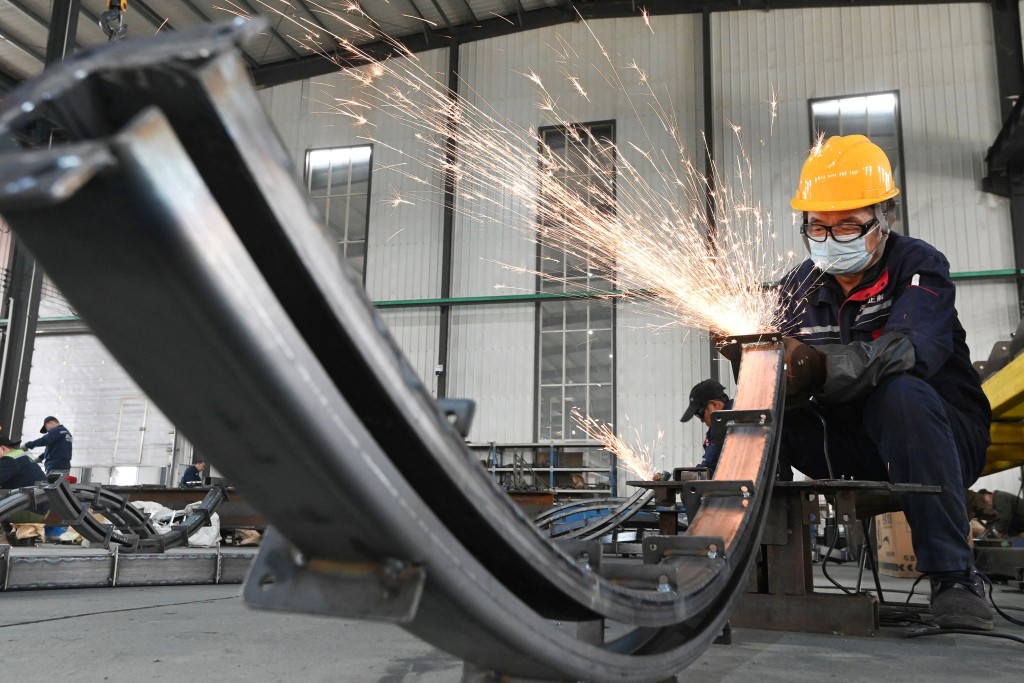
Advanced manufacturing will underpin China’s quality growth and supply-chain self-reliance, with robotics and automation and precision components among the key areas of focus, the bank said.
The green transition will remain a key pillar of China’s carbon-neutrality ambitions, potentially driving new energy vehicle penetration above 90 percent and making L4/L5 autonomous passenger vehicles widespread by 2040, while further accelerating battery storage and renewable energy deployment, it added.