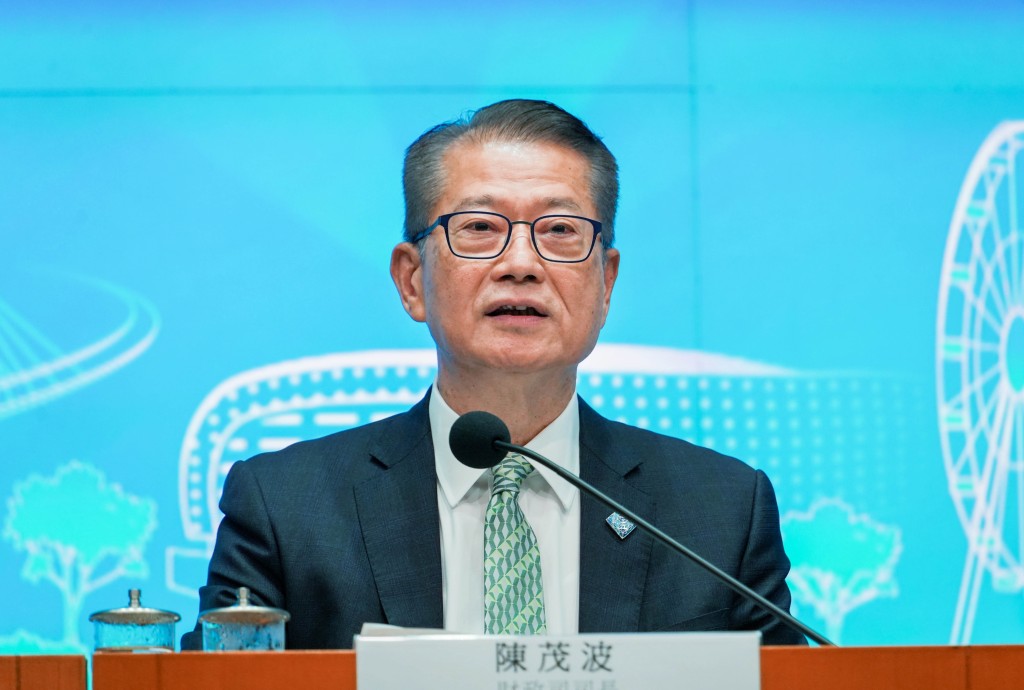
Hong Kong is set to return to a track of steady economic expansion as Financial Secretary Paul Chan Mo-po expressed confidence that the city will reach the full-year government-set economic growth target this year, which exceeds the 10-year average before the pandemic.
The growth target is between 3.5 percent and 4.5 percent.
The development of artificial intelligence is adding momentum to the economy, and based on the latest assessment by government economists, Chan said he is assured that the SAR’s gross domestic product this year could meet the growth target.
The projection is well above the 2.8 percent average annual growth in the 10 years before Covid, or 2010 to 2019. It is also higher than the 3.3 percent rise on average in the nine years from 2010 to 2018, excluding the effect of a 1.7 percent contraction in 2019 caused by social unrest.
Hong Kong's GDP could also grow faster this year than last year’s 3.6 percent increase.
In the first half of 2026, the territory’s economy logged a 5.1 percent increase, the strongest half-yearly performance in nearly five years.
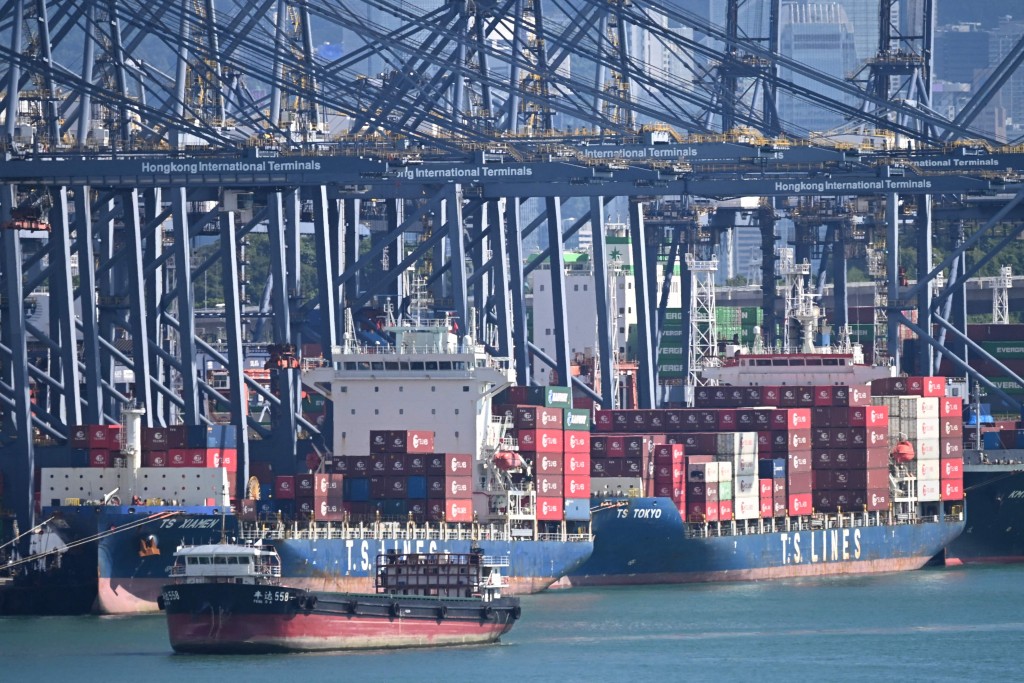
The city’s total value of exports of goods in August reached HK$667.9 billion, a year-on-year increase of 53 percent, driven by demand for AI-related electronic products.
Outbound shipments for the first eight months combined rose by 42.5 percent. If sustained, 2026 would become the best year in history for Hong Kong’s exports, surpassing 1979 when a 40.9 percent hike was recorded.
It would also be the highest in absolute amount, outstripping last year’s HK$5.24 trillion in export value, which was a 15.4 percent jump from 2024.
AI-related products now account for about 70 percent of Hong Kong’s total exports, as the mainland – a key supplier and consumer of advanced electronics – has routed around one-third of its integrated circuit exports through the city, the government has said.
Meanwhile, the adoption of AI-empowered products and services also helped private investment in machinery, equipment and intellectual property product acquisitions surge by 38.4 percent in the first six months of 2026.
That boosted overall private investment by 19.4 percent for the third consecutive quarter of double-digit growth in the June quarter.
Private consumption also maintained moderate growth for five consecutive quarters in April-June as Hongkongers spent less abroad, suggesting a partial reallocation of consumption toward the domestic economy, the government said earlier.
Despite the rises, the seasonally adjusted GDP fell 0.6 percent quarter on quarter in the second quarter, following a 2.9 percent gain in the preceding quarter.
While noting the governance challenges AI brings to Hong Kong, Chan also said the city can play a unique role in providing "rules" and "trust."
Leveraging its common law system, talent, professional services, and financial support, Hong Kong can provide trusted solutions that balance model training, cross-border data flow, privacy protection, and dispute resolution, Chan wrote in his blog on Sunday.
The authorities are fully committed to supporting citizens in learning and using AI more, he added.
Chan has arrived in Doha, Qatar to attend the annual meeting of the Asian Infrastructure Investment Bank, where he is expected to share Hong Kong's experience with the governors of member states on issues such as promoting infrastructure development, enhancing regional connectivity, and sustainable development.
He is also expected to introduce the new opportunities and advantages Hong Kong has gained by aligning with national development strategies.