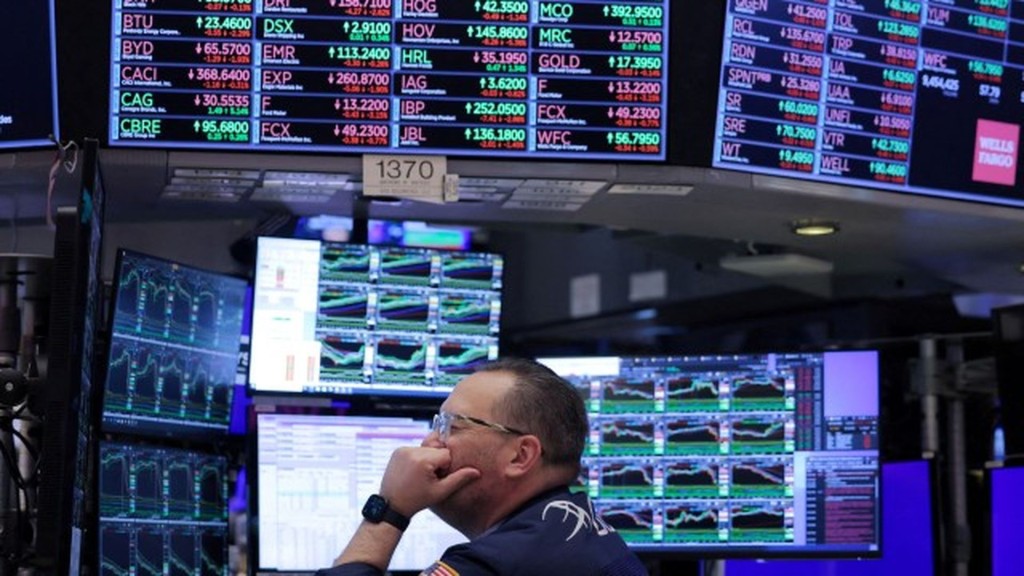
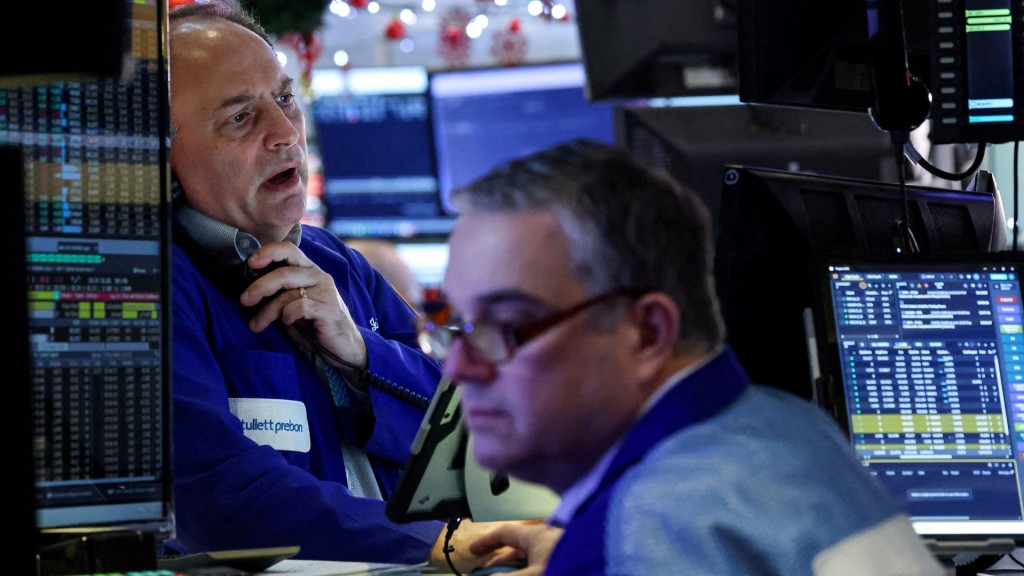
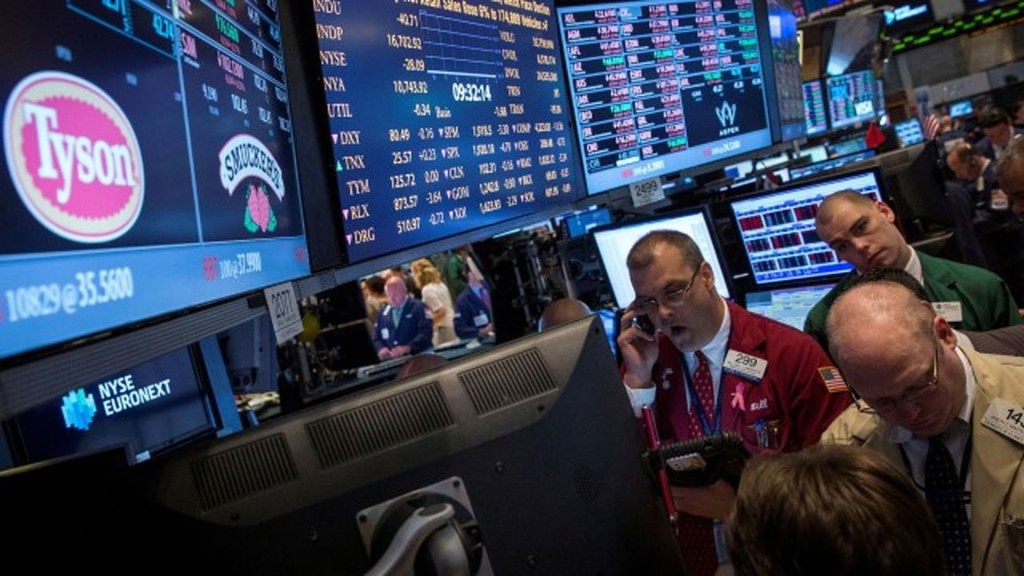
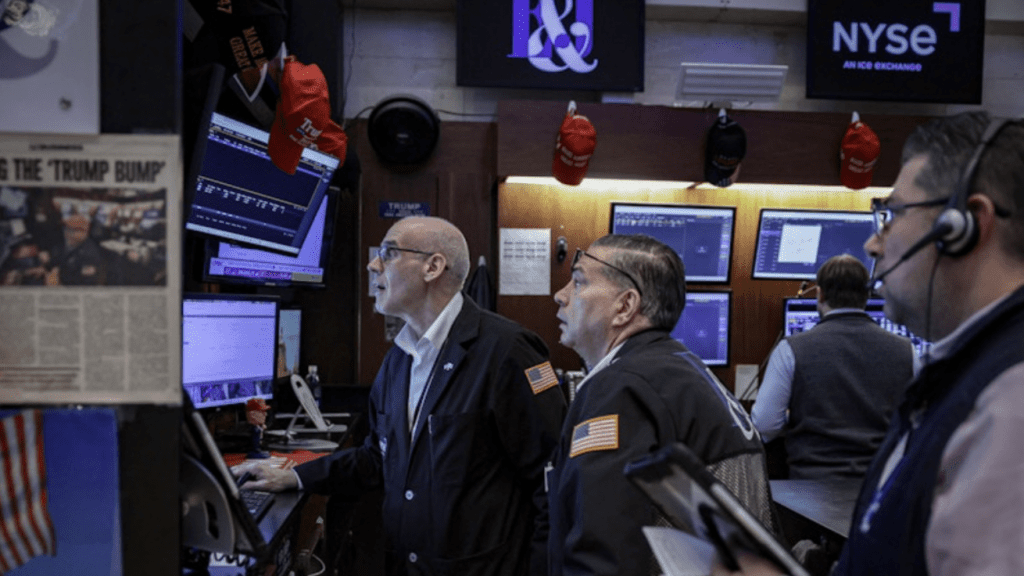
The major U.S. stock indexes ended more than 1% lower on Wednesday, with chipmaker shares extending recent declines and with renewed tensions between the U.S. and Iran adding to investor uncertainty.
President Donald Trump said the U.S. would attack Iran again if no peace deal is secured. The threat followed one of the most significant exchanges of hostilities in two months in the Middle East war.
An index of semiconductors .SOX fell 3.6%, with Nvidia NVDA.O and Broadcom AVGO.O among the biggest drags on the S&P 500. Investors have been worried about stretched valuations in the group.
The S&P 500 technology sector .SPRLCT ended down 11% from its June 2 record high close, confirming a correction.
The Cboe Volatility Index .VIX, Wall Street's fear gauge,added to recent gains.
Investors were still taking some profits in the tech space, said Tom Hainlin, an investment strategist at U.S. Bank Wealth Management in Minneapolis.
Also, investors are now "pricing in maybe a higher interest rate" after recent economic data and are also worried about the war, he said.
"Perhaps that conflict continues on into the mid to late summer," he said.
Adding to the down move, shares of trucking companies XPO XPO.N, J.B. Hunt JBHT.O and Old Dominion ODFL.O fell after Amazon AMZN.O announced expansion of its less-than-truckload freight services in the U.S. Industrials .SPLRCI dropped 3.4%, leading sector decliners.
The Dow Jones Industrial Average .DJI fell 953.33 points, or 1.87%, to 49,918.78, the S&P 500 .SPX lost 119.66 points, or 1.62%, to 7,266.99 and the Nasdaq Composite .IXIC lost 509.32 points, or 1.98%, to 25,169.50.
The Federal Reserve is widely expected to hold interest rates steady at its June policy meeting. Investors are pricing in at least one 25-basis-point rate hike by the end of the year.
Friday's U.S. jobs report was stronger than expected. On Wednesday, U.S. consumer prices increased 4.2% in the 12 months through May, the largest gain since April 2023, data showed, as the Middle East conflict raised the price of gasoline and other energy products.
The pace of increase was, however, in line with forecasts, as per a Reuters poll of economists.
After the closing bell, Oracle ORCL.N shares were down about 1% following the release of its results.
During the regular session, Super Micro Computer SMCI.Otumbled28% after it announced plans to raise $7 billion through a series of equity and equity-linked financing transactions to fund component purchases for its growing AI server demand.
The rotation out of high-flying technology shares has helped other areas of the markets that have lagged this year, including healthcare, real estate and consumer staples.
The much-hyped $1.75 trillion listing of SpaceX SPCX.O on Friday, targeting a record $75 billion raise, could also pressure U.S. stocks as concerns mount over excessive optimism in the tech sector.
Declining issues outnumbered advancers by a 1.87-to-1 ratio on the NYSE. There were 179 new highs and 138 new lows on the NYSE.
On the Nasdaq, 1,772 stocks rose and 3,129 fell as declining issues outnumbered advancers by a 1.77-to-1 ratio. The S&P 500 posted 22 new 52-week highs and 8 new lows while the Nasdaq Composite recorded 139 new highs and 141 new lows.
Volume on U.S. exchanges was 20.7 billion shares, compared with the 20.6 billion average for the full session over the last 20 trading days.
Reuters