Read More
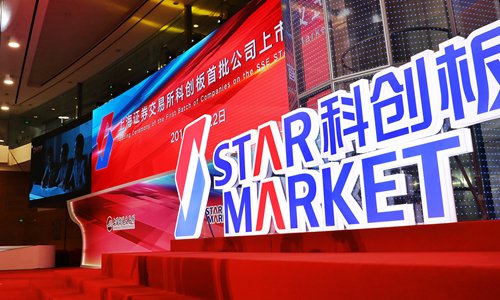
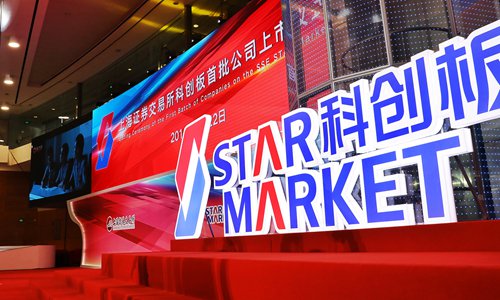
China's STAR Market, a year-old tech-focused board for start-ups that Beijing hopes
will fund a technological edge over Washington, launched its index on Thursday and showed it has made double the gains of its U.S. counterpart Nasdaq this year, Reuters reports.
The STAR 50 index, the first index for Shanghai's STAR Market, opened at 1,487.2 points, compared with 1,000 base points at the end of 2019. That makes for a roughly 50 percent surge compared with the Nasdaq 100 index's 24 percent rise so far this
year.
The creation of the index, which tracks the 50 biggest companies listed on the board for more than six months, offers investors a tool to monitor and evaluate a market that has been endorsed by President Xi Jinping.
"STAR 50 will be the equivalent to Nasdaq 100," said Duan Shihua, head of Shanghai Changer Investment Management Consulting, a Chinese index publisher.
"In this information age, tech firms have the biggest growth potential, and represent the future."
First announced by President Xi in November, 2018, when the Sino-U.S. trade war was raging, the STAR Market was designed to nurture China's own Intels and Qualcomms as
Beijing seeks technological self-sufficiency.
The STAR Market, with its streamlined listing process, has already dwarfed Shanghai's 30-year-old main board in the first half of 2020 to become the world's second-biggest IPO venue trailing only Nasdaq.
The market is now home to 140 companies worth 2.8 trillion yuan (US$400 billion) in combined market value, and hundreds of companies are preparing to list, including Alibaba's Ant Group.
The STAR 50 index tracks tech companies such as chip-maker Advanced Micro-Fabrication Equipment and software maker Beijing Kingsoft.
ADVERTISEMENT
SCROLL TO CONTINUE WITH CONTENT
Money managers are already rushing to capitalize on the index launch. Four mutual fund companies, including China Asset Management Co and E Fund Management Co, have applied to launch exchange-traded funds (ETFs) tracking the STAR 50, according to regulatory disclosures.
But with STAR Market companies trading at 100 times trailing earnings on average, compared with a multiple of just 34 for Nasdaq stocks, some analysts caution it could be a bubble ready to burst.