Read More








Nine-day rainy spell to hit HK with heavy showers and thunderstorms expected
11-06-2026 22:45 HKT


ICC chief hails Hong Kong as dispute resolution hub
08-06-2026 07:20 HKT
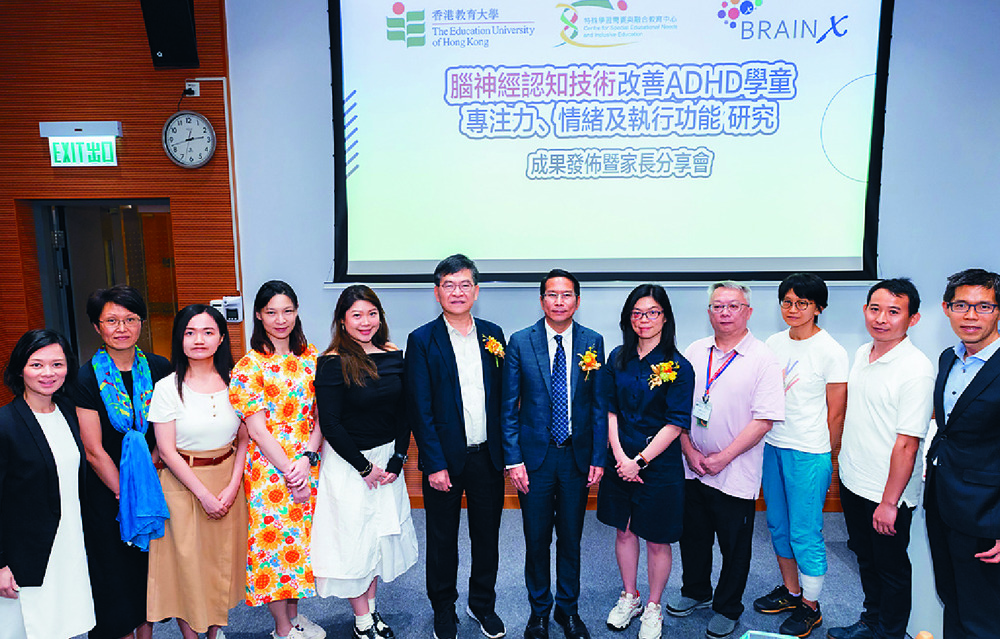
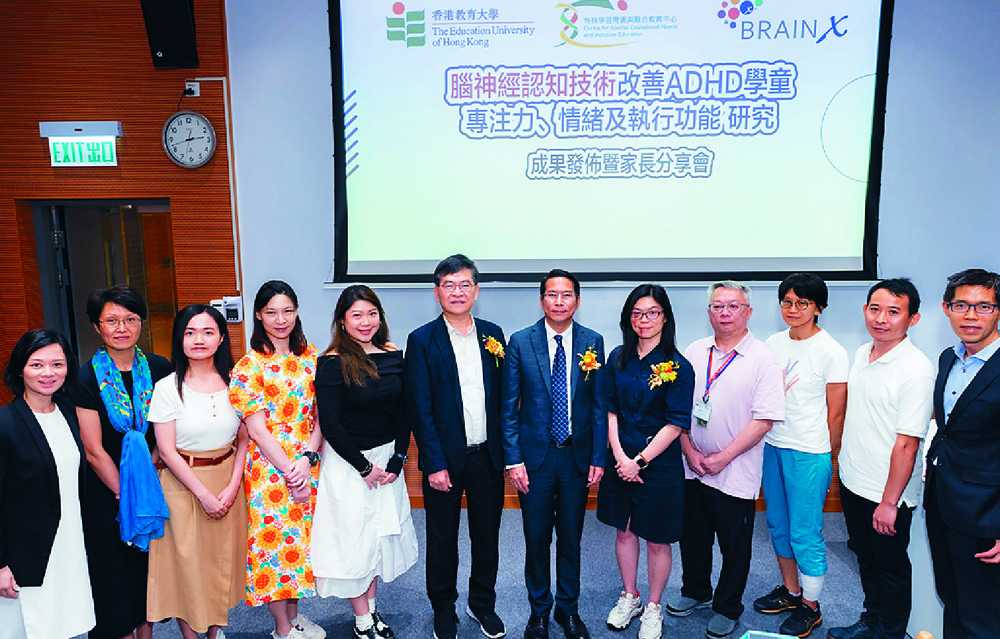
Hyperactive children can train their brains to concentrate, a recent study has found. The project by The Education University of Hong Kong found that neurocognitive training can help improve attention level, ability for emotional regulation, and executive function skills of children with attention deficit hyperactivity disorder.
Children with this neuro-developmental disorder often experience hyperactivity, restlessness, and even emotional instability - making parenting particularly challenging.
Supported by BrainX Training Center, the project enrolled 24 students from primary three to six diagnosed with ADHD.
During the 20-week project, conducted between September last year and February, students were required to attend a one-hour training session twice a week to receive neurocognitive training using brainwave technology, similar to playing computer games.
The children completed a set of tasks that helped them develop various skills, such as attention stamina, visual tracking, time management, short-term memory, discriminatory processing, and auditory processing. A wristband was used to measure their attention level in real-time.
Among the tasks were:
Attention stamina. To visualize the effect of concentration, children were asked to control the movement of a dolphin with brainwaves, collect coins from the treasure chest under the sea and accumulate points. If they became distracted, the dolphin would swim back to the surface to notify them.
Visual tracking. Children were required to stay focused on the moving target carefully, which helped enhance their concentration, while unleashing their learning ability.
Time management. In this game, children were asked to move the cartons using brainwaves without a time limit. It trained children's task initiation skills on receiving instructions.
Short-term memory. By teaching them how to store visual and auditory information in the area of short-term memory, the children learnt how to remember phone numbers, names, and other information in daily life.
Discriminatory processing. Through evaluating the importance of information received, the children learnt to distinguish and filter pieces of information.
Auditory processing: To train children to execute commands in an orderly manner, children were given an increasing number of tasks gradually.
Tests were conducted before and after the training to measure each participant's level of attentiveness, reaction time, impulsivity and hyper-reactivity.
The tests found that the children demonstrated an overall improvement in their performance, with a particularly significant increase observed in their reaction time.
Many of their parents stated that the training helped strengthen their children's attention levels and their parent-child relationshisp.
"On receiving the training, my son's patience and efficiency have significantly improved when doing homework," one parent said. Another added: "My child no longer loses control of his emotions over trivial matters. With his stabilized emotions, the pressure on us has also reduced."
ivy.ong@singtaonewscorp.com