Read More


Typhoon signals depend on low-pressure system’s track and speed, say HKO
01-06-2026 20:17 HKT

HK to bake in 36-degree heat on Friday before five-day rain spell
01-06-2026 17:31 HKT


Transcending borders and cultural barriers
For almost a century, Yew Chung and Yew Wah (YCYW) have blazed new trails in international education. Generations of Yew Chung educators, staff and students share in the same beliefs and mission: ‘Aligning with science and technology, culture and arts, love and charity’.
YCYW has successfully integrated the best of the East and the West in its pioneering system of bi-lingual education that employs Chinese and Western co-teachers. This has enriched learning through harnessing, not segregating, language, and promoted cultural understanding. The schools too are headed by co-principals of equal status offering cultural cohesion at the very top. The model has worked so well it has been emulated by other international schools.
Respecting, understanding and appreciating any culture is strongly emphasised at their schools, says Dr. Esther Chan, the Deputy CEO (K-12 Education) of Yew Chung Yew Wah Education. Their Chinese students do not only have strong roots in their motherland but they also have an informed global perspective. Many expatriate students in their Yew Chung schools are drawn to their exceptional methods of using language as a tool to understand a culture and can now interchange languages comfortably. Students develop an appreciation of China and its rich heritage, enabling them to act as interlocutors building future connections between China and the world.
The evolution of international education
Dr. Troy Lui, Chief Education Officer of Yew Chung Yew Wah Education, recounted their few years’ practice of solely having a Western principal governing the schools, “We are all unknowingly governed by our own knowledge and cultural background, and this was inevitably leading our schools with a very Western management.”
Students following their previous curriculum were only required to speak Chinese during their Chinese Language and Culture classes while all other subjects were delivered in English. Although their students were fluent in Chinese, they could not use specific terminology or sentence structures when it came to talking about specialised subjects. The 21st century competency forced YCYW educators to contemplate the future challenges their students were going to face and ask themselves whether their students were truly bilingual.
For the past few years, YCYW has been developing a unified curriculum framework and focusing on interdisciplinary learning. “Fixing students into silos is not going to be helpful when it comes to tackling real life scenarios,” Dr. Chan explains. “Students are not just there to listen to the teacher, rather the teachers are facilitators of students’ learning, and direct them in understanding and finding their own answers. Students should ultimately learn to be self-learners and self-independent in that respect.”
At YCYW, students in primary and secondary focus on problem-based learning, where they develop critical thinking skills to help them tackle whatever challenges that may come their way once they reach adulthood.
YCYW adopts an open door policy to ensure the accessibility of their teachers and school leaders, and to maintain the open and collaborative relationship between the leadership team and students. The boundaries of classroom walls have also been broken down into learning communities, to accommodate students, teachers, even parents coming together as active learners with a shared interest for shared learning, discovery and the generation of knowledge. This open and transparent learning environment has partitions to increase team teaching arrangements between teachers and is no longer confined to two teachers per class. Every learning community has a student progress leader to oversee the academic, social and emotional progress of each and every student; making sure they are being cared for.
Their recently emphasised Professional Development Mondays allows every school member to share in its different online sessions, depending on their areas of interest or areas that a group of teachers or non-teaching staff will be developing. Focusing on professional training, teachers are invited to join these online trainings that could be related to special pedagogies or how to interact with SEN children. Their last annual webinar had over 1,700 colleagues in attendance, with famous scholars leading presentations and workshops for teachers to strengthen their mutual understanding and working relationship.
Early Childhood Education: Learning through play
Dr. Betty Chan, CEO and School Supervisor of YCYW in Hong Kong, returned to Hong Kong in the 1970s after completing her doctorate in the US. She led the reform in early childhood education in Hong Kong and promoted the pioneering concept of ‘learning through play’. Initially faced with setbacks and uncertainties, the concept has since been recognised by society as a form of exploration for young inquisitive minds.
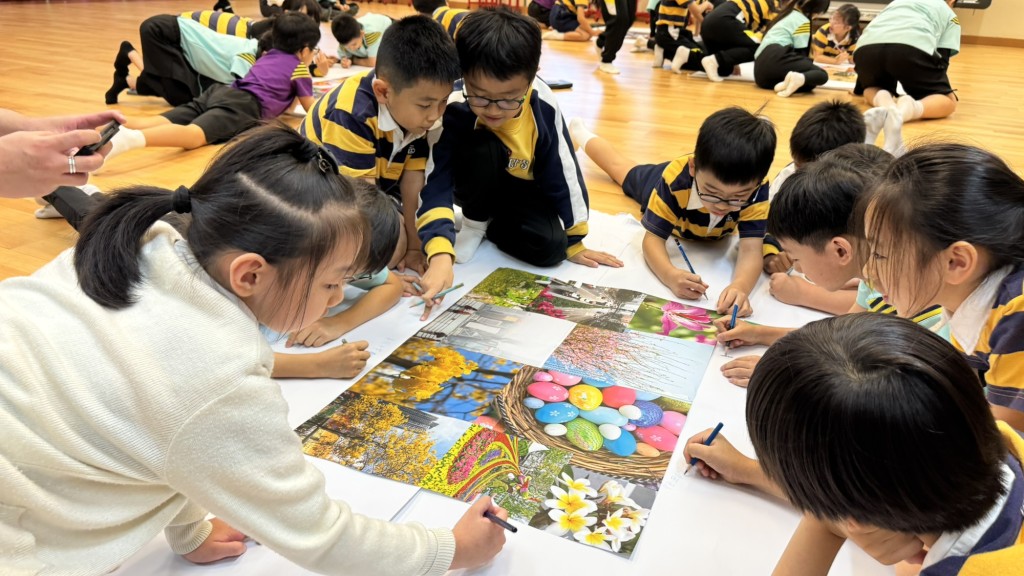
Their kindergartens’ Emergent Curriculum has teachers monitor the children’s ever-changing interests and accommodate the curriculum accordingly. Learning through play guarantees a fun and interesting setting for young ones to acquire knowledge, and their progress are assessed throughout. “There’s never a question that can’t be asked,” Dr. Chan remarks. “Every question is a good question.”
“Giving is always better than receiving”
YCYW students are instilled with the attitude of giving back at a young age; they are encouraged to express their appreciation and contribute regularly to the community. Their ‘Seeds of Hope’ charity programme brings students to impoverished schools to aid the less fortunate through their own labour, and nurtures a sense of service and compassion. Additionally, to further their love for humanity and adventure, every Year 8 student is required to join at least one uniformed group (Hong Kong Adventure Corps, Hong Kong Red Cross, Hong Kong Girl Guides, Sea Cadets or Scout Association).
Academic programmes on offer
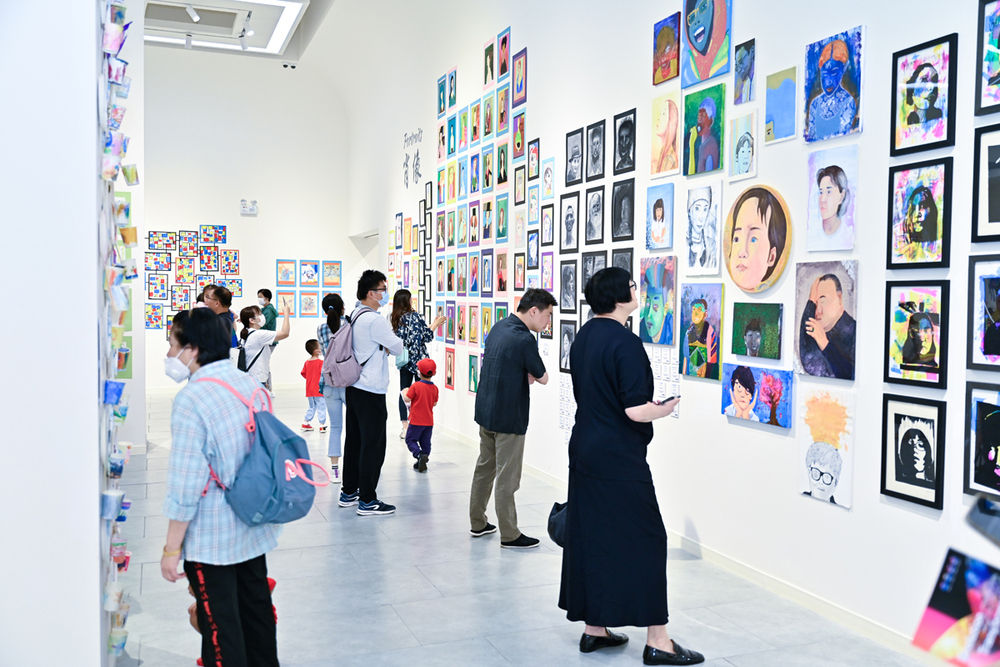
YCYW, famed for its strong Arts and Music background, offers a mature violin programme in every school for ages 4 to Year 3 students to gain exposure to music, and acts as a good mental exercise while also leading to an appreciation for a wide array of other subjects and arts.
As students have many extracurricular activities after school, rather than taking more time out of their education, every week their students will be freed out of a different subject lesson to take their Music lessons as part of their IIIP (In-school individual instrumental programme) which runs up to their secondary education.
Their DT & Arts department encompasses an area called the makerspace, a combination of their design & technology, Art and EdTech (education technology) elements into their learning. EdTech transverses all disciplines and by increasing resources in their EdTech, YCYW are determined to break down silos through the use of technology to aid learning while also teaching students to problem solve, create and design.
With a low staff to student ratio, teachers are not the only members delivering classes; specialist staff known as Fellows-in-Residence - who are distinguished artists or scientists in their fields are a part of school programmes that their students take part in aside from their regular lessons.
Throughout the pandemic, pastoral care sessions have been offered by their Christian & Community Development Division and counsellors to provide emotional and behavioural support. As a school, they continue to raise the bar in education, emphasising educational quality to nurture students to become well-rounded and to stand at the forefront of their education.
The pandemic has provided a great opportunity to think of the future development of their schools, prompting educators to hypothesise a combination of their teaching resources to provide more electives for their upper secondary students. Dr. Lui explained that some schools with a low student population may be able to hybridise their schools together online so there can be more options for students to choose from, thus opening a multitude of doors for their future.
To further their success in life, their careers and university guidance officers help take care of student’s university applications and offer careers consultations as early as Year 5 to help them become acquainted with their future prospects.