Read More
Financial Secretary Paul Chan Mo-po has been wrestling with massive budget deficits and is eyeing the HK$2 public transport subsidy for seniors over 60 as an area to trim spending.As I commented recently, it is necessary for Chan to return to financial prudence to keep spending at 20 percent of the city's GDP. The deal to lower the eligibility age of the subsidy from 65 to 60 departed from the expected fiscal prudence. Adjusting it is all but necessary as long as the seniors are not demonized by politicians as abusers to justify the cutback.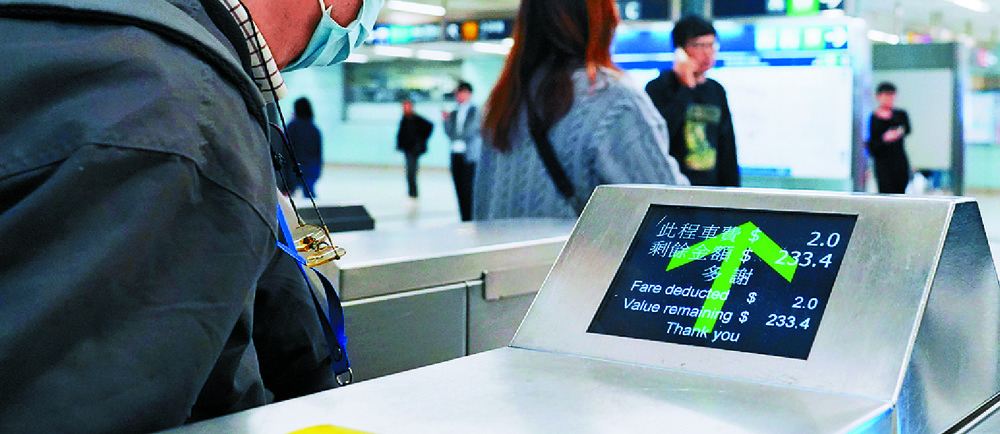
It is reported that the government will maintain the eligibility age at 60, but will introduce a limit of 240 trips per month - an average of eight trips per day. Also, for fares above HK$10, the seniors will be asked to pay 20 percent of the fare, thus paying HK$4 for a trip costing HK$20 or HK$6 for a trip of HK$30 in fare.
ADVERTISEMENT
SCROLL TO CONTINUE WITH CONTENT
It is foreseeable that as the population continues to age, the cost in the transport subsidy will grow exponentially if unchecked.
The reported adjustments fall in line with prudent financial principles. However, there is room for further tightening as the changes are estimated to save the government a few hundred million dollars a year only.
Against a deficit of HK$200 billion before bond sales were included, the saving in transport subsidy would be peanuts. Land sales, once the city's cash cow, has so far generated only a fraction of the HK$33 billion predicted in the 2024-25 budget. The real budget hole is elsewhere.
The financial secretary said on his blog yesterday that he would strictly control government spending, increase revenue appropriately, make use of public resources and market forces to stimulate development.The question is: if tax increases are off the table, could Hong Kong be creative enough to cap public spending at 20 percent of the GDP?
The civil service establishment is huge. Outsourcing certain jobs would help reduce staff costs.Also, imagine a world where AI is part of the civil service workforce handling the repetitive, boring tasks involving loads of paperwork, data processing and administrative stuff. Certainly, the flip side is that many people would lose their jobs.
Shenzhen, for example, is experimenting with AI in government roles. It is reported to have 70 AI "civil servants" doing jobs that were used to be done by humans.Chan may also ask nonlocal students to pay full fees to save the public a significant amount. If nonlocal students were to be asked to bear the full cost, the government may look to saving as much as HK$3.9 billion a year, about two-thirds of the entirety being set aside for the HK$2 subsidy scheme this year. The money saved could then be committed to other needs.
The non-means-tested one-off student grant of HK$2,500 provided to eligible students from secondary, day-school, primary, kindergarten and special students since 2019 is expected to be slashed and is estimated to save the government HK$2 billion annually.The cutting back on the transport subsidy for senior citizens is more a symbolic gesture of commitment to keeping government spending under control. Even if the whole scheme were to be abolished, it would save HK$6 billion a year at most, which would be a drop in the ocean.
What is more important is to grow the pie. Or, better still, come up with a road map.So will the budget due to be announced on Wednesday live up to the cover's turquoise blue color that Chan has likened to boundless opportunities for the city?Wednesday's budget is expected to outline strict controls on government spending, increasing revenue and utilizing public resources and market forces.