Read More











Any act of abuse should surely be barred as a matter of principle.
So when Education Secretary Christine Choi Yuk-lin said a review was underway to plug a loophole exploited by mainlanders in order to pay lower tuition fees to which only local students are entitled, no one would be happier than the parents who organized an online petition to the Legislative Council to plead for an end to the situation.
Frankly, taxpayers will also be happy to see an end to the abuse, no matter how minor a saving this may achieve in easing the massive deficits facing Hong Kong.
The administration has introduced various immigration schemes over the past several years, including the Top Talent Pass, the Quality Migrant Admission and the Capital Investment Entrant schemes.
Successful applicants often do not come to Hong Kong alone. Their under-age children often also come as dependants and study at local primary and secondary schools before taking the Diploma of Secondary Education exam to apply to join one of the government-funded universities as a local student - and there is absolutely nothing wrong with that. However, quite a number are believed to have abused the system.
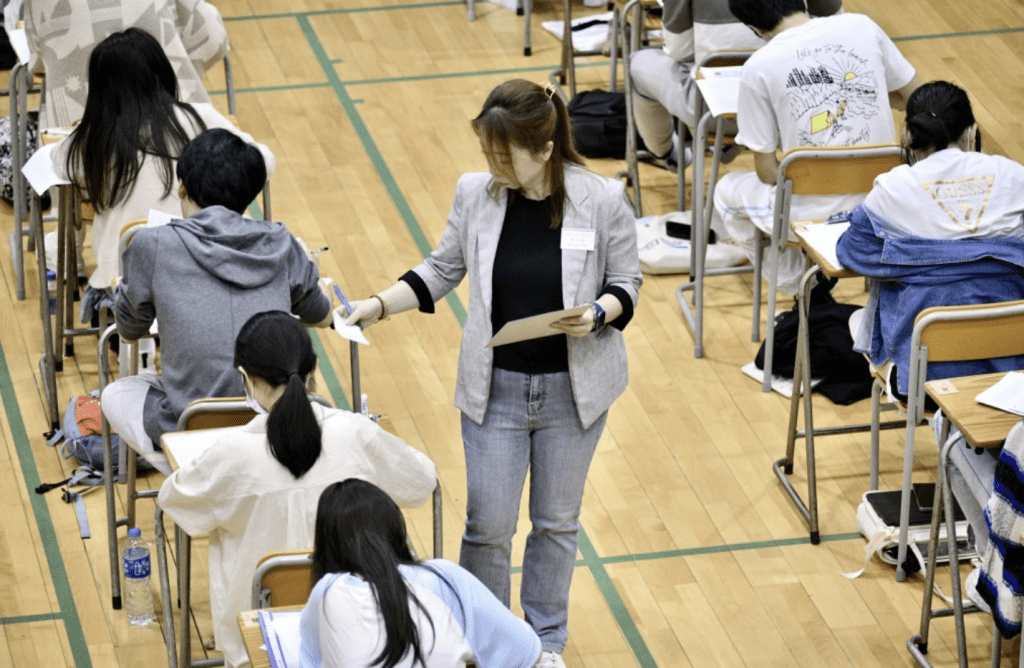
While not actually living in the city, as expected, the students spend little time here. Instead, they study in secondary schools in the mainland and undergo intensive coaching at private tutorial centers in Shenzhen before applying to sit the DSE exam as private candidates.
They are also known as "exam migrants," whose parents obtain immigration status for the sole purpose of getting them to study at one of Hong Kong's esteemed universities.
Although they are not actually local residents, they are ironically considered "local" due to JUPAS guidance which states that holders of valid entry documents are defined as local students.
This is wrong in principle and unfair to locals whose parents have worked and paid taxes in the city.
The last time Choi's bureau spoke about the need to review the definition of being local was in October and she said last week that the review was still ongoing.
It is hoped that the review exercise will be completed in the near future. It would be even better if it could be finished in time for Financial Secretary Paul Chan Mo-po to include the outcome in his upcoming budget.
It should not be a complicated task and the authorities should be able to complete it quickly as there are plenty of examples to which officials can refer.
For example, the Guangdong provincial government requires someone from another province to have studied at secondary level locally for at least three years before they can join the gaokao - the nationwide exam for university admission - as a local student.
Britons with full citizenship must also have lived in the UK for no less than three years prior to the start of their course in order to be eligible for subsidized university education.
Tightening the definition will help the SAR screen in only those who genuinely intend to settle and build their lives in Hong Kong.