Read More
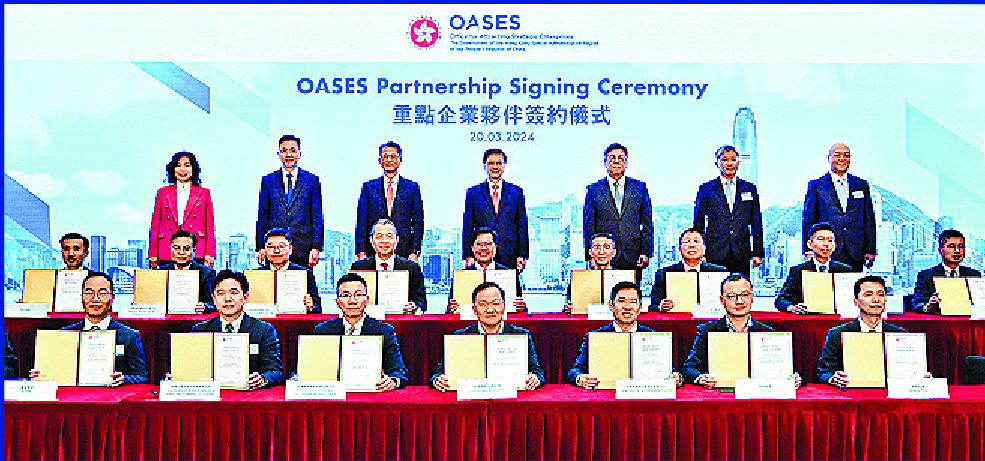
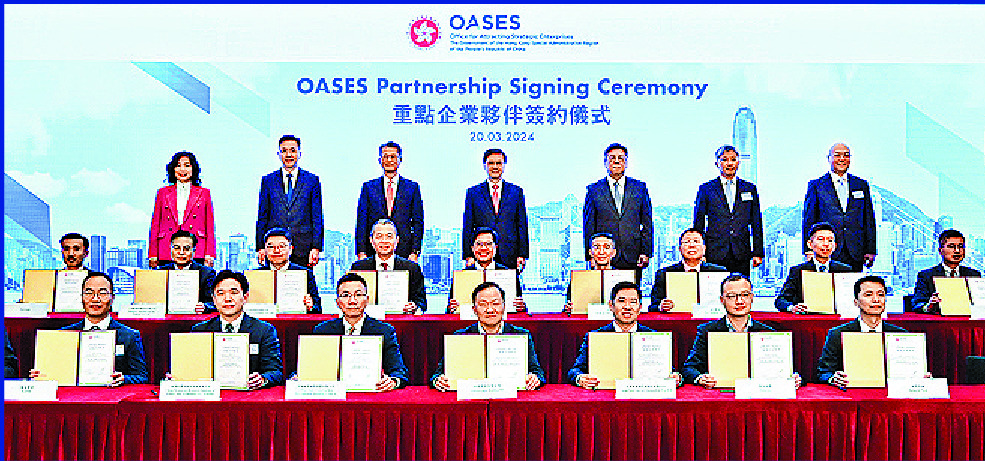
A host of government officials and company representatives lined up for press photos at a signing ceremony held by the Office for Attracting Strategic Enterprises a few days ago.
ADVERTISEMENT
SCROLL TO CONTINUE WITH CONTENT
What was exactly the agreement being signed for?
According to the official announcement, the companies - including several from the United States and the rest from the mainland - were there to sign on to become "strategic enterprise partners" of the SAR government. In publicity literature, they were also said to be about to "settle" in Hong Kong.
People involved in covering financial news may find it confusing to understand the full extent of the terms. What does a "strategic enterprise partnership" exactly constitute? What does "settle" mean?
In the commercial world, there are a variety of agreements. As one would readily expect the contract is the most formal type, signed to create a legally binding effect. Usually a contract includes consequential clauses in the event its terms are breached.
There is also the memorandum of understanding.
Strictly speaking, this cannot be said to be a formal agreement because, although it contains promises, these are not legally enforceable.
Lastly, there is the expression of interest. One may sign an expression of interest without fearing any consequences. It is not legally binding nor does it oblige someone to commit further.
Then what is a strategic enterprise partnership? What does it infer? Although one may have heard about a "comprehensive strategic partnership" between governments, it is still a rather vague term.
Unfortunately, it was not defined further at the ceremony after the grand announcement.
Also, what does "settle" mean in this context? Are signatories obliged to open just a representative office or a large factory? It would certainly help if government officials define them clearly.
It looks like the agreements signed at the high-profile ceremony were a kind of memorandum of understanding or expression of interest rather than a formal contract. If that is indeed the case, it may well be too early to pop the champagne.
Let us recall what happened last year. MTR Corp planned to develop a residential project at the future Tung Chung East MTR station. The project attracted an incredible 32 expressions of interest. However, the MTRC was stunned as it announced later that year that no "conforming tender" was received.
It could be either that some tenders were received but none conformed with requirements or no tender was received at all.
Had MTRC uncorked the champagne immediately after receiving the 32 expressions of interest, would it have been too early to declare success and celebrate?
Maybe I am too conservative.
According to the OASES, the "strategic enterprises" will invest more than HK$40 billion and create over 13,000 jobs in Hong Kong.
It is not a problem to be high-minded - if it is going to occur. I will store the champagne in a wine rack for the time being and pop it only after seeing HK$40 billion invested and 13,000 jobs created.
Hopefully I do not have to wait for long.