Read More






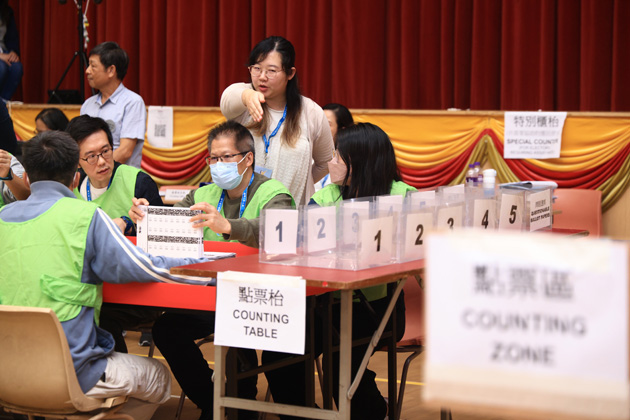
Would the direct vote of the district council election have produced a turnout rate other than the record low if not for the computer breakdown in the final hours of Sunday's poll?
Even though it has become a focal point, the answer is anything but certain - but the interpretations could also be poles apart, like the reading of a glass that is half full.
The computer incident was discovered at 7.42pm, according to the electoral commission.
At precisely 7.30pm, the turnout rate stood at 24.53 percent, with participating political parties all cranking up emergency calls to urge voters to head for the booths.
One way or the other, the incident and subsequent switch to manual operation provided a convenient reason for critics to deepen a conspiracy theory that has gone viral on the internet.
They claimed the glitch was the government's plan B to push up the turnout rate in order to hit 30 percent - an unspoken target allegedly set by Beijing.
By the same token, the incident also offered convenience for members of the establishment to assert that they could have performed better had it not been for the computer incident that led to fewer supporters showing up.
For example, Liberal Party chairman Peter Shiu blamed the incident - and also the weather - for some voters who had planned to cast the ballot giving up in the end.
Business and Professionals Alliance chairman Lo Wai-kwok thought likewise, criticizing the electoral officials for not switching to paper ballots earlier after the glitch.
It is hoped that the special task force promised by Chief Executive John Lee Ka-chiu to conduct an investigation will be able to complete the probe impartially so that similar incidents will be prevented from happening again.
With any election, credibility is the most crucial element and more important than ensuring a higher turnout rate.
Meanwhile, the vote once again demonstrated the advantage that a large political party has in an election.
According to a senior DAB figure - the biggest winner of Sunday's vote - the party mobilized workers and volunteers to conduct a further round of home visits during the extended voting hours to urge supporters to head to the polling stations before the extended vote closed at midnight.
Such an exercise was extremely labor intensive and, as such, impossible for smaller competitors like Executive Council convenor Regina Ip Lau Suk-yee's New People's Party to replicate.
It is little wonder that Ip was said to have been upset by what happened in the final hours of the poll.
Final vote counts returned 41 of DAB's 44 candidates to office, representing a tremendous success rate of over 93 percent.
Was the outcome acceptable to Beijing?
Obviously yes, if the message of congratulation issued by the Hong Kong and Macau Affairs Office in Beijing is to be taken at face value.
It said the vote will help power the consolidation of Hong Kong's social foundation so that it can achieve further prosperity.
It is apparent that the SAR's vigorous efforts to promote the election have won appreciation from the central government.