Read More
Remember this political phrase: "small yard, high fence"?
ADVERTISEMENT
SCROLL TO CONTINUE WITH CONTENT
The first reference made to it in the context of the Sino-US relationship dated back to early 2021 and it has since been mentioned on a number of occasions.
One of the last times it was elaborated was by US national security advisor Jake Sullivan at a university in October 2022.
The phrase, created by political analyst Samm Sacks in 2018, may provide the basics for understanding the current US policy towards China - including US Secretary of State Antony Blinken's planned China visit that has been postponed from early this year.
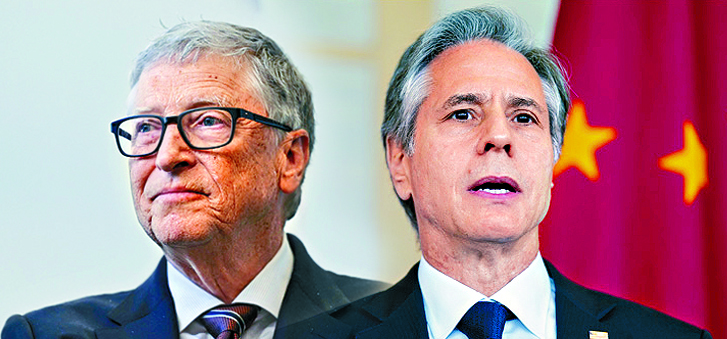
By the same token, President Xi Jinping may also be viewed as attempting to put down the fence from within the small yard when he reportedly appealed to Microsoft co-founder Bill Gates and the latter's technology peers to bring AI to China during a meeting ahead of Blinken's arrival.
Expectation has been low for Blinken's meetings in Beijing to lead to any breakthrough, which is the only reasonable prediction at the moment.
Keeping the status quo rather than letting it spiral into military conflicts is presumably the best possible outcome of these talks.
Chinese Defense Minister Li Shangfu may have refused an American invitation to conduct sideline talks with his US counterpart Lloyd Austin during the Shangri-La dialogue in Singapore.
However, it is clear that both sides do recognize a need to keep the dialogue open and, also importantly, to establish a high-level communication channel for crisis management to avoid hot conflicts due to miscalculation.
Blinken's meetings with Chinese Foreign Minister Qin Gang, the country's top diplomat Wang Yi and probably Xi will unlikely lead to US President Joe Biden's administration agreeing to lowering the high fence it is actively putting up around key technologies to keep them from Chinese access.
On non-sensitive products, trade can be expected to continue.
Although it has been more than two years since US officials made reference to the approach of "small yard, high fence" in the context of the US relationship with China, Washington has not departed from it despite recent maneuvers that seemed contradictory.
Yet, what the US is willing to give may not be what China wants.
Although China sees Gates as an old friend in light of Microsoft's long-standing presence in China, it was still extraordinary for Xi to receive Gates in person in view of the strict diplomatic protocol that has been known for the Chinese leadership.
It is probable that, in agreeing to meet with Gates, Xi was trying to assure the US business sector that first, Americans are welcome to do business in China and, second, that Americans should be prepared to offer China what it needs as they do business in the country.
And AI technology is what China wants most.
The reported conversation with the Microsoft co-founder was consistent with Beijing's long-standing strategy to forge friendships in the backyard of its opponents.
So, will Gates react to Xi's appeal to cause the high fence to break down from within the small yard of AI stakeholders?
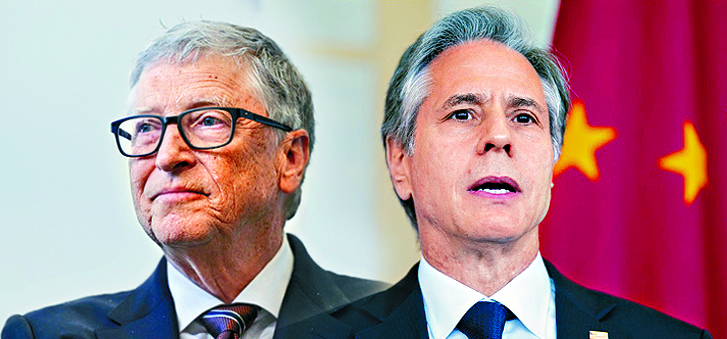
Bill Gates and Antony Blinken