Read More
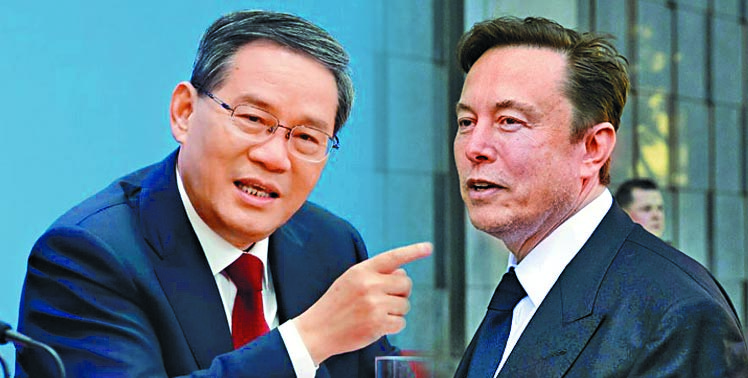
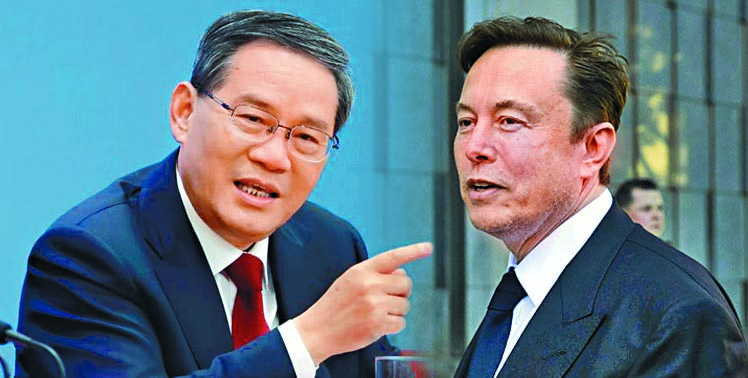
After persuading Alibaba founder Jack Ma Yun to return to China from an extended holiday overseas, Premier Li Qiang has secured Tesla and SpaceX founder Elon Musk’s fi rst visit to the country in three years.
ADVERTISEMENT
SCROLL TO CONTINUE WITH CONTENT
Mind that both are outstanding icons in the commercial technology sector.
If Ma’s spectacular return was expected to bring assurance to nonstate enterprises at home following a crackdown on a number of private businesses for more than two years, Musk’s stylish landing in the capital on a private jet would be aimed at winning over foreign investors.
The Chinese foreign ministry was rather positive about Musk’s arrival, welcoming him – as well as any business leader – to promote “mutually beneficial cooperation.”
Though short of an announcement, Musk will reportedly meet with the premier. Both Musk and Li have known each other since Li was in charge of Shanghai. It was during this time Musk decided to build the world’s biggest Tesla factory there. Recently, Musk also agreed to build a battery factory in Shanghai.
While the relatively high profile with which the foreign ministry has mentioned Musk’s visit may confirm Beijing’s resolve to retain and attract foreign investment at a time foreign investors are leaving the country, it may be viewed as a sign of the urgency facing China’s economy.
Musk’s visit is anticipated to render the efforts a boost much the way Ma’s return from overseas travel has been expected to do so.
Remember that Musk had once questioned “where is Jack Ma” when asked by the media if he had any plan to visit China.
Now, after Ma, so does Musk.
Musk’s appearance in Beijing comes at a time the United States and other G7 members concluded a meeting in which an unprecedented hard-line was adopted on China.
The recent G7 summit in Japan was arguably the most crucial one in the club’s recent history. It stopped short of decoupling from China despite US advocacy but endorsed a new approach of de-risking advanced by Germany.
It may be a step backward for US hard-liners but a major step for other G7 members. It is at this point all the G7 members have aligned their China policies.
It should be noted that it was after the summit that Beijing slapped an unexpected sanction on US RAM maker Micron.
Micron’s memory products for computers are top-notch but non-sensitive, being most commonly used in the world.
It would be a mistake to say Micron is the first US company sanctioned by China. As a matter of fact, Lockheed Martin and Raytheon Missiles and Defense have been declared
“unreliable” by Beijing for quite some time.
Maybe the difference this time is Micron is a non-military hardware supplier while Lockheed and Raytheon are considered military and have been supplying Taiwan military hardware and software solutions.
The signal over Micron is rather clear. As Washington pursues a parallel strategy to keep talking on one hand and tightening the loop on the other, Beijing is showing
Washington its displeasure over the latter’s strategy. If Musk symbolizes carrot, Micron would be the example of stick.