Read More






Defying the demographic cliff: restoring hope
06-10-2026 04:56 HKT



Elon Musk unveils Tesla's 'flying' car
16-10-2026 16:58 HKT
Schools offering quality education never worry about student enrolments.
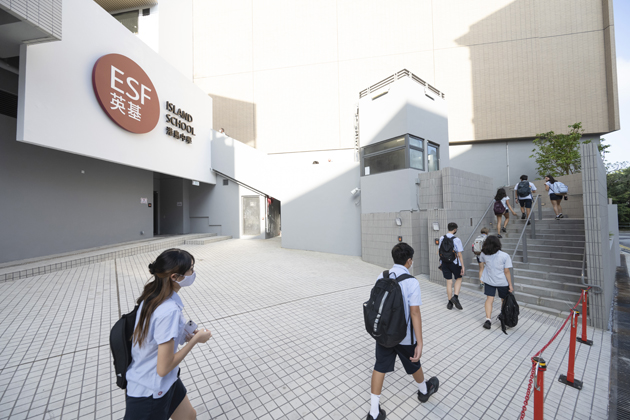
For example, one of the city's oldest international curriculum providers, the English Schools Foundation, has proved as popular as ever despite dropouts due to expatriate families moving out of Hong Kong to escape the city's perpetual restrictions during the pandemic.
Only schools not living up to parents' expectations need fear not admitting enough students.
So education-sector lawmaker Chu Kwok-keung raised many eyebrows when he called international schools out for the faults of others.
His criticism that international schools have admitted too many local students was bitterly misguided because he was trying to pass the blame from the underperformers to those that have outperformed.
The city has seen its school-age population drop overall and this has affected both local and international schools. Nonetheless, many schools - especially those considered elite by parents - are still heavily oversubscribed.
Chu was concerned that local schools suffering from low admissions are being asked to cut classes or plan for closure.
It is too easy to get lost in the numbers game to place the blame on some popular international schools for enrolling local students more than they are supposed to.
The government has said it wants 70 percent of students at international schools to be nonlocal.
But the threshold was never meant to be as rigid as it is taken to be by some critics - otherwise, the government would not have relaxed its application during the pandemic.
It is reported that the percentage has been temporarily relaxed for several newly established international schools because of the pandemic.
Although many families have moved elsewhere with their children, many more have opted to stay in Hong Kong and they are happy to see the increased vacancies at international and local elite schools.
If not due to these vacancies created by the latest wave of emigration, they may not have been able to secure a place for their children in these "dream" schools.
In respect of the 70 percent policy threshold for nonlocal students at an international school, the Education Bureau should deal with it flexibly rather than seeing it as an iron-clad tool to be used readily to penalize schools because of their academic success.
The decrease in student numbers experienced by international schools since 2019 was predictable. Although the social instability in 2019 has had an impact on the number, the major exodus has been due to the pandemic.
It is probable that these schools have already seen the peak of the exodus, and the question of the falling ratio for nonlocal students is temporary.
If Chief Executive John Lee Ka-chiu's drive to "grab" top talents succeeds, it is likely that these talents - though mainly coming from the mainland - will like to see their children educated at one of the city's international schools rather than a local alternative.
Instead of banking on punishing the successful for the rescue of the underperformers, would it make better sense to ask the underperforming to do better?